
Art for Action - Benefit Exhibition
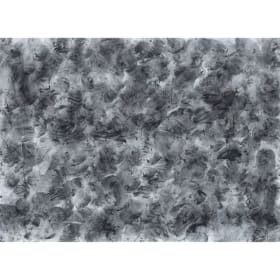
Jasmine Narkita Wiley
$8,900
for the purpose of economics, self portrait, 2026
Indigo, acrylic, bleached denim
60 × 72 in.
Unique
Jasmine Narkita Wiley is an interdisciplinary artist and writer whose work brings together textiles, craft, the body, and the image to explore Black identity, visibility, and the gaze. Moving between the political and the spiritual, she is interested in how materials can hold histories while creating possibilities for repair.
Created during Wiley’s 2026 Black (Space) Residency at Minnesota Street Project, for the purpose of economics, self portrait is an abstract portrait made through direct contact with the artist’s body. Wiley applied indigo to her skin and pressed herself against cream-colored denim, leaving behind sweeping, abstract traces of her physical presence. The artists' body is recorded through gesture, pressure, and touch. Indigo and denim bring their own histories of labor, commerce, and Black experience to this intimate act of mark-making. At six feet wide, this self-portrait allows us to encounter the body through the marks she has chosen to leave behind.
0
Nengi Omuku x Ituen Basi
$1,800
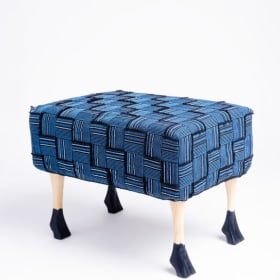
Edong Sheep Stools, 2026
Handcrafted stools upholstered in Aso Oke textile
Dimensions variable
Unique
Nengi Omuku is best known for her ethereal oil paintings on sanyan, a pre-colonial handwoven Yoruba textile whose history and material presence are integral to her work. With the Edong Sheep Stools, that relationship to Nigerian textile histories moves beyond the painted surface and into the realm of functional design. Created in collaboration with celebrated Nigerian fashion designer Ituen Basi, the stools are handcrafted and upholstered in Aso Oke, another Yoruba handwoven textile.
Conceived especially as a fundraiser for Omuku’s nonprofit organization, The Art of Healing (TAOH), each is a unique object that brings together contemporary art, Nigerian craft, and social purpose. Proceeds from the stools will support TAOH’s renovation of a state psychiatric clinic in Lagos that serves more than half of the city’s mental health cases. In these joyful, tactile objects, art and design become a direct path to care.
0

Helina Metaferia
$15,500
Headdress 74, 2025
Hand-cut and assembled media collage
30 × 40 in.
Unique
Helina Metaferia is an interdisciplinary artist whose work brings overlooked histories of activism into conversation with the present. Working across collage, performance, video, sculpture, and social engagement, she explores how histories of resistance are carried from one generation to the next. Headdress 74 is part of Metaferia’s ongoing By Way of Revolution series, which centers women of color whose contributions to social justice movements have often gone unrecognized.
Metaferia photographs contemporary activists and adorns their portraits with elaborate, hand-cut headdresses assembled from archival images of earlier generations of BIPOC activists. The crown becomes both archive and tribute: history quite literally rests upon the sitter’s head. Headdress 74 elevates its subject while making visible the generations of activism that precede and surround her. The result is at once an individual portrait and an image of collective power.
0

Jasmine Narkita Wiley
$1,900
Watch_001, 2026
Indigo, acrylic, handwoven baskets, archival image from vintage Ebony magazine on Rives BFK
22 × 30 in.
Unique
In her interdisciplinary practice, Jasmine Narkita Wiley explores the complicated relationship between visibility and power—who gets to look, who is watched, and how Black subjects can reclaim agency over their own representation. Created during Wiley’s 2026 Black (Space) Residency, Watch_001 brings together indigo and acrylic, handwoven basket patterns, and an archival image from a vintage Ebony magazine.
These materials carry different forms of memory: the intimacy and labor of handcraft alongside a printed image drawn from an enormously influential archive of Black American life and representation. The title Watch turns looking into an active proposition, asking us to consider the difference between being seen and being watched—and what happens when the person or image under observation looks back. By bringing the handmade and the archival together, she creates a layered meditation on Black visibility, memory, and the power to shape one’s own image.
0
Daapo Reo
$8,000
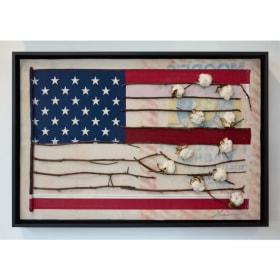
the fabric of hate, 2026
Deconstructed U.S. flag, textile, twigs, raw cotton, iron
21 × 39 in.
Unique
Daapo Reo uses flags and textiles to examine how national identity is constructed—and who is permitted to belong within it. Born in Nigeria and now living in New York, Reo brings autobiographical experience into conversation with larger histories of migration and power.
In The Fabric of Hate, Reo pulls the American flag apart and reconstructs it with textile, twigs, raw cotton, and iron, transforming a symbol of national unity into something fractured, tactile, and unsettled. The title points to the political and social divisions shaping contemporary life. By physically dismantling and remaking the flag, Reo reveals national identity as continually shaped by the histories—and conflicts—we choose to carry forward.
0

Ana Silva
$26,000
11 Masks, 2025
Wood, cords, fabric
Dimensions Variable
Ana Silva (born 1979, Calulo, Angola; based in Lisbon) builds a fiercely imaginative practice rooted in memory, material transformation, and the psychic charge of women’s histories.
Working on second-hand fabrics and woven plastic bags, Silva reclaims discarded materials to narrate women’s struggles, environmental precarity, and the fragile continuities of textile traditions. Her masks project extends this ethos. By revisiting and embroidering semi-abstract masks, she demystifies the African mask and restores its contemporary force. These reincarnations propose a modern Africa that honors ancestral knowledge while anticipating new futures.
0

Nengi Omuku x Ituen Basi
$1,800
Edong Sheep Stools, 2026
Handcrafted stools upholstered in Aso Oke textile
Dimensions variable
Unique
Nengi Omuku is best known for her ethereal oil paintings on sanyan, a pre-colonial handwoven Yoruba textile whose history and material presence are integral to her work. With the Edong Sheep Stools, that relationship to Nigerian textile histories moves beyond the painted surface and into the realm of functional design. Created in collaboration with celebrated Nigerian fashion designer Ituen Basi, the stools are handcrafted and upholstered in Aso Oke, another Yoruba handwoven textile.
Conceived especially as a fundraiser for Omuku’s nonprofit organization, The Art of Healing (TAOH), each is a unique object that brings together contemporary art, Nigerian craft, and social purpose. Proceeds from the stools will support TAOH’s renovation of a state psychiatric clinic in Lagos that serves more than half of the city’s mental health cases. In these joyful, tactile objects, art and design become a direct path to care.
0
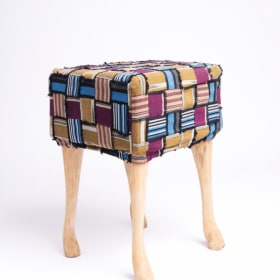
Nengi Omuku x Ituen Basi
$1,500
Edong Sheep Stools, 2026
Handcrafted stools upholstered in Aso Oke textile
Dimensions variable
Unique
Nengi Omuku is best known for her ethereal oil paintings on sanyan, a pre-colonial handwoven Yoruba textile whose history and material presence are integral to her work. With the Edong Sheep Stools, that relationship to Nigerian textile histories moves beyond the painted surface and into the realm of functional design. Created in collaboration with celebrated Nigerian fashion designer Ituen Basi, the stools are handcrafted and upholstered in Aso Oke, another Yoruba handwoven textile.
Conceived especially as a fundraiser for Omuku’s nonprofit organization, The Art of Healing (TAOH), each is a unique object that brings together contemporary art, Nigerian craft, and social purpose. Proceeds from the stools will support TAOH’s renovation of a state psychiatric clinic in Lagos that serves more than half of the city’s mental health cases. In these joyful, tactile objects, art and design become a direct path to care.
0
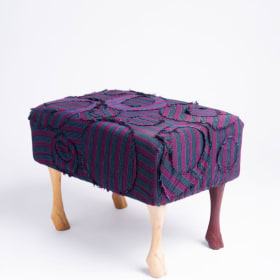
Nengi Omuku x Ituen Basi
$1,800
Edong Sheep Stools, 2026
Handcrafted stools upholstered in Aso Oke textile
Dimensions variable
Unique
Nengi Omuku is best known for her ethereal oil paintings on sanyan, a pre-colonial handwoven Yoruba textile whose history and material presence are integral to her work. With the Edong Sheep Stools, that relationship to Nigerian textile histories moves beyond the painted surface and into the realm of functional design. Created in collaboration with celebrated Nigerian fashion designer Ituen Basi, the stools are handcrafted and upholstered in Aso Oke, another Yoruba handwoven textile.
Conceived especially as a fundraiser for Omuku’s nonprofit organization, The Art of Healing (TAOH), each is a unique object that brings together contemporary art, Nigerian craft, and social purpose. Proceeds from the stools will support TAOH’s renovation of a state psychiatric clinic in Lagos that serves more than half of the city’s mental health cases. In these joyful, tactile objects, art and design become a direct path to care.
0
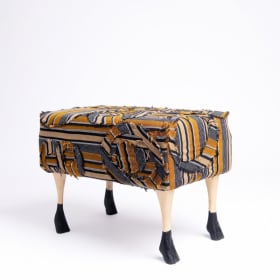
Nengi Omuku x Ituen Basi
$1,800
Edong Sheep Stools, 2026
Handcrafted stools upholstered in Aso Oke textile
Dimensions variable
Unique
Nengi Omuku is best known for her ethereal oil paintings on sanyan, a pre-colonial handwoven Yoruba textile whose history and material presence are integral to her work. With the Edong Sheep Stools, that relationship to Nigerian textile histories moves beyond the painted surface and into the realm of functional design. Created in collaboration with celebrated Nigerian fashion designer Ituen Basi, the stools are handcrafted and upholstered in Aso Oke, another Yoruba handwoven textile.
Conceived especially as a fundraiser for Omuku’s nonprofit organization, The Art of Healing (TAOH), each is a unique object that brings together contemporary art, Nigerian craft, and social purpose. Proceeds from the stools will support TAOH’s renovation of a state psychiatric clinic in Lagos that serves more than half of the city’s mental health cases. In these joyful, tactile objects, art and design become a direct path to care.
0
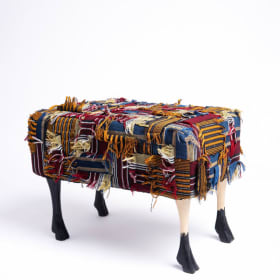
Nengi Omuku x Ituen Basi
$1,800
Edong Sheep Stools, 2026
Handcrafted stools upholstered in Aso Oke textile
Dimensions variable
Unique
Nengi Omuku is best known for her ethereal oil paintings on sanyan, a pre-colonial handwoven Yoruba textile whose history and material presence are integral to her work. With the Edong Sheep Stools, that relationship to Nigerian textile histories moves beyond the painted surface and into the realm of functional design. Created in collaboration with celebrated Nigerian fashion designer Ituen Basi, the stools are handcrafted and upholstered in Aso Oke, another Yoruba handwoven textile.
Conceived especially as a fundraiser for Omuku’s nonprofit organization, The Art of Healing (TAOH), each is a unique object that brings together contemporary art, Nigerian craft, and social purpose. Proceeds from the stools will support TAOH’s renovation of a state psychiatric clinic in Lagos that serves more than half of the city’s mental health cases. In these joyful, tactile objects, art and design become a direct path to care.
0

Nengi Omuku x Ituen Basi
$1,800
Edong Sheep Stools, 2026
Handcrafted stools upholstered in Aso Oke textile
Dimensions variable
Unique
Nengi Omuku is best known for her ethereal oil paintings on sanyan, a pre-colonial handwoven Yoruba textile whose history and material presence are integral to her work. With the Edong Sheep Stools, that relationship to Nigerian textile histories moves beyond the painted surface and into the realm of functional design. Created in collaboration with celebrated Nigerian fashion designer Ituen Basi, the stools are handcrafted and upholstered in Aso Oke, another Yoruba handwoven textile.
Conceived especially as a fundraiser for Omuku’s nonprofit organization, The Art of Healing (TAOH), each is a unique object that brings together contemporary art, Nigerian craft, and social purpose. Proceeds from the stools will support TAOH’s renovation of a state psychiatric clinic in Lagos that serves more than half of the city’s mental health cases. In these joyful, tactile objects, art and design become a direct path to care.
0
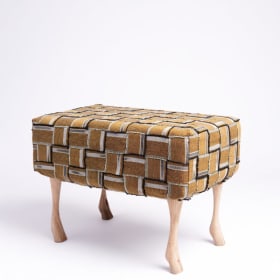
Nengi Omuku x Ituen Basi
$1,800
Edong Sheep Stools, 2026
Handcrafted stools upholstered in Aso Oke textile
Dimensions variable
Unique
Nengi Omuku is best known for her ethereal oil paintings on sanyan, a pre-colonial handwoven Yoruba textile whose history and material presence are integral to her work. With the Edong Sheep Stools, that relationship to Nigerian textile histories moves beyond the painted surface and into the realm of functional design. Created in collaboration with celebrated Nigerian fashion designer Ituen Basi, the stools are handcrafted and upholstered in Aso Oke, another Yoruba handwoven textile.
Conceived especially as a fundraiser for Omuku’s nonprofit organization, The Art of Healing (TAOH), each is a unique object that brings together contemporary art, Nigerian craft, and social purpose. Proceeds from the stools will support TAOH’s renovation of a state psychiatric clinic in Lagos that serves more than half of the city’s mental health cases. In these joyful, tactile objects, art and design become a direct path to care.
0

Nengi Omuku x Ituen Basi
$1,800
Edong Sheep Stools, 2026
Handcrafted stools upholstered in Aso Oke textile
Dimensions variable
Unique
Nengi Omuku is best known for her ethereal oil paintings on sanyan, a pre-colonial handwoven Yoruba textile whose history and material presence are integral to her work. With the Edong Sheep Stools, that relationship to Nigerian textile histories moves beyond the painted surface and into the realm of functional design. Created in collaboration with celebrated Nigerian fashion designer Ituen Basi, the stools are handcrafted and upholstered in Aso Oke, another Yoruba handwoven textile.
Conceived especially as a fundraiser for Omuku’s nonprofit organization, The Art of Healing (TAOH), each is a unique object that brings together contemporary art, Nigerian craft, and social purpose. Proceeds from the stools will support TAOH’s renovation of a state psychiatric clinic in Lagos that serves more than half of the city’s mental health cases. In these joyful, tactile objects, art and design become a direct path to care.
0
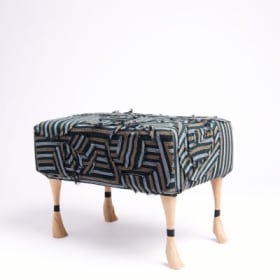
Nengi Omuku x Ituen Basi
$1,800
Edong Sheep Stools, 2026
Handcrafted stools upholstered in Aso Oke textile
Dimensions variable
Unique
Nengi Omuku is best known for her ethereal oil paintings on sanyan, a pre-colonial handwoven Yoruba textile whose history and material presence are integral to her work. With the Edong Sheep Stools, that relationship to Nigerian textile histories moves beyond the painted surface and into the realm of functional design. Created in collaboration with celebrated Nigerian fashion designer Ituen Basi, the stools are handcrafted and upholstered in Aso Oke, another Yoruba handwoven textile.
Conceived especially as a fundraiser for Omuku’s nonprofit organization, The Art of Healing (TAOH), each is a unique object that brings together contemporary art, Nigerian craft, and social purpose. Proceeds from the stools will support TAOH’s renovation of a state psychiatric clinic in Lagos that serves more than half of the city’s mental health cases. In these joyful, tactile objects, art and design become a direct path to care.
0

Nengi Omuku x Ituen Basi
$1,800
Edong Sheep Stools, 2026
Handcrafted stools upholstered in Aso Oke textile
Dimensions variable
Unique
Nengi Omuku is best known for her ethereal oil paintings on sanyan, a pre-colonial handwoven Yoruba textile whose history and material presence are integral to her work. With the Edong Sheep Stools, that relationship to Nigerian textile histories moves beyond the painted surface and into the realm of functional design. Created in collaboration with celebrated Nigerian fashion designer Ituen Basi, the stools are handcrafted and upholstered in Aso Oke, another Yoruba handwoven textile.
Conceived especially as a fundraiser for Omuku’s nonprofit organization, The Art of Healing (TAOH), each is a unique object that brings together contemporary art, Nigerian craft, and social purpose. Proceeds from the stools will support TAOH’s renovation of a state psychiatric clinic in Lagos that serves more than half of the city’s mental health cases. In these joyful, tactile objects, art and design become a direct path to care.
0
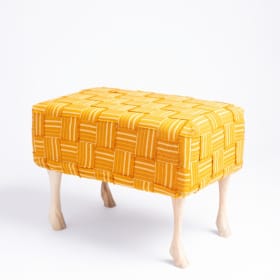
Nengi Omuku x Ituen Basi
$1,800
Edong Sheep Stools, 2026
Handcrafted stools upholstered in Aso Oke textile
Dimensions variable
Unique
Nengi Omuku is best known for her ethereal oil paintings on sanyan, a pre-colonial handwoven Yoruba textile whose history and material presence are integral to her work. With the Edong Sheep Stools, that relationship to Nigerian textile histories moves beyond the painted surface and into the realm of functional design. Created in collaboration with celebrated Nigerian fashion designer Ituen Basi, the stools are handcrafted and upholstered in Aso Oke, another Yoruba handwoven textile.
Conceived especially as a fundraiser for Omuku’s nonprofit organization, The Art of Healing (TAOH), each is a unique object that brings together contemporary art, Nigerian craft, and social purpose. Proceeds from the stools will support TAOH’s renovation of a state psychiatric clinic in Lagos that serves more than half of the city’s mental health cases. In these joyful, tactile objects, art and design become a direct path to care.
0
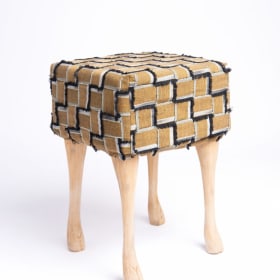
Nengi Omuku x Ituen Basi
$1,500
Edong Sheep Stools, 2026
Handcrafted stools upholstered in Aso Oke textile
Dimensions variable
Unique
Nengi Omuku is best known for her ethereal oil paintings on sanyan, a pre-colonial handwoven Yoruba textile whose history and material presence are integral to her work. With the Edong Sheep Stools, that relationship to Nigerian textile histories moves beyond the painted surface and into the realm of functional design. Created in collaboration with celebrated Nigerian fashion designer Ituen Basi, the stools are handcrafted and upholstered in Aso Oke, another Yoruba handwoven textile.
Conceived especially as a fundraiser for Omuku’s nonprofit organization, The Art of Healing (TAOH), each is a unique object that brings together contemporary art, Nigerian craft, and social purpose. Proceeds from the stools will support TAOH’s renovation of a state psychiatric clinic in Lagos that serves more than half of the city’s mental health cases. In these joyful, tactile objects, art and design become a direct path to care.
0
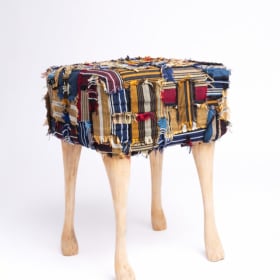
Nengi Omuku x Ituen Basi
$1,500
Edong Sheep Stools, 2026
Handcrafted stools upholstered in Aso Oke textile
Dimensions variable
Unique
Nengi Omuku is best known for her ethereal oil paintings on sanyan, a pre-colonial handwoven Yoruba textile whose history and material presence are integral to her work. With the Edong Sheep Stools, that relationship to Nigerian textile histories moves beyond the painted surface and into the realm of functional design. Created in collaboration with celebrated Nigerian fashion designer Ituen Basi, the stools are handcrafted and upholstered in Aso Oke, another Yoruba handwoven textile.
Conceived especially as a fundraiser for Omuku’s nonprofit organization, The Art of Healing (TAOH), each is a unique object that brings together contemporary art, Nigerian craft, and social purpose. Proceeds from the stools will support TAOH’s renovation of a state psychiatric clinic in Lagos that serves more than half of the city’s mental health cases. In these joyful, tactile objects, art and design become a direct path to care.
0

Nengi Omuku x Ituen Basi
$1,800
Edong Sheep Stools, 2026
Handcrafted stools upholstered in Aso Oke textile
Dimensions variable
Unique
Nengi Omuku is best known for her ethereal oil paintings on sanyan, a pre-colonial handwoven Yoruba textile whose history and material presence are integral to her work. With the Edong Sheep Stools, that relationship to Nigerian textile histories moves beyond the painted surface and into the realm of functional design. Created in collaboration with celebrated Nigerian fashion designer Ituen Basi, the stools are handcrafted and upholstered in Aso Oke, another Yoruba handwoven textile.
Conceived especially as a fundraiser for Omuku’s nonprofit organization, The Art of Healing (TAOH), each is a unique object that brings together contemporary art, Nigerian craft, and social purpose. Proceeds from the stools will support TAOH’s renovation of a state psychiatric clinic in Lagos that serves more than half of the city’s mental health cases. In these joyful, tactile objects, art and design become a direct path to care.
0
Add a donation
to support Conjunction Arts
$
Tax receipt eligible
Did you know? We fundraise with Zeffy to ensure 100% of your purchase goes to our mission!