
Offered by
Certified Gardeners Association of Passaic County
About this shop
Certified Gardeners Association of Passaic County Fall Bulb Sale
Add a donation for Certified Gardeners Association of Passaic County
$


FB01 Allium - Allium ampeloprasum “Ping Pong”
$18
20 bulbs Allium ampeloprasum have papery sheathed buds that look like onions before they slowly bloom. The buds produce 3” sized balls of composite silver-white flowers with a slight pink glow. They will turn pure-white as they mature, only retaining a very light pink in the center of each bud. The flowers have beautiful purple veins and low-growing, strappy foliage.
● HEIGHT: 36”
● BULB SIZE: 6 cm/up
● PLANTING DEPTH & SPACING: 4" deep and 3" to 4" apart.
● SUN & SOIL REQUIREMENTS: Alliums need 6 hours of full sunlight and should be planted in rich, well-draining soil with a neutral pH (6.0 to 7.0 range). They benefit from a summer dry period.
● FLOWERING Zone 7: June/July
● PESTS & DISEASE: Very rodent and deer resistant, generally rabbit resistant, and very disease resistant.
● POLLINATORS & PETS: Much loved by bees, butterflies and other helpful pollinators. Warning: toxic to dogs and cats.


FB02 Allium - Allium Gladiator
$18
5 bulbs A cross between A. aflatunense and A. macleanii, Allium Gladiators blossom into 6" wide rose-purple globes. Each globe has starry florets dotted with green eyes. The flower’s low, strappy foliage starts to brown out prior to flowering.
● HEIGHT: 36" to 48"
● BULB SIZE: 18 cm/up
● PLANTING DEPTH & SPACING: 6" to 8" deep and 8" to 10" apart.
● SUN & SOIL REQUIREMENTS: Alliums need 6 hours of full sunlight and should be planted in rich, well-draining soil with a neutral pH (6.0 to 7.0 range). They benefit from a summer dry period.
● FLOWERING Zone 7: May/June
● PESTS & DISEASE: Very rodent and deer resistant, generally rabbit resistant, and very disease resistant.
● POLLINATORS & PETS: Much loved by bees, butterflies and other helpful pollinators. Warning: toxic to dogs and cats.


FB03 Allium - Allium Ostara
$18
5 bulbs A cross of A. atropurpureum and A. karataviense, Allium ostara blooms into 4” to 6” wide dark purple globes. They maintain a long-lasting glossy, blue-green foliage.
● HEIGHT: 16”
● BULB SIZE: 12 cm/up
● PLANTING DEPTH & SPACING: 4" deep and 3" to 4" apart.
● SUN & SOIL REQUIREMENTS: Alliums need 6 hours of full sunlight and should be planted in rich, well-draining soil with a neutral pH (6.0 to 7.0 range). They benefit from a summer dry period.
● FLOWERING Zone 7: Late May/June
● PESTS & DISEASE: Very rodent and deer resistant, generally rabbit resistant, and very disease resistant.
● POLLINATORS & PETS: Much loved by bees, butterflies and other helpful pollinators. Warning: toxic to dogs and cats.

FB04 Allium schubertii "The Tumbleweed Onion”
$15
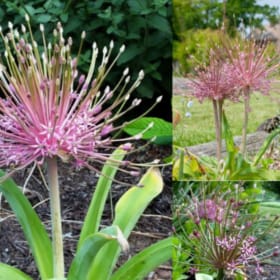
5 bulbs Allium schubertii starts with buds that look like a thick, green paint brush. The buds produce 12" wide airy umbels comprising dozens of mallow-purple florets which extend from creamy-mauve stems. They look like long spidery fireworks, and this form holds as the flowers die back and knobby, green seed pods develop.
● HEIGHT: 16”
● BULB SIZE: 14 cm/up
● PLANTING DEPTH & SPACING: 4" deep and 3" to 4" apart.
● SUN & SOIL REQUIREMENTS: Alliums need 6 hours of full sunlight and should be planted in rich, well-draining soil with a neutral pH (6.0 to 7.0 range). They benefit from a summer dry period.
● FLOWERING Zone 7: May/June
● PESTS & DISEASE: Very rabbit, rodent and deer-resistant, but they are susceptible to thrips and onion maggot. They have good resistance to common diseases.
● POLLINATORS & PETS: Much loved by bees, butterflies and other helpful pollinators. Warning: toxic to dogs and cats.


FB05 Allium stipitatum “White Giant”
$18
5 bulbs Allium stipitatum produces densely compacted 6" to 8" wide snow-white globes, comprising hundreds of little florets with deep green eyes. The plant stays green until the flower blooms, then begins to fade into its hauntingly beautiful dried form.
● HEIGHT: 36" to 48"
● BULB SIZE: 18 cm/up
● PLANTING DEPTH & SPACING: 6" to 8" deep and 8" to 10" apart.
● SUN & SOIL REQUIREMENTS: Alliums need 6 hours of full sunlight and should be planted in rich, well-draining soil with a neutral pH (6.0 to 7.0 range). They benefit from a summer dry period.
● FLOWERING Zone 7: May/June
● PESTS & DISEASE: Very rabbit, rodent and deer-resistant, but are susceptible to thrips and onion maggot. They have good resistance to common diseases.
● POLLINATORS & PETS: Much loved by bees, butterflies and other helpful pollinators. Warning: toxic to dogs and cats.

FB06 Snow Crocus Species Mixture
$10
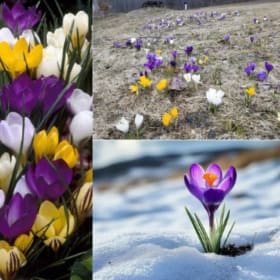
20 bulbs This Snow Crocus mix blends white, yellow, blue and violet varieties. The flowers emerge from grass-like foliage with narrow, median silvery stripes. They are some of the first plants to bloom in Spring, often through snow. This mixture is a less expensive option than buying multiple packs of single color flowers. Please be aware that the variety of plant colors may vary from pictures and descriptions.
● HEIGHT: 4"
● BULB SIZE: 5 cm/up
● PLANTING DEPTH & SPACING: 4" deep and 3" to 4" apart. Plant about nine bulbs per square foot for dense coverage.
● SUN & SOIL REQUIREMENTS: Crocuses can tolerate partial shade, but thrive and produce the most vibrant blooms when exposed to at least 6 hours of direct sunlight daily. They like well-draining soil with a neutral pH (6.0 to 7.0 range). They can adapt to various soil types, but poor draining soil enhances the chance of developing root rot.
● FLOWERING Zone 7: late March/early April
● PESTS & DISEASE: Not resistant to rodents, rabbits, or deer as they can eat the bulbs and foliage. Aphids or bulb mites can also damage the plants. They are generally disease resistant.
● POLLINATORS & PETS: Very beneficial for pollinators, particularly bees, in early Spring. Warning: toxic to dogs, cats, and horses.
● NOTES: Crocuses can bloom indoors over the winter if you pot them in mid-October, then precool them at a consistent 38°F to 45°F. Keep them in the dark for eight to ten weeks with moderate weekly watering. Then, bring them into the house and progressively stronger sunlight, and they will bloom about four weeks later.


FB07 Daffodil - Narcissus Bantam
$15
10 bulbs Narcissus bantam produces a flawless, well-overlapping, recurved, greenish-yellow perianth (outer part of the flower). The flower has a 2" sulfur-yellow, bowl-shaped cup with an orange-edged, frilly rim. This Narcissus variety is 'Ahwahnee' Large Cupped (Royal Horticultural Society Division 2).
● HEIGHT: 18" to 20"
● BULB SIZE: 12 to 14 cm
● PLANTING DEPTH & SPACING: 5” to 6" deep and 5” to 6" apart. After the first hard frost, apply a 2" layer of mulch, like straw, shredded wood, or dried leaves to prevent premature sprouting.
● SUN & SOIL REQUIREMENTS: Narcissuses prefer 6 hours of full sun every day and like well-draining soil with a slightly acidic to neutral pH (6.0 to 7.0 range). After the first hard frost, apply a 2" layer of mulch, like straw, shredded wood, or dried leaves to prevent premature sprouting.
● FLOWERING Zone 7: April/May
● PESTS & DISEASE: Generally resistant to deer, rabbits, and rodents, but are susceptible to Narcissus bulb fly, lesser bulb fly, bulb mites, and nematodes. They are generally disease resistant.
● POLLINATORS & PETS: Not a primary food source for most pollinators, but can be an early source of nectar and a warming platform for some bees. Warning: toxic to dogs and cats.
● NOTES: No space in your garden? No problem! Choose daffodil bulbs for donation and we’ll plant them through Habitat’s Community Clean-Up Program—bringing color and joy to local neighborhoods.

FB08 Daffodil - Narcissus bulbocodium “Golden Bells”
$15
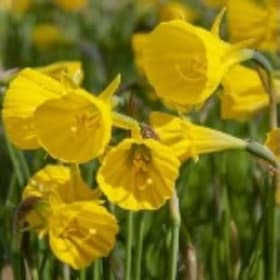
10 bulbs Narcissus bulbocodium produces many flowers that are a deep golden-yellow. The deep cups surrounding the pistil bear an uncanny resemblance to bells. This class of Narcissus is Bulbocodium Daffodil Cultivars (Royal Horticultural Society Division 10), a slightly taller, multi-flowering version of the original Yellow Hoop Petticoat.
● HEIGHT: 6" to 8"
● BULB SIZE: 7 cm/up
● PLANTING DEPTH & SPACING: 4" deep and 3" to 4" apart.
● SUN & SOIL REQUIREMENTS: Narcissuses prefer 6 hours of full sun every day and like well-draining soil with a slightly acidic to neutral pH (6.0 to 7.0 range). After the first hard frost, apply a 2" layer of mulch, like straw, shredded wood, or dried leaves to prevent premature sprouting.
● FLOWERING Zone 7: April
● PESTS & DISEASE: Generally resistant to deer, rabbits, and rodents, but are susceptible to Narcissus bulb fly, lesser bulb fly, bulb mites, and nematodes. They are generally disease resistant.
● POLLINATORS & PETS: Not a primary food source for most pollinators, but can be an early source of nectar and a warming platform for some bees. Warning: toxic to dogs and cats.
● NOTES: No space in your garden? No problem! Choose daffodil bulbs for donation and we’ll plant them through Habitat’s Community Clean-Up Program—bringing color and joy to local neighborhoods.


FB09 Daffodil - Narcissus Milena
$15
10 bulbs Narcissus milena produces a 3.5” wide, upward-facing, greenish-yellow perianth (outer part of the flower). The extravagant cup is packed with orange-yellow petaloid segments, with white flames spreading from the base. This Narcissus is a Jan de Winter hybrid. Double (Royal Horticultural Society Division 4).
● HEIGHT: 16”
● BULB SIZE: 10 to 12 cm
● PLANTING DEPTH & SPACING: 5” to 6" deep and 5” to 6" apart.
● SUN & SOIL REQUIREMENTS: Narcissuses prefer 6 hours of full sun every day and like well-draining soil with a slightly acidic to neutral pH (6.0 to 7.0 range). After the first hard frost, apply a 2" layer of mulch, like straw, shredded wood, or dried leaves to prevent premature sprouting.
● FLOWERING Zone 7: April/May
● PESTS & DISEASE: Generally resistant to deer, rabbits, and rodents, but are susceptible to Narcissus bulb fly, lesser bulb fly, bulb mites, and nematodes. They are generally disease resistant.
● POLLINATORS & PETS: Not a primary food source for most pollinators, but can be an early source of nectar and a warming platform for some bees. Warning: toxic to dogs and cats.
● NOTES: No space in your garden? No problem! Choose daffodil bulbs for donation and we’ll plant them through Habitat’s Community Clean-Up Program—bringing color and joy to local neighborhoods.

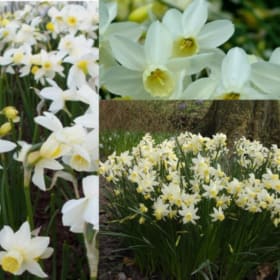
FB10 Daffodil - Narcissus Sailboat
$15
10 bulbs Narcissus sailboat bears up to six 2.5" windswept ivory flowers per stem, each with funnel-shaped yellow cups that mature to white. This variety is a William Pannill award-winner. Jonquilla (Royal Horticultural Society Division 7).
● HEIGHT: 10" to 12"
● BULB SIZE: 12 to 14 cm
● PLANTING DEPTH & SPACING: 5” to 6" deep and 5” to 6" apart.
● SUN & SOIL REQUIREMENTS: Narcissuses prefer 6 hours of full sun every day and like well-draining soil with a slightly acidic to neutral pH (6.0 to 7.0 range). After the first hard frost, apply a 2" layer of mulch, like straw, shredded wood, or dried leaves to prevent premature sprouting.
● FLOWERING Zone 7: May
● PESTS & DISEASE: Generally resistant to deer, rabbits, and rodents, but are susceptible to Narcissus bulb fly, lesser bulb fly, bulb mites, and nematodes. They are generally disease resistant.
● POLLINATORS & PETS: Not a primary food source for most pollinators, but can be an early source of nectar and a warming platform for some bees. Warning: toxic to dogs and cats.
● NOTES: No space in your garden? No problem! Choose daffodil bulbs for donation and we’ll plant them through Habitat’s Community Clean-Up Program—bringing color and joy to local neighborhoods.


FB11 Daffodil - Narcissus Starlight Sensation
$15
10 bulbs Narcissus Starlight Sensation produces up to four stems per bulb. Each stem has up to four creamy-white flowers. This variety is a Brent Heath hybrid. Triandrus (Royal Horticultural Society Division 5).
● HEIGHT: 14" to 16"
● BULB SIZE: 12 to 14 cm
● PLANTING DEPTH & SPACING: 5” to 6" deep and 5” to 6" apart.
● SUN & SOIL REQUIREMENTS: Narcissuses prefer 6 hours of full sun every day and like well-draining soil with a slightly acidic to neutral pH (6.0 to 7.0 range). After the first hard frost, apply a 2" layer of mulch, like straw, shredded wood, or dried leaves to prevent premature sprouting.
● FLOWERING Zone 7: April/May
● PESTS & DISEASE: Generally resistant to deer, rabbits, and rodents, but are susceptible to Narcissus bulb fly, lesser bulb fly, bulb mites, and nematodes. They are generally disease resistant.
● POLLINATORS & PETS: Not a primary food source for most pollinators, but can be an early source of nectar and a warming platform for some bees. Warning: toxic to dogs and cats.
● NOTES: No space in your garden? No problem! Choose daffodil bulbs for donation and we’ll plant them through Habitat’s Community Clean-Up Program—bringing color and joy to local neighborhoods.


FB12 Geranium Tuberosum
$10
5 bulbs Geranium tuberosum is an attractive, sculpted, fern-like foliage. It produces one or two slender stalks, topped with two leaves split into multiple wiry stems with loosely clustered, buttercup-shaped, rose-violet flowers etched with deep purple veins. Each beautiful flower has five lobed petals that look like hearts from which ten purple anthers emerge.
● HEIGHT: 8"
● BULB SIZE: 5cm/up
● PLANTING DEPTH & SPACING: 4" deep (no deeper!) and 4" apart. Plant nine bulbs per square foot for dense covering and Spring ground cover.
● SUN & SOIL REQUIREMENTS: Geraniums like 4-6 hours of direct sunlight daily for optimal growth and flowering, as prolonged periods of shade may reduce its vigor and the number of blooms. They prefer well-draining soil that is a bit humus-rich, at a neutral pH (range 6.0 to 7.0).
● FLOWERING Zone 7: April/May
● PESTS & DISEASE: Incredibly tough, they are deer, rabbit, and rodent resistant, but can be affected by various pests, including aphids, spider mites, whiteflies, and caterpillars. They are very disease resistant.
● POLLINATORS & PETS: Geraniums are pollinated by a variety of insects, primarily bees and flies. Warning: toxic to dogs and cats.


FB13 Gladiolus Byzantinus “Jacob's Ladder” or “Sword Lily”
$10
10 bulbs Gladiolus byzantinus is a hardy heirloom of dense spires with glowing, purple-red flowers. The interiors of the flowers are white-striped, sitting above low growing, sword-like foliage.
● HEIGHT: 16" to 24"
● BULB SIZE: 6 cm/up
● PLANTING DEPTH & SPACING: 6" deep and 6" apart.
● SUN & SOIL REQUIREMENTS: Gladiolus like 6-8 hours of direct sunlight daily, and should be planted in well-drained, fertile soil with a slightly acidic to neutral pH range (6.0-7.0).
● FLOWERING Zone 7: May/June
● PESTS & DISEASE: Generally considered rabbit, rodent, and deer resistant, but they are susceptible to thrips. They are also generally considered disease resistant, known for their hardiness and resilience to many common gladiolus problems.
● POLLINATORS & PETS: Pollinated by bees and butterflies, and is also attractive to hummingbirds. Warning: toxic to dogs, cats, and horses.
FB14 Hyacinthus orientalis “Aiolos”
$10
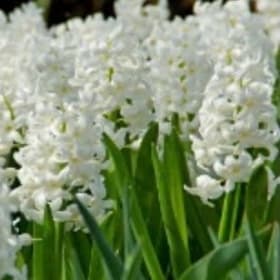
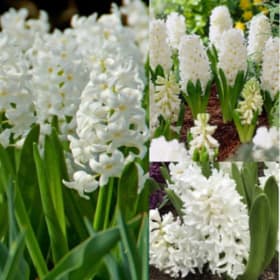
5 bulbs Hyacinthus orientalis “Aiolos” produces ivory-white florets, or nails, with cream highlights. These florets gradually mature to a bright white color. This plant is a cross of Delft Blue and Carnegie Hyacinths.
● HEIGHT: 8" to 12"
● BULB SIZE: 16 to 17 cm
● PLANTING DEPTH & SPACING: Plant 6" deep and 6" apart.
● SUN & SOIL REQUIREMENTS: Hyacinths like 6 hours of direct sunlight per day for optimal bloom size and stem straightness. However, they can still bloom successfully in areas with light shade or partial sun exposure. They should be planted in well-drained soil with a slightly acidic to neutral pH range (6.0-7.0).
● FLOWERING Zone 7: March/April
● PESTS & DISEASE: Hyacinths are semi-resistant to deer and generally resistant to rabbits, but rodents may dig up and eat the bulbs. They can also be susceptible to common garden pests like aphids, spider mites, and bulb flies. They are relatively disease resistant, but can be susceptible to certain fungal and bacterial issues, particularly if not planted in well-draining soil.
● POLLINATORS & PETS: Hyacinths attract various pollinators, including bees and butterflies. Warning: toxic to dogs, cats, and horses.

FB15 Hyacinthus orientalis “Delft Blue”
$10
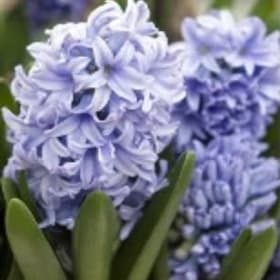
5 bulbs Hyacinthus orientalis “Delft Blue” has soft lilac-blue florets, or nails, with paler edges.
● HEIGHT: 8" to 12"
● BULB SIZE: 16/17 cm
● PLANTING DEPTH & SPACING: Plant 6" deep and 6" apart.
● SUN & SOIL REQUIREMENTS: Hyacinths like 6 hours of direct sunlight per day for optimal bloom size and stem straightness. However, they can still bloom successfully in areas with light shade or partial sun exposure. They should be planted in well-drained soil with a slightly acidic to neutral pH range (6.0-7.0).
● FLOWERING Zone 7: March/April
● PESTS & DISEASE: Hyacinths are semi-resistant to deer and generally resistant to rabbits, but rodents may dig up and eat the bulbs. They can also be susceptible to common garden pests like aphids, spider mites, and bulb flies. They are relatively disease resistant, but can be susceptible to certain fungal and bacterial issues, particularly if not planted in well-draining soil.
POLLINATORS & PETS: Hyacinths attract various pollinators, including bees and butterflies. Warning: toxic to dogs, cats, and horses.


FB16 Hyacinth Bedding Mixture
$18
10 bulbs This Hyacinth Bedding Mixture includes five varieties of Hyacinth orientalis (Aiolos, Blue Jacket, Delft Blue, Fondant, Pink Pearl and White Pearl), producing vibrant blue, pink and white flowers. This mixture is a less expensive option than buying multiple packs of single color flowers. Please be aware that the variety of plant colors may vary from pictures and descriptions.
● HEIGHT: 8" to 12"
● BULB SIZE: 15 to 16 cm
● PLANTING DEPTH & SPACING: 6" deep and 6" apart.
● SUN & SOIL REQUIREMENTS: Hyacinths like 6 hours of direct sunlight per day for optimal bloom size and stem straightness. However, they can still bloom successfully in areas with light shade or partial sun exposure. They should be planted in well-drained soil with a slightly acidic to neutral pH range (6.0-7.0).
● FLOWERING Zone 7: March/April
● PESTS & DISEASE: Hyacinths are semi-resistant to deer and generally resistant to rabbits, but rodents may dig up and eat the bulbs. They can also be susceptible to common garden pests like aphids, spider mites, and bulb flies. They are relatively disease resistant, but can be susceptible to certain fungal and bacterial issues, particularly if not planted in well-draining soil.
● POLLINATORS & PETS: Hyacinths attract various pollinators, including bees and butterflies. Warning: toxic to dogs, cats, and horses.


FB17 Dutch Iris Alaska
$10
10 bulbs Iris hollandica “Alaska” produces a glistening white flower with ever-so-delicate yellow blotches on its falls. The outer petals open downward to reveal a contrasting color on the petals' spines. These magnificent varieties are characterized by glorious ephemeral colors, larger flowers, and often the growth of a second flowering stem.
● HEIGHT: 18" to 22"
● BULB SIZE: 6 cm
● PLANTING DEPTH & SPACING: 6” deep and 6” apart. Recommended to plant 9 Bulbs per square foot.
● SUN & SOIL REQUIREMENTS: Irises like at least 6 hours of direct sunlight daily. They should be placed in free-draining soil with a neutral pH (6.0 to 7.0 range), but can also tolerate soils with high clay content.
● FLOWERING Zone 7: June
● PESTS & DISEASE: Generally deer, rabbit, and rodent resistant. They are also resistant to most diseases and can tolerate periods of drought.
● POLLINATORS & PETS: They attract a variety of pollinators to the garden. Warning: toxic to dogs, cats, and horses.
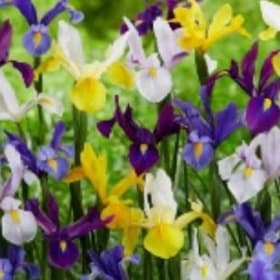

FB18 Dutch Iris Rainbow Mixture “Iris hollandica”
$10
10 bulbs This stunning mixture includes purple, lavender, blue, yellow and white iris varieties. The outer petals open downward to reveal a contrasting color on the petals' spines. These magnificent varieties are characterized by glorious ephemeral colors, larger flowers, and often the growth of a second flowering stem. This mixture is a less expensive option than buying multiple packs of single color flowers. Please be aware that the variety of plant colors may vary from pictures and descriptions.
● HEIGHT: 18" to 22"
● BULB SIZE: 8 cm/up
● PLANTING DEPTH & SPACING: 6" deep and 6" apart
● SUN & SOIL REQUIREMENTS: Irises like at least 6 hours of direct sunlight daily. They should be placed in free-draining soil with a neutral pH (6.0 to 7.0 range), but can also tolerate soils with high clay content.
● FLOWERING Zone 7: May/June
● PESTS & DISEASE: Generally deer, rabbit, and rodent resistant. They are also resistant to most diseases and can tolerate periods of drought.
● POLLINATORS & PETS: They attract a variety of pollinators to the garden. Warning: toxic to dogs, cats, and horses.

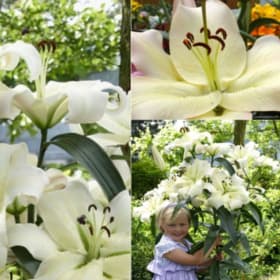
FB19 Orienpet Lily “Pretty Woman”
$18
3 bulbs “Pretty Woman” lilies produce towering, huge flowers that open pale-yellow with soft pink petal edges. The flowers mature to ivory-white and finally bright white, with green nectary furrows. They have slightly recurved petals, elongated anther-tipped stamens, and a subtle, fruity fragrance.
● HEIGHT: 4' to 5'
● BULB SIZE: 14 to 16 cm
● PLANTING DEPTH & SPACING: 10" to 12" apart and 6" to 8" deep. Recommended to plant 4 bulbs per square foot. After the first hard frost, apply a 2" layer of mulch, like straw, shredded wood, or dried leaves to prevent premature sprouting.
● SUN & SOIL REQUIREMENTS: Lilies like 6 or more hours of full sun daily. However, they need to keep their roots cool so plant them with low-growing annuals, perennials, or grasses. They are drought resistant and prefer well-draining soil with a slightly acidic to neutral pH range of 6.0 to 6.8.
● FLOWERING Zone 7: July/August
● PESTS & DISEASE: Somewhat deer resistant, but are susceptible to rabbits, rodents, and lily beetles. Very resistant to diseases.
● POLLINATORS & PETS: They attract a variety of pollinators, with hummingbirds, bees, and butterflies being particularly fond of their blooms. Warning: toxic to dogs and very toxic to cats.

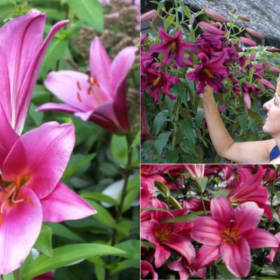
FB20 Orienpet Lily “Purple Prince”
$18
3 bulbs “Purple Prince” lilies produce regal maroon-purple flowers with a pink flush and lime-green nectary furrows. Their huge, waxy flowers have slightly recurved petals, elongated anther-tipped stamens, and a subtle, fruity fragrance.
● HEIGHT: 4' to 6’ on average, but can reach 8’
● BULB SIZE: 14 to 16 cm
● PLANTING DEPTH & SPACING: 10" to 12" apart and 6" deep. Recommended to plant 4 bulbs per square foot. After the first hard frost, apply a 2" layer of mulch, like straw, shredded wood, or dried leaves to prevent premature sprouting. Good for naturalizing.
● SUN & SOIL REQUIREMENTS: Lilies like 6 or more hours of full sun daily. However, they need to keep their roots cool so plant them with low-growing annuals, perennials, or grasses. They are drought resistant and prefer well-draining soil with a slightly acidic to neutral pH range of 6.0 to 6.8.
● FLOWERING Zone 7: July/August
● PESTS & DISEASE: Somewhat deer resistant, but are susceptible to rabbits, rodents, and lily beetles. Very resistant to diseases.
● POLLINATORS & PETS: They attract a variety of pollinators, with hummingbirds, bees, and butterflies being particularly fond of their blooms. Warning: toxic to dogs and very toxic to cats.
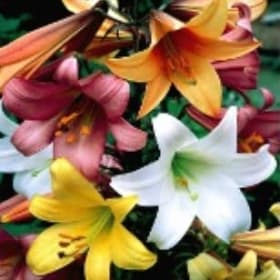
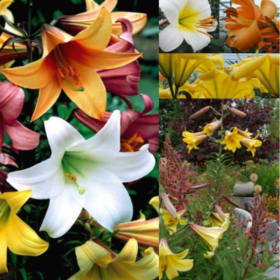
FB21 Chinese Trumpet Lily Mixture
$18
3 bulbs This Chinese Trumpet lily mix includes Beijing Moon, Eastern Moon and Passion Moon varieties. The flowers range in a sherbet-like mélange of colors including dark pink, orange, yellow and ivory. This mixture is a less expensive option than buying multiple packs of single color flowers. Please be aware that the variety of plant colors may vary from pictures and descriptions.
● HEIGHT: 4' to 6’ on average, but can reach 8’
● BULB SIZE: 18 to 20 cm
● PLANTING DEPTH & SPACING: 12" apart and 6" deep. Recommended to plant 4 bulbs per square foot. After the first hard frost, apply a 2" layer of mulch, like straw, shredded wood, or dried leaves to prevent premature sprouting. Good for naturalizing.
● SUN & SOIL REQUIREMENTS: Lilies like 6 or more hours of full sun daily. However, they need to keep their roots cool so plant them with low-growing annuals, perennials, or grasses. They are drought resistant and prefer well-draining soil with a slightly acidic to neutral pH range of 6.0 to 6.8.
● FLOWERING Zone 7: July/August
● PESTS & DISEASE: Somewhat deer resistant, but are susceptible to rabbits, rodents, and lily beetles. Very resistant to diseases.
POLLINATORS & PETS: Chinese Trumpet lilies are primarily pollinated by moths, particularly hawkmoths. Warning: toxic to dogs and very toxic to cats.
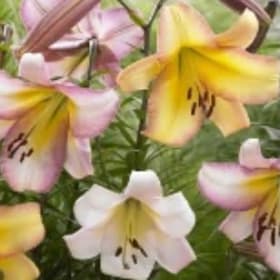
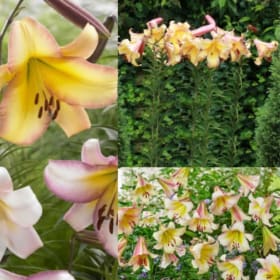
FB22 Orienpet Lily Moon Mixture
$18
3 bulbs This mix of Orienpet lilies includes Beijing Moon, Eastern Moon and Passion Moon varieties. The flowers range in a sherbet-like mélange of colors including pink, yellow and ivory. This mixture is a less expensive option than buying multiple packs of single color flowers. Please be aware that the variety of plant colors may vary from pictures and descriptions.
● HEIGHT: 4' to 6’ on average, but can reach 8’
● BULB SIZE: 14 to 16 cm
● PLANTING DEPTH & SPACING: 12" apart and 6" deep. Recommended to plant 4 bulbs per square foot. After the first hard frost, apply a 2" layer of mulch, like straw, shredded wood, or dried leaves to prevent premature sprouting.
● SUN & SOIL REQUIREMENTS: Lilies like 6 or more hours of full sun daily. However, they need to keep their roots cool so plant them with low-growing annuals, perennials, or grasses. They are drought resistant and prefer well-draining soil with a slightly acidic to neutral pH range of 6.0 to 6.8.
● FLOWERING Zone 7: July/August
● PESTS & DISEASE: Somewhat deer resistant, but are susceptible to rabbits, rodents, and lily beetles. Very resistant to diseases.
POLLINATORS & PETS: They attract a variety of pollinators, with hummingbirds, bees, and butterflies being particularly fond of their blooms. Warning: toxic to dogs and very toxic to cats.

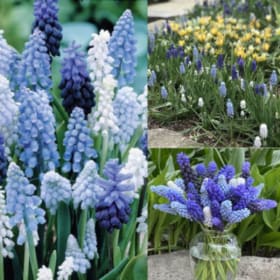
FB23 Magical Muscari Mixture “Grape Hyacinth”
$10
20 bulbs This mix of small “grape” hyacinths includes Muscari armeniacum, Muscari armeniacum “Siberian Tiger,” Muscari latifolium and Muscari Valerie Finnis. The flowers come in tones of periwinkle, sapphire, cerulean, pale wisteria and white, sprouting above ample foliage clumps. This mixture is a less expensive option than buying multiple packs of single color flowers. Please be aware that the variety of plant colors may vary from pictures and descriptions.
● HEIGHT: 4" to 12"
● BULB SIZE: 6 to 9 cm
● PLANTING DEPTH & SPACING: 5" deep and 3" to 4" apart.
● SUN & SOIL REQUIREMENTS: Grape hyacinths do well in both full sunlight and scattered or dappled sunlight. They prefer well-draining soil with a neutral to slightly acidic pH (6.0 to 7.0 range).
● FLOWERING Zone 7: May
● PESTS & DISEASE: Semi rabbit, deer, and rodent resistant. Generally disease resistant.
● POLLINATORS & PETS: Very attractive to bees and butterflies. Generally considered non-toxic to dogs and cats, but excessive ingestion can lead to mild gastrointestinal upset in pets.
NOTES: It is common for Muscari to grow foliage in the Fall. Ignore it and do not mulch until the ground surface freezes.
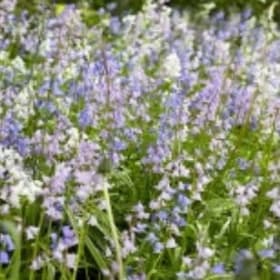

FB24 Hyacinthoides hispanica “Spanish Bluebells” Mixture
$10
10 bulbs Spanish Bluebells, also known as Wood Hyacinths, is a hybrid of about 60% Hyacinthoides hispanica “Excelsior” (blue), 20% Hyacinthoides hispanica “Queen of the Pinks,” and 20% Hyacinthoides hispanica “White City.” They have strappy, linear foliage and rigid upright stems topped with 15 to 20 pendant, bell-shaped flowers. This mixture is a less expensive option than buying multiple packs of single color flowers. Please be aware that the variety of plant colors may vary from pictures and descriptions.
● HEIGHT: 12" to 15"
● BULB SIZE: 8cm/up
● PLANTING DEPTH & SPACING: 4" deep and 4" apart.
● SUN & SOIL REQUIREMENTS: Spanish Bluebells thrive in partial shade or dappled sunlight, with 3-6 hours of sunlight daily. Morning sunlight is best to avoid leaf burn. They prefer moist soil that is slightly acidic to neutral pH (range of 6.0 to 7.0).
● FLOWERING Zone 7: May/June
● PESTS & DISEASE: Generally rabbit, deer and rodent resistant. Generally disease resistant.
POLLINATORS & PETS: Attractive to a variety of pollinators, including bees and butterflies. Warning: toxic to dogs and cats.


FB25 Delightful Tulip Mixture
$15
10 bulbs This Giant Darwin Hybrid Tulip mix is equal parts of Apricot Delight, Candy Apple Delight, Cherry Delight and Rosy Delight. The velvety cupped flowers come in shades of red and pink, creating an eye-popping extravaganza of delight. This mixture is a less expensive option than buying multiple packs of single color flowers. Please be aware that the variety of plant colors may vary from pictures and descriptions.
● HEIGHT: 18" to 22"
● BULB SIZE: 12cm/up
● PLANTING DEPTH & SPACING: 6" apart, and 6" to 8" deep. Recommended to plant 4 bulbs per square foot.
● SUN & SOIL REQUIREMENTS: Tulips thrive in dappled sun to partial shade, with about 6 hours of sun daily for optimal growth and blooming. They prefer well-drained, fertile soil that is loose and airy, allowing for good root development, with a slightly acidic to neutral pH (6.0-7.0).
● FLOWERING Zone 7: May/June
● PESTS & DISEASE: Not resistant to deer, rabbits, or rodents. They are susceptible to various diseases like Tulip fire (caused by Botrytis tulipae).
POLLINATORS & PETS: Some bees like them, but they have less nectar and pollen than other plants, making them less attractive to a variety of pollinators. Warning: toxic to cats and dogs.


FB26 Foxtrot Family Special
$15
10 bulbs This blend of Double Early Tulips Foxtrot and its sibling, Foxy Foxtrot, is one of the best. The flowers include both deep, old-rose with shimmering white highlights and variable green midveins, to citrus-yellow that matures to a rich marmalade-orange with honey-yellow and salmon-rose striations.
● HEIGHT: 12" to 14"
● BULB SIZE: 12cm/up
● PLANTING DEPTH & SPACING: 6" apart, and 6" to 8" deep. Recommended to plant 4 bulbs per square foot.
● SUN & SOIL REQUIREMENTS: Tulips thrive in dappled sun to partial shade, with about 6 hours of sun daily for optimal growth and blooming. They prefer well-drained, fertile soil that is loose and airy, allowing for good root development, with a slightly acidic to neutral pH (6.0-7.0).
● FLOWERING Zone 7: May/June
● PESTS & DISEASE: Not resistant to deer, rabbits, or rodents. They are susceptible to various diseases like Tulip fire (caused by Botrytis tulipae).
POLLINATORS & PETS: Some bees like them, but they have less nectar and pollen than other plants, making them less attractive to a variety of pollinators. Warning: toxic to cats and dogs.


FB27 Magic Carpet Tulip Mixture
$15
10 bulbs This tulip mix of Double Early Tulips creates richly-colored garden carpets that form a vibrant and fragrant combination. It includes Foxtrot, Foxy Foxtrot, Margarita, Marie Jo, Mondial, Monsella, Monte Orange, and Red Princess displaying a palette of colors including deep red, hot pink, golden yellow, fiery orange, and ivory white. This mixture is a less expensive option than buying multiple packs of single color flowers. Please be aware that the variety of plant colors may vary from pictures and descriptions.
● HEIGHT: 12" to 18"
● BULB SIZE: 12cm/up
● PLANTING DEPTH & SPACING: 6" apart, and 6" to 8" deep. Recommended to plant 4 bulbs per square foot.
● SUN & SOIL REQUIREMENTS:Tulips thrive in dappled sun to partial shade, with about 6 hours of sun daily for optimal growth and blooming. They prefer well-drained, fertile soil that is loose and airy, allowing for good root development, with a slightly acidic to neutral pH (6.0-7.0).
● FLOWERING Zone 7: May/June
● PESTS & DISEASE: Not resistant to deer, rabbits, or rodents. They are susceptible to various diseases like Tulip fire (caused by Botrytis tulipae).
● POLLINATORS & PETS: Some bees like them, but they have less nectar and pollen than other plants, making them less attractive to a variety of pollinators. Warning: toxic to cats and dogs.


FB28 Tulip Black Hero
$10
5 bulbs Black Hero tulips are lustrous midnight-black with a maroon sheen. Blooming later than most other tulips, these long-lasting flowers have extremely substantive flower petals. This tulip class is Peony Flowering (double late).
● HEIGHT: 22"
● BULB SIZE: 12cm/up
● PLANTING DEPTH & SPACING: 6" apart, and 6" to 8" deep. Recommended to plant 4 bulbs per square foot.
● SUN & SOIL REQUIREMENTS: Tulips thrive in dappled sun to partial shade, with about 6 hours of sun daily for optimal growth and blooming. They prefer well-drained, fertile soil that is loose and airy, allowing for good root development, with a slightly acidic to neutral pH (6.0-7.0).
● FLOWERING Zone 7: late June
● PESTS & DISEASE: Not resistant to deer, rabbits, or rodents. They are susceptible to various diseases like Tulip fire (caused by Botrytis tulipae).
POLLINATORS & PETS: Some bees like them, but they have less nectar and pollen than other plants, making them less attractive to a variety of pollinators. Warning: toxic to cats and dogs.
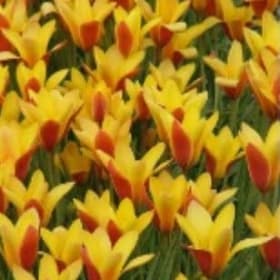

FB29 Tulipa clusiana Cynthia
$15
10 bulbs Tulipa clusiana “Cynthia” is early blooming and long-lasting. This bicolor tetraploid features elegantly pointed flowers of deep yellow and orangey-red.
● HEIGHT: 8” to 10"
● BULB SIZE: 5 to 6cm
● PLANTING DEPTH & SPACING: 6" apart, and 6" to 8" deep. Recommended to plant 4 bulbs per square foot.
● SUN & SOIL REQUIREMENTS: Tulips thrive in dappled sun to partial shade, with about 6 hours of sun daily for optimal growth and blooming. They prefer well-drained, fertile soil that is loose and airy, allowing for good root development, with a slightly acidic to neutral pH (6.0-7.0).
● FLOWERING Zone 7: April
● PESTS & DISEASE: Not resistant to deer, rabbits, or rodents. They are susceptible to various diseases like Tulip fire (caused by Botrytis tulipae).
● POLLINATORS & PETS: Some bees like them, but they have less nectar and pollen than other plants, making them less attractive to a variety of pollinators. Warning: toxic to cats and dogs.


FB30 Tulipa turkestanica
$15
10 bulbs Tulipa turkestanica is a naturalizing tetraploid that yields multiple star-shaped flowers. The ivory edges surrounding orange-yellow bases create a gentle, warm color.
● HEIGHT: 8"
● BULB SIZE: 5 to 6 cm
● PLANTING DEPTH & SPACING: 6" apart, and 6" to 8" deep. Recommended to plant 4 bulbs per square foot.
● SUN & SOIL REQUIREMENTS: Tulips thrive in dappled sun to partial shade, with about 6 hours of sun daily for optimal growth and blooming. They prefer well-drained, fertile soil that is loose and airy, allowing for good root development, with a slightly acidic to neutral pH (6.0-7.0).
● FLOWERING Zone 7: April
● PESTS & DISEASE: Not resistant to deer, rabbits, or rodents. They are susceptible to various diseases like Tulip fire (caused by Botrytis tulipae).
● POLLINATORS & PETS: Some bees like them, but they have less nectar and pollen than other plants, making them less attractive to a variety of pollinators. Warning: toxic to cats and dogs.
Did you know? We fundraise with Zeffy to ensure 100% of your purchase goes to our mission!