
Offered by
Cottrell Community Planning Organization
About this shop
Tree Sale Fundraiser hosted by Cottrell CPO

Dragon Lady Holly tree
$125
Dragon Lady Holly tree
(Current Size: 6' – 7’)
A beautiful and desirable landscape tree or shrub, known for its seasonal interest, form, or foliage. Excellent choice
for Pacific Northwest gardens. It features glossy, dark green, spiny leaves and bright red berries in fall and winter,
which attract wildlife. Thriving in full sun to partial shade and well-drained soil, it is low-maintenance and
adaptable to various soil types. Ideal for formal gardens, hedges, and privacy screens, it adds elegance and yearround
visual interest to any landscape.
Height: 10 to 20 feet Spread: 4 to 6 feet
Light preference: Full sun to partial shade Soil: Moist, well-drained; avoid soggy roots
Water:
- During establishment (first 1–2 years): Water deeply once or twice a week
- After establishment: Drought-tolerant to moderate watering depending on species
- Mulch annually to maintain soil moisture and reduce weed pressure
Uses:
Great for residential landscapes, borders, screening, ornamental display, or as a specimen plant.
Care Notes:
- Prune lightly if needed to maintain shape (late winter or early spring)
- Monitor for pests or root rot in poorly drained soils
- Fertilize in spring if growth appears slow

Bloodgood Japanese Maple
$100
Bloodgood Japanese Maple
(Current Sizes: 6-8' B&B)
A beautiful and desirable landscape tree or shrub, known for its seasonal interest, form, or foliage. Excellent choice for Pacific Northwest gardens.
Foliage: The hallmark of the Bloodgood Japanese Maple is its stunning deep reddish-purple leaves, which are non-dissected. These leaves retain their color throughout the summer and turn a brilliant crimson in the fall. Some variations in color, such as greener shades in hot or dry conditions, are possible.
Form: It typically grows into a small, rounded, deciduous tree, reaching about 15-20 feet tall and wide at maturity. Some may see them maintained at smaller sizes, around 10-12 feet, depending on desired landscape look.
Flowers and Fruit: Small, purplish-red flowers bloom in spring, followed by red samara fruits (often called "helicopters") that ripen in late summer to early fall.
Growth Rate: Bloodgood Japanese Maples are considered moderate to fast-growing, especially when young, adding about 1-2 feet of growth per year.
Hardiness: They thrive in USDA hardiness zones 5 through 8.
Light Requirements: They can tolerate a range of light conditions, from full sun to part shade. In warmer climates, afternoon shade is recommended to prevent leaf scorch.
- During establishment (first 1–2 years): Water deeply once or twice a week
- After establishment: Drought-tolerant to moderate watering depending on species
- Mulch annually to maintain soil moisture and reduce weed pressure
- Prune lightly if needed to maintain shape (late winter or early spring)
- Monitor for pests or root rot in poorly drained soils - Fertilize in spring if growth appears slow

Bloodgood Japanese Maples
$65
5-7' #5 container.
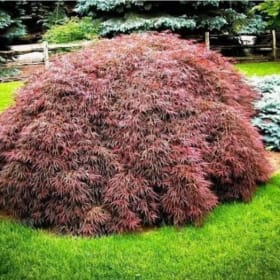
Tamukeyama Japanese Maple B&B
$150
Tamukeyama Japanese Maple (Current Size: 4') B&B
A beautiful and desirable landscape tree or shrub, known for its seasonal interest, form, or foliage. Excellent choice for Pacific Northwest gardens. The Tamukeyama Japanese Maple (Acer palmatum 'Tamukeyama') is a popular cultivar prized for its vibrant, deeply dissected red foliage and graceful, weeping form. It is a stunning and relatively low-maintenance tree that provides multi-seasonal interest with its vibrant foliage and graceful form.
Appearance:
Leaves: Finely dissected, lace-like leaves that emerge deep crimson-red in spring, transition to a dark purple-red in summer, and turn brilliant scarlet in the fall.
Form: Weeping, cascading habit, creating a mounding shape with arching branches.
Bark: Deep red bark that becomes more prominent in winter after leaf drop.
Growth & Size:
Mature Size: Reaches 6-8 feet tall and 8-12 feet wide.
Growth Rate: Considered a moderate grower.
Growing Conditions:
Hardiness Zones: Best suited for USDA hardiness zones 5-8.
Sunlight: Prefers full sun to partial shade, with some afternoon shade recommended in hotter climates to prevent leaf scorch.
Soil: Requires well-drained, slightly acidic soil.
Care:
Watering: Water regularly, especially during dry periods, ensuring the soil remains consistently moist but not waterlogged.
Fertilizing: Apply a balanced, slow-release fertilizer in early spring.
Pruning: Requires minimal pruning, but dead or crossing branches can be removed in late winter or early spring.
Landscape Use:
Excellent as a specimen or focal point in the landscape.
Well-suited for smaller gardens or containers due to its compact size.
Ideal for Japanese-style gardens or woodland settings.
Tamukeyama Japanese Maple
$100
Tamukeyama Japanese Maple (Current Size: 4') #10
A beautiful and desirable landscape tree or shrub, known for its seasonal interest, form, or foliage. Excellent choice for Pacific Northwest gardens. The Tamukeyama Japanese Maple (Acer palmatum 'Tamukeyama') is a popular cultivar prized for its vibrant, deeply dissected red foliage and graceful, weeping form. It is a stunning and relatively low-maintenance tree that provides multi-seasonal interest with its vibrant foliage and graceful form.
Appearance:
Leaves: Finely dissected, lace-like leaves that emerge deep crimson-red in spring, transition to a dark purple-red in summer, and turn brilliant scarlet in the fall.
Form: Weeping, cascading habit, creating a mounding shape with arching branches.
Bark: Deep red bark that becomes more prominent in winter after leaf drop.
Growth & Size:
Mature Size: Reaches 6-8 feet tall and 8-12 feet wide.
Growth Rate: Considered a moderate grower.
Growing Conditions:
Hardiness Zones: Best suited for USDA hardiness zones 5-8.
Sunlight: Prefers full sun to partial shade, with some afternoon shade recommended in hotter climates to prevent leaf scorch.
Soil: Requires well-drained, slightly acidic soil.
Care:
Watering: Water regularly, especially during dry periods, ensuring the soil remains consistently moist but not waterlogged.
Fertilizing: Apply a balanced, slow-release fertilizer in early spring.
Pruning: Requires minimal pruning, but dead or crossing branches can be removed in late winter or early spring.
Landscape Use:
Excellent as a specimen or focal point in the landscape.
Well-suited for smaller gardens or containers due to its compact size.
Ideal for Japanese-style gardens or woodland settings.

Tamukeyama Japanese maple
$40
Tamukeyama Japanese maple 3-5gal
(Current Size: 3-4')
Description:
A beautiful and desirable landscape tree or shrub, known for its seasonal interest, form, or foliage. Excellent choice for Pacific Northwest gardens.
Mature Size: [Height & width varies by species — to be filled in manually]
USDA Zone: 7–8 (Northwest Oregon & SW Washington)
Light: Full sun to partial shade
Soil: Moist, well-drained; avoid soggy roots
Water:
- During establishment (first 1–2 years): Water deeply once or twice a week
- After establishment: Drought-tolerant to moderate watering depending on species
- Mulch annually to maintain soil moisture and reduce weed pressure
Uses:
Great for residential landscapes, borders, screening, ornamental display, or as a specimen plant.
Care Notes:
- Prune lightly if needed to maintain shape (late winter or early spring)
- Monitor for pests or root rot in poorly drained soils
- Fertilize in spring if growth appears slow
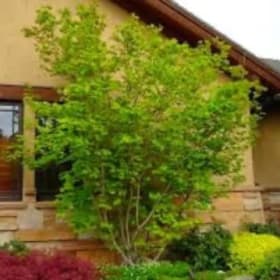
Vine Maple
$15
Vine Maple - 3 gal
(Current Size: 3')
Description:
A beautiful and desirable landscape tree or shrub, known for its seasonal interest, form, or foliage. Excellent choice for Pacific Northwest gardens.
Mature Size: [Height & width varies by species — to be filled in manually]
USDA Zone: 7–8 (Northwest Oregon & SW Washington)
Light: Full sun to partial shade
Soil: Moist, well-drained; avoid soggy roots
Water:
- During establishment (first 1–2 years): Water deeply once or twice a week
- After establishment: Drought-tolerant to moderate watering depending on species
- Mulch annually to maintain soil moisture and reduce weed pressure
Uses:
Great for residential landscapes, borders, screening, ornamental display, or as a specimen plant.
Care Notes:
- Prune lightly if needed to maintain shape (late winter or early spring)
- Monitor for pests or root rot in poorly drained soils
- Fertilize in spring if growth appears slow
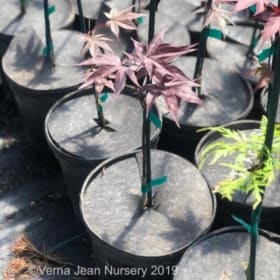

Variety local grafted Japanese Maples
$10
Variety local grafted Japanese Maples
(Current Size: 1gal)
Description:
A beautiful and desirable landscape tree or shrub, known for its seasonal interest, form, or foliage. Excellent choice for Pacific Northwest gardens.
Mature Size: [Height & width varies by species — to be filled in manually]
USDA Zone: 7–8 (Northwest Oregon & SW Washington)
Light: Full sun to partial shade
Soil: Moist, well-drained; avoid soggy roots
Water:
- During establishment (first 1–2 years): Water deeply once or twice a week
- After establishment: Drought-tolerant to moderate watering depending on species
- Mulch annually to maintain soil moisture and reduce weed pressure
Uses:
Great for residential landscapes, borders, screening, ornamental display, or as a specimen plant.
Care Notes:
- Prune lightly if needed to maintain shape (late winter or early spring)
- Monitor for pests or root rot in poorly drained soils
- Fertilize in spring if growth appears slow

Japanese Maple Inabe Shidare
$100
Japanese Maple Inabe Shidare #10
(Current Size: 4')
Description:
A beautiful and desirable landscape tree or shrub, known for its seasonal interest, form, or foliage. Excellent choice for Pacific Northwest gardens.
Mature Size: [Height & width varies by species — to be filled in manually]
USDA Zone: 7–8 (Northwest Oregon & SW Washington)
Light: Full sun to partial shade
Soil: Moist, well-drained; avoid soggy roots
Water:
- During establishment (first 1–2 years): Water deeply once or twice a week
- After establishment: Drought-tolerant to moderate watering depending on species
- Mulch annually to maintain soil moisture and reduce weed pressure
Uses:
Great for residential landscapes, borders, screening, ornamental display, or as a specimen plant.
Care Notes:
- Prune lightly if needed to maintain shape (late winter or early spring)
- Monitor for pests or root rot in poorly drained soils
- Fertilize in spring if growth appears slow
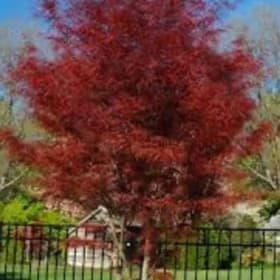
Hubb's Red Willow Japanese Maple
$125
Hubb's Red Willow Japanese Maple
(Current Size: 6-7') #10
Description:
A beautiful and desirable landscape tree or shrub, known for its seasonal interest, form, or foliage. Excellent choice for Pacific Northwest gardens.
Mature Size: [Height & width varies by species — to be filled in manually]
USDA Zone: 7–8 (Northwest Oregon & SW Washington)
Light: Full sun to partial shade
Soil: Moist, well-drained; avoid soggy roots
Water:
- During establishment (first 1–2 years): Water deeply once or twice a week
- After establishment: Drought-tolerant to moderate watering depending on species
- Mulch annually to maintain soil moisture and reduce weed pressure
Uses:
Great for residential landscapes, borders, screening, ornamental display, or as a specimen plant.
Care Notes:
- Prune lightly if needed to maintain shape (late winter or early spring)
- Monitor for pests or root rot in poorly drained soils
- Fertilize in spring if growth appears slow
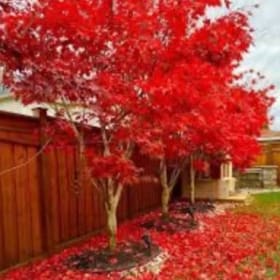
Fireglow Japanese Maple
$110
Fireglow Japanese Maple
(Current Size: 4-5') #10 container
Description:
A beautiful and desirable landscape tree or shrub, known for its seasonal interest, form, or foliage. Excellent choice for Pacific Northwest gardens.
Mature Size: [Height & width varies by species — to be filled in manually]
USDA Zone: 7–8 (Northwest Oregon & SW Washington)
Light: Full sun to partial shade
Soil: Moist, well-drained; avoid soggy roots
Water:
- During establishment (first 1–2 years): Water deeply once or twice a week
- After establishment: Drought-tolerant to moderate watering depending on species
- Mulch annually to maintain soil moisture and reduce weed pressure
Uses:
Great for residential landscapes, borders, screening, ornamental display, or as a specimen plant.
Care Notes:
- Prune lightly if needed to maintain shape (late winter or early spring)
- Monitor for pests or root rot in poorly drained soils
- Fertilize in spring if growth appears slow
'Viridis' Japanese maple
$65
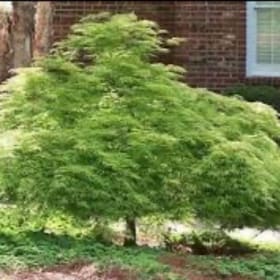
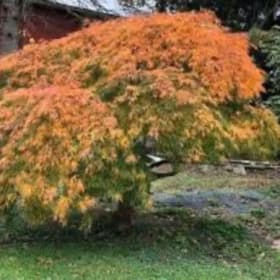
'Viridis' Japanese Laceleaf maple #5 4-5'. The 'Viridis' Japanese maple, also known as Acer palmatum dissectum 'Viridis', is a popular green lace leaf Japanese maple cultivar known for its beautiful, cascading branches and finely dissected foliage.
Key Characteristics:
Foliage: Bright, chartreuse green in spring, maturing to a rich green in the summer. The leaves are finely cut and have a delicate, thread-like appearance, giving the tree a frilly texture. In the fall, the foliage transforms into bright shades of yellow to orange, sometimes with crimson highlights. This outstanding fall color can be truly "traffic stopping".
Form: Weeping and cascading, forming a dome shape at maturity. Branches cascade down, sometimes reaching the ground.
Size: A small to medium-sized dwarf Japanese maple, typically reaching 4 to 6 feet tall and about as wide or wider within 10 years. Some sources indicate a mature height of 6-8 feet and a width of 6-8 feet. Very old trees can even reach up to 4 meters.
Growth Rate: Slow-growing, typically adding 4 to 6 inches of growth in a season.
Hardiness Zones: Hardy in USDA Zones 5a-9a.
Light Requirements: Prefers filtered sun, partial shade, or dappled sun. While it can tolerate full sun in cooler climates, it benefits from afternoon shade in hotter areas to prevent leaf scorch.
Soil and Water Needs: Requires moist, well-drained, slightly acidic soil. Consistency in watering is important, especially during the first growing season, but avoid waterlogged conditions.
Landscape Use: An excellent specimen tree, ideal for borders, water features, or Asian-inspired landscapes. Its weeping habit makes it suitable for slopes, raised beds, or near pathways. It's also well-suited for container gardening.
Other Features: Deer resistant, heat tolerant, insect resistant, and disease resistant. Pruning is best done in late winter or early spring.
In summary, the 'Viridis' Japanese maple is a stunning and versatile tree that offers beautiful foliage and a graceful form throughout the year. Its slow growth and adaptability make it a popular choice for many gardens.
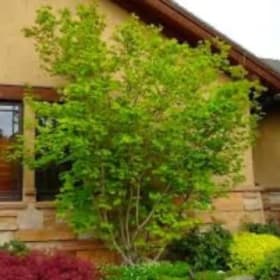
Green Vine Maple
$15
Vine maple
(Current Size: 5') #3
Description:
A beautiful and desirable landscape tree or shrub, known for its seasonal interest, form, or foliage. Excellent choice for Pacific Northwest gardens.
Mature Size: [Height & width varies by species — to be filled in manually]
USDA Zone: 7–8 (Northwest Oregon & SW Washington)
Light: Full sun to partial shade
Soil: Moist, well-drained; avoid soggy roots
Water:
- During establishment (first 1–2 years): Water deeply once or twice a week
- After establishment: Drought-tolerant to moderate watering depending on species
- Mulch annually to maintain soil moisture and reduce weed pressure
Uses:
Great for residential landscapes, borders, screening, ornamental display, or as a specimen plant.
Care Notes:
- Prune lightly if needed to maintain shape (late winter or early spring)
- Monitor for pests or root rot in poorly drained soils
- Fertilize in spring if growth appears slow
Green Vine Maple (Copy)
$25
Vine maple
(Current Size: 2-4'') #5 g
Description:
A beautiful and desirable landscape tree or shrub, known for its seasonal interest, form, or foliage. Excellent choice for Pacific Northwest gardens.
Mature Size: [Height & width varies by species — to be filled in manually]
USDA Zone: 7–8 (Northwest Oregon & SW Washington)
Light: Full sun to partial shade
Soil: Moist, well-drained; avoid soggy roots
Water:
- During establishment (first 1–2 years): Water deeply once or twice a week
- After establishment: Drought-tolerant to moderate watering depending on species
- Mulch annually to maintain soil moisture and reduce weed pressure
Uses:
Great for residential landscapes, borders, screening, ornamental display, or as a specimen plant.
Care Notes:
- Prune lightly if needed to maintain shape (late winter or early spring)
- Monitor for pests or root rot in poorly drained soils
- Fertilize in spring if growth appears slow
Green Vine Maple (Copy) (Copy)
$40
Vine maple
(Current Size: 7'') #5 g
Description:
A beautiful and desirable landscape tree or shrub, known for its seasonal interest, form, or foliage. Excellent choice for Pacific Northwest gardens.
Mature Size: [Height & width varies by species — to be filled in manually]
USDA Zone: 7–8 (Northwest Oregon & SW Washington)
Light: Full sun to partial shade
Soil: Moist, well-drained; avoid soggy roots
Water:
- During establishment (first 1–2 years): Water deeply once or twice a week
- After establishment: Drought-tolerant to moderate watering depending on species
- Mulch annually to maintain soil moisture and reduce weed pressure
Uses:
Great for residential landscapes, borders, screening, ornamental display, or as a specimen plant.
Care Notes:
- Prune lightly if needed to maintain shape (late winter or early spring)
- Monitor for pests or root rot in poorly drained soils
- Fertilize in spring if growth appears slow
Paperbark Maple
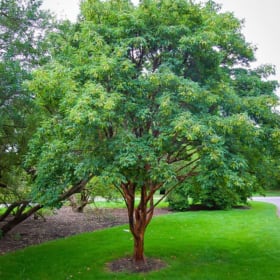
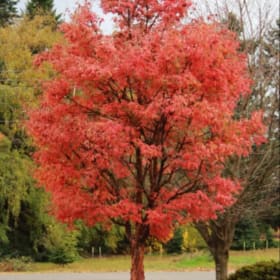
$200
The Paperbark Maple, scientifically known as Acer griseum, is a small, deciduous tree prized for its ornamental value, particularly its striking bark and fall color.
Key Characteristics:
Bark: The most distinctive feature is its exfoliating bark, which peels away in thin, papery layers, revealing a cinnamon-brown or reddish-brown new bark underneath. This creates year-round visual interest. The bark remains attached to the tree rather than falling to the ground.
Size: It is a small to medium-sized tree, typically reaching 20-30 feet tall and 15-25 feet wide at maturity.
Leaves: It has compound, trifoliate leaves (three leaflets) that are dark green above and frosty blue-green or gray-green underneath. The leaves turn beautiful shades of orange and red in the fall, often persisting on the tree into winter.
Flowers: The flowers are yellowish and bloom in early spring, but they are generally inconspicuous.
Growth Habit: It has an oval to oval-rounded crown with slender, upright branching. It is a slow-growing tree.
Hardiness: It is hardy in USDA zones 4-8.
Native Area: It is native to central China.
Cultivation and Care:
Light: Paperbark maples thrive in full sun to partial shade.
Soil: They prefer moist, well-drained soil, but they can tolerate a variety of soil types, including clay. Slightly acidic soil is ideal.
Watering: Keep the soil consistently moist, especially during the first few growing seasons. Mature trees are more drought-tolerant, but they may need watering during hot, dry periods.
Pruning: Little pruning is required, mainly to remove dead, diseased, or damaged branches. Pruning is best done in late fall or early winter when the tree is dormant.
Propagation: Propagation is challenging due to the low viability of seeds and the difficulty of rooting cuttings. Grafting or air layering are sometimes used.
Problems: Generally, paperbark maples are relatively pest and disease-free. However, they can occasionally be affected by issues like root rot if the soil is consistently soggy.
Uses and Ornamental Value:
Specimen Tree: The paperbark maple is an excellent choice as a specimen or accent tree in small gardens, near patios, or in townhouse gardens due to its smaller size and attractive features.
Shade Tree: Its lush foliage provides moderate shade.
Urban Landscapes: It has a good tolerance for air pollution, making it suitable for urban environments.
Pollinator Support: The early spring blossoms provide nectar for pollinators.
Bonsai: It is a popular subject for bonsai.
Winter Interest: The cinnamon-colored, exfoliating bark provides significant visual interest in the winter landscape.
Armstrong Maple
$80
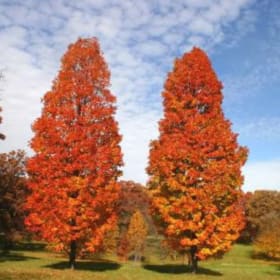
Armstrong Maple (Current Size: 8’ - 10' in containers)
The Armstrong Maple, or Acer rubrum 'Armstrong', is a cultivar of red maple known for its narrow, upright growth, making it suitable for smaller spaces. It's a fast-growing tree with attractive red-orange fall foliage.
Growth Habit:
Armstrong Maple grows tall and narrow, making it ideal for vertical accents in landscapes or areas where a wider-spreading tree wouldn't fit.
Fall Foliage:
The tree is prized for its vibrant red-orange fall colors.
Maintenance:
It's generally considered low-maintenance and fast-growing.
Soil Tolerance:
The Armstrong Maple can tolerate a variety of soil conditions, including wet and clay soils.
Uses:
The Armstrong Maple is well-suited for planting along property lines, in narrow planting strips, or as a single specimen tree.
Other Considerations:
Some reports suggest it might broaden with age, so it's important to consider this when selecting a planting location.
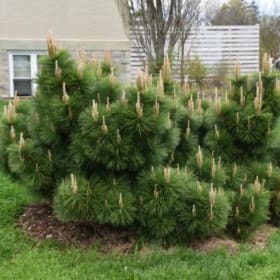
Thunder Head Pine
$100
Thunderhead Pine (Current Size: 4-5' in containers )
A beautiful and desirable landscape tree or shrub, known for its seasonal interest, form, or foliage. Excellent choice for Pacific Northwest gardens. Great for residential landscapes, borders, screening, ornamental display, or as a specimen plant. A full-grown Thunderhead Pine is a beautiful, character-filled evergreen known for its dense foliage, unique shape, and silvery-white candles. While it is naturally slow-growing, its size can be managed with pruning if desired. It is a versatile plant suitable for a variety of landscape uses and thrives in full sun and well-drained soil. Slow growth rate.
Mature Size:
Height: 10 feet to 15 feet. Some sources say 5-10 feet or even 8-12 feet; Spread: 15 feet to 20 feet.
Key Characteristics:
Irregular, broadly pyramidal form: Resembles a "thunderhead" cloud, adding character to the landscape.
Dense, dark green needles: Provide year-round beauty.
Silvery-white candles: New growth appears in late winter and early spring at the ends of branches, creating a striking contrast.
Cones: Up to 3 inches long, oval, and brown.
Pruning: Can be pruned or "candled" to control size and shape, or left in its natural form.
Tolerances: Drought-tolerant once established, salt-tolerant, tolerant of urban pollution.
Prefers well-drained soil: avoid soggy roots
Water: During establishment (first 1–2 years): Water deeply once or twice a week
- After establishment: Drought-tolerant to moderate watering depending on species
- Mulch annually to maintain soil moisture and reduce weed pressure
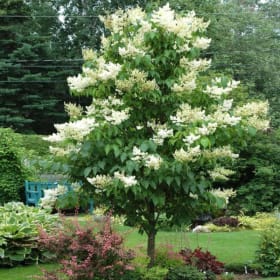
Ivory Silk Lilac Tree
$65
Ivory Silk Lilac Tree (Current Size: 8' - 10' in containers or bags)
The Ivory Silk Japanese Tree Lilac (Syringa reticulata 'Ivory Silk') is a popular and attractive flowering tree, widely used in landscapes for its beautiful blooms and relatively compact size. It offers a beautiful and fragrant addition to landscapes, providing late-season blooms and attractive foliage and bark.
Size: It's considered a small tree or large shrub, reaching a mature height of 20-30 feet and a width of 15-20 feet.
Flowers: The tree is known for its large, showy clusters of creamy white, fragrant flowers that bloom in late spring to early summer, typically in May or June, which is later than most other lilac varieties. The flower panicles can be quite large, reaching up to 12 inches long. Some find the fragrance to be a bit musky.
Appearance: The tree features dark green, ovate leaves that remain attractive throughout the summer. It also has attractive reddish-brown, exfoliating bark on younger branches that turns gray with age.
Hardiness: It is well-suited for a wide range of climates and thrives in USDA hardiness zones 3 to 7.
Care: The Ivory Silk Japanese Tree Lilac is relatively low-maintenance. It prefers full sun for the best bloom production and well-drained soil, but it's adaptable to various soil types, including clay and sandy loam, as long as there is good drainage.
Uses: It's a versatile choice for landscaping, whether as a specimen tree, along streets or driveways, in foundation plantings, or as a screen.
Pest and Disease Resistance: It shows good resistance to some common lilac pests and diseases, such as powdery mildew, scale insects, and lilac borers.

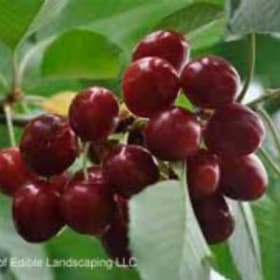
Sam Cherry Tree
$75
Sam Cherry Tree Prunus avium ‘SAM’ (Current Size: 8-10 in container')
The Sam Cherry Tree is a popular sweet cherry cultivar. It is a reliable and productive sweet cherry cultivar that yields delicious, crack-resistant fruit and is well-suited for a variety of landscapes within its hardiness zones.
Key Characteristics:
Fruit: Produces large, dark red, almost black, glossy cherries with firm, juicy flesh. The flavor is generally sweet with a slightly tart undertone. Sam cherries are also known for their crack resistance. They are versatile and can be enjoyed fresh, in baking, canning, or preserves.
Tree: The Sam Cherry Tree is a vigorous grower and can reach a mature height of 15-20 feet. However, it can be maintained at a more moderate height with consistent pruning. It blooms late in the season, which helps to avoid late spring frosts.
Pollination: The Sam Cherry Tree is not self-pollinating and requires a pollinator from a different sweet cherry variety to produce fruit. Recommended pollinators include Bing, Royal Ann, Lambert, Stella, or any other suitable sweet cherry variety.
Hardiness: The Sam Cherry Tree is hardy in USDA Zones 5-9.
Disease Resistance: It is reported to have good resistance to bacterial canker, a significant disease affecting sweet cherries.
Bearing Age: The tree can start bearing fruit within 2-3 years after planting, depending on growing conditions.
Yield: A mature tree can yield over 50 pounds of cherries.
Growing Conditions:
Sun: Prefers full sun exposure.
Soil: Thrives in well-drained, fertile soil. It has a preference for neutral to acidic loam soils.
Watering: Requires regular watering, especially during dry periods and while establishing.
Maintenance:
Pruning: Pruning should be done in late winter or early spring to maintain shape, improve air circulation, and promote fruit production. * Pests: To deter birds, cover the trees with netting or use flash tape.
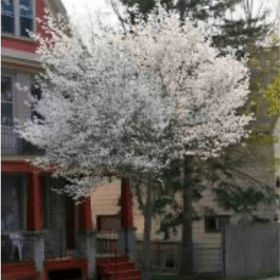
Princess Diana Serviceberry
$65
Princess Dianna Service Berry Tree (Current Size: apx 8' + in bags or containers)
The Princess Diana Serviceberry tree, also known as Amelanchier x grandiflora 'Princess Diana', is a beautiful deciduous tree prized for its multi-season interest. It is a versatile and attractive tree that offers a long season of beauty and valuable benefits for wildlife.
Key Features:
Spring: Clusters of delicate white flowers emerge before the leaves, providing a lovely display and early food source for pollinators like bees and butterflies. The flower buds are yellow.
Summer: Edible, bluish-purple berries resembling blueberries ripen and are a favorite of birds and humans alike. They can be eaten fresh or used in jams, jellies, and pies.
Fall: Dark green, oval leaves turn a vibrant red-orange, adding beautiful fall color to the landscape.
Winter: Smooth gray bark provides winter interest.
Growth Habit: This tree is typically multi-stemmed with a rounded form. It grows to about 15-20 feet tall and 12-15 feet wide. It is considered to have a moderate growth rate.
Landscape Uses: An excellent choice for small landscapes, as an accent tree, in shrub borders, or along woodland margins. Its non-invasive roots make it suitable for planting near pavements.
Wildlife Benefits: Attracts birds, bees, and butterflies, and serves as a host plant for certain butterfly species.
Care: Relatively low maintenance, prefers full sun to partial shade and average to moist, well-drained soil. Pruning is best done in late winter or early spring.
The berries are not particularly attractive to deer.
While generally non-toxic to pets, it's a good idea to monitor their interaction with the plant to prevent excessive berry consumption.
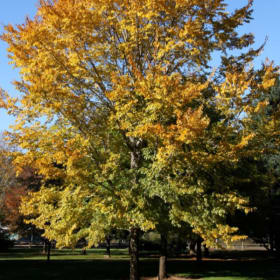
Triumph Elm
$65
Triumph Elm (Current Size: 10’ -12' in containers or bags)
The Triumph Elm is a popular choice for shade trees due to their attractive symmetrical canopy and vase-shaped growth habit. It's known for its disease resistance, fast growth, and ability to thrive in various urban conditions due to its tolerance of pollution and other stresses. It is a strong, symmetrical, and adaptable shade tree that offers significant benefits for homeowners and urban landscapes.
Growth Habit:
Grows upright and vase-shaped, with branches that arch somewhat as it matures. Typically reaches a height of 50-60 feet with a spread of 35-40 feet.
Foliage:
Features glossy, dark green leaves that turn yellow-orange in the fall.
Adaptability:
Tolerant of various soil conditions, including moist and dry, and can thrive in urban environments.
Fast Growth:
Known for rapid growth, making it a good choice for quickly establishing shade.
Maintenance:
Relatively low-maintenance, with occasional fertilizer applications as needed.
Benefits of Planting Triumph Elms:
Exceptional Shade:
Provides ample shade, helping to cool down yards and reduce energy consumption.
Aesthetic Appeal:
The symmetrical canopy and vase-shaped growth habit create a visually appealing tree.
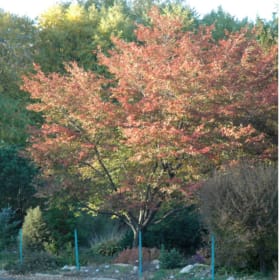

Robin Hill Service Berry Tree
$65
Robin Hill Service Berry tree (Current Size: 6’- 8' in containers or bags)
The Robin Hill Serviceberry (Amelanchier x grandiflora 'Robin Hill') is a charming deciduous tree known for its seasonal interest and wildlife appeal. Overall, the Robin Hill Serviceberry is a beautiful and adaptable tree that provides multi-season interest, making it a valuable addition to many landscapes.
Key Characteristics:
Size: Reaches a mature height of 20-25 feet and a spread of 15 feet. It has a rounded to oval shape.
Flowers: Features early-spring blooms that emerge from pale pink buds and open to showy white flowers. The flowers hang in clusters above the foliage and attract bees.
Fruit: Produces dark purple to blue berries in late spring to early summer. These edible berries are a favorite of birds and resemble blueberries.
Foliage: The oval leaves emerge a dark green and turn brilliant shades of orange and red in the fall.
Bark: Has smooth, gray bark that adds visual interest to the landscape.
Growth Rate: Grows at a moderate rate.
Hardiness: Hardy in USDA zones 4-8. Tolerates temperatures down to -30°F.
Light Requirements: Prefers full sun to partial shade.
Soil: Adapts to various soil types but prefers moist, well-drained soil. It is somewhat tolerant of urban pollution.
Maintenance: Relatively low-maintenance, best pruned in late winter.
Uses:
Accent Tree: Its size and ornamental features make it a good accent plant.
Shade Tree: Provides good summer shade.
Screening Tree: Can be used as a screen near decks or fences.
Wildlife Gardens: Attracts birds and pollinators.
Edible Landscaping: The berries can be consumed fresh or used in various recipes.
Disease Resistance:
Shows high resistance to leaf spot.
Has low resistance to powdery mildew.
Most cultivars are resistant to common diseases like fireblight, leaf spot, and rust.
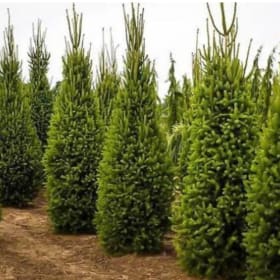

Columnar Norway Spruce
$30
Columnar Norway Spruce (Pyramid shape, current Size: 30-36" in 3 gal containers)
The Columnar Norway Spruce, also known as Picea abies 'Cupressina', is a popular evergreen tree known for its elegant, narrow, upright growth habit, an ideal choice for landscapes with limited space, such as narrow borders, driveways, or as a vertical accent. It is a beautiful, low-maintenance evergreen tree that is well-suited for a variety of landscape uses due to its narrow form and adaptability.
Appearance: Features dense, dark green needles and a sleek, narrow form with branching to the ground. This gives it a formal and elegant appearance. Its tight form helps it withstand wind and snow loads.
Size: Typically reaches a mature height of 25-30 feet, with a spread of 5-10 feet. Some sources indicate it can grow up to 30 ft. tall with age.
Growth Rate: Generally considered a fast-growing tree, with a growth rate of 8-10 inches per year.
Light and Soil: Prefers full sun (at least 6 hours per day). It thrives in average to evenly moist, well-drained soil, but is adaptable to various soil conditions. Avoid wet or poorly drained sites.
Maintenance: Relatively low-maintenance, requiring minimal pruning. If pruning is necessary, only trim back the new growth of the current season.
Disease Resistance: Known for its disease and pest resistance.
Deer Resistance: Deer-resistant.
Landscape Uses: Excellent for privacy screens, windbreaks, hedges, or as a vertical accent in formal gardens. It is a good alternative to Arborvitae in areas prone to snow or wind damage.

Frank's Columnar Austrian Pine
$75
Frank's Columnar Austrian Pine (Current Size: apx 4’ B&B)
Frank's Columnar Austrian Pine (Pinus nigra 'Frank') is a cultivated variety of the Austrian Pine tree, known for its distinct, upright, and narrow columnar growth habit. This evergreen coniferous tree is valued for its landscape applications, especially where a strong vertical element is desired. Its unique shape makes it an excellent focal point in a garden or landscape.
Appearance:
Foliage: Rich, dark green needles that stay green throughout the winter.
Form: A dense, tight, and narrow column shape.
Size: Generally matures to 8-12 feet tall and 2-4 feet wide, depending on growing conditions and pruning.
Candles: Produces creamy white, vertical "candles" (new shoots) in the spring, which can be trimmed to encourage denser growth.
Growing Conditions & Care:
Sunlight: Requires full sun exposure (at least 6-8 hours of direct sunlight daily).
Soil: Prefers well-drained soil and is adaptable to various soil types, including clay, loam, sandy, and silty.
Moisture: Drought-tolerant once established but prefers well-drained, average moisture levels.
Hardiness Zone: Typically hardy in USDA Zones 4-7 or 4-8. Note that while it's cold hardy, it may not be ideal for hot and humid climates.
Maintenance: Low maintenance, generally requiring minimal pruning. "Candle pruning" can be done in the spring to control the shape.
Tolerances: Deer resistant and salt spray tolerant.
Hedge or screen: Can be planted in groups to create a narrow hedge or privacy screen.
Foundation planting: Suitable for planting near homes and other structures.
Other applications: Can be used in rock gardens, conifer gardens, and as a vertical accent in any garden design.
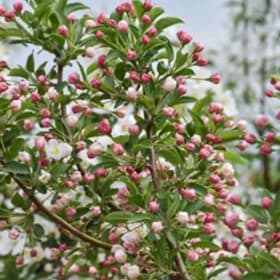

Firebird Flowering Crabapple
$65
Firebird Flowering Crabapple Current Size: 5-6' in container or bag
The 'Firebird' Flowering Crabapple (Malus 'Firebird') is a popular ornamental tree known for its beautiful blooms, persistent fruit, and compact size. It is a beautiful and relatively low-maintenance tree that offers multi-seasonal interest with its fragrant blooms, persistent fruit, and attractive form.
Appearance and Features:
Blooms: 'Firebird' delights with fragrant white flowers in mid-spring, opening from distinctive red or rose-colored buds.
Fruit: It produces showy red pomes (small apple-like fruits) in abundance from early to mid-fall. These fruits are particularly notable for their persistence, remaining on the branches throughout the winter.
Foliage: The leaves are dark green and deciduous, turning yellow in the fall.
Form: It has a dense, spreading deciduous habit, often displaying attractive horizontal or tiered branches.
Growing Conditions:
Sunlight: 'Firebird' prefers full sun.
Soil: It thrives in well-drained, fertile soil. While it's tolerant of various soil types, avoid rocky or heavy clay soils.
Growth Rate: Medium: Mature Size: It typically reaches about 8 feet tall and 10 feet wide.
Pruning: Little pruning is needed due to its slow growth, but crossing branches can be removed during dormancy.
Landscape Uses:
Accent Tree: 'Firebird' is a great focal point or accent tree in landscapes, providing a stunning display of spring blooms and persistent fruit.
Small Spaces: Its compact size makes it suitable for smaller gardens or areas where space is limited.
Under Power Lines: The tree has a low canopy, allowing for planting under power lines.
Urban Environments: It is highly tolerant of urban pollution.
Privacy Screening: It can be used for privacy or property definition, especially when planted as a shrub-form tree.
Benefits:
Persistent Fruit: Unlike some crabapples, 'Firebird' fruits stay on the tree through winter, offering year-round interest and providing food for birds.
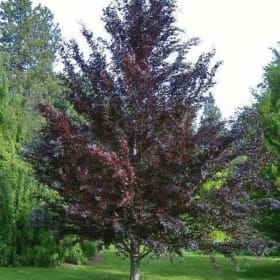
Eruopean Beech
$120
European Beech (red variety)
(Current Size: 6-8') #10
Description:
A beautiful and desirable landscape tree or shrub, known for its seasonal interest, form, or foliage. Excellent choice for Pacific Northwest gardens.
Mature Size: [Height & width varies by species — to be filled in manually]
USDA Zone: 7–8 (Northwest Oregon & SW Washington)
Light: Full sun to partial shade
Soil: Moist, well-drained; avoid soggy roots
Water:
- During establishment (first 1–2 years): Water deeply once or twice a week
- After establishment: Drought-tolerant to moderate watering depending on species
- Mulch annually to maintain soil moisture and reduce weed pressure
Uses:
Great for residential landscapes, borders, screening, ornamental display, or as a specimen plant.
Care Notes:
- Prune lightly if needed to maintain shape (late winter or early spring)
- Monitor for pests or root rot in poorly drained soils
- Fertilize in spring if growth appears slow
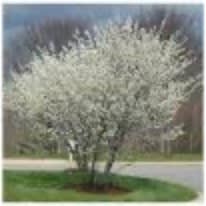
Princess Diana Serviceberry (bush)
$40
Princess Diana Serviceberry (bush)
(Current Size: 4-5')
Description:
A beautiful and desirable landscape tree or shrub, known for its seasonal interest, form, or foliage. Excellent choice for Pacific Northwest gardens.
Mature Size: [Height & width varies by species — to be filled in manually]
USDA Zone: 7–8 (Northwest Oregon & SW Washington)
Light: Full sun to partial shade
Soil: Moist, well-drained; avoid soggy roots
Water:
- During establishment (first 1–2 years): Water deeply once or twice a week
- After establishment: Drought-tolerant to moderate watering depending on species
- Mulch annually to maintain soil moisture and reduce weed pressure
Uses:
Great for residential landscapes, borders, screening, ornamental display, or as a specimen plant.
Care Notes:
- Prune lightly if needed to maintain shape (late winter or early spring)
- Monitor for pests or root rot in poorly drained soils
- Fertilize in spring if growth appears slow
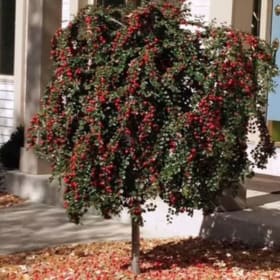
Cranberry Cotoneaster
$65
Cranberry Cotoneaster (weeping, flowering tree)
(Current Size: 5-6')
Description:
A beautiful and desirable landscape tree or shrub, known for its seasonal interest, form, or foliage. Excellent choice for Pacific Northwest gardens.
Mature Size: [Height & width varies by species — to be filled in manually]
USDA Zone: 7–8 (Northwest Oregon & SW Washington)
Light: Full sun to partial shade
Soil: Moist, well-drained; avoid soggy roots
Water:
- During establishment (first 1–2 years): Water deeply once or twice a week
- After establishment: Drought-tolerant to moderate watering depending on species
- Mulch annually to maintain soil moisture and reduce weed pressure
Uses:
Great for residential landscapes, borders, screening, ornamental display, or as a specimen plant.
Care Notes:
- Prune lightly if needed to maintain shape (late winter or early spring)
- Monitor for pests or root rot in poorly drained soils
- Fertilize in spring if growth appears slow
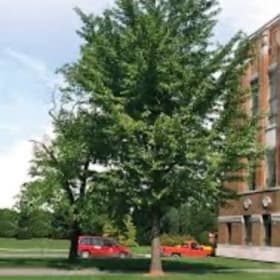

Ginkos Biloba
$50
Ginkos Biloba #5-7
(Current Size: 5-6')
Description:
A beautiful and desirable landscape tree or shrub, known for its seasonal interest, form, or foliage. Excellent choice for Pacific Northwest gardens.
Mature Size: [Height & width varies by species — to be filled in manually]
USDA Zone: 7–8 (Northwest Oregon & SW Washington)
Light: Full sun to partial shade
Soil: Moist, well-drained; avoid soggy roots
Water:
- During establishment (first 1–2 years): Water deeply once or twice a week
- After establishment: Drought-tolerant to moderate watering depending on species
- Mulch annually to maintain soil moisture and reduce weed pressure
Uses:
Great for residential landscapes, borders, screening, ornamental display, or as a specimen plant.
Care Notes:
- Prune lightly if needed to maintain shape (late winter or early spring)
- Monitor for pests or root rot in poorly drained soils
- Fertilize in spring if growth appears slow
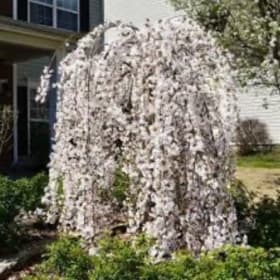
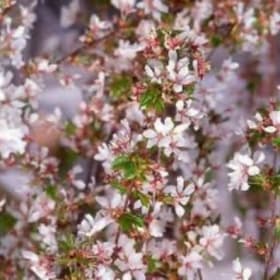
Snow Fountain Weeping Cherry
$75
Snow Fountain Weeping Cherry
(Current Size: 5-6' & 6-8')
Description:
A beautiful and desirable landscape tree or shrub, known for its seasonal interest, form, or foliage. Excellent choice for Pacific Northwest gardens.
Mature Size: [Height & width varies by species — to be filled in manually]
USDA Zone: 7–8 (Northwest Oregon & SW Washington)
Light: Full sun to partial shade
Soil: Moist, well-drained; avoid soggy roots
Water:
- During establishment (first 1–2 years): Water deeply once or twice a week
- After establishment: Drought-tolerant to moderate watering depending on species
- Mulch annually to maintain soil moisture and reduce weed pressure
Uses:
Great for residential landscapes, borders, screening, ornamental display, or as a specimen plant.
Care Notes:
- Prune lightly if needed to maintain shape (late winter or early spring)
- Monitor for pests or root rot in poorly drained soils
- Fertilize in spring if growth appears slow

Royal Prince Oak
$75
Royal Prince Oak
(Current Size: 10-12')
Description:
A beautiful and desirable landscape tree or shrub, known for its seasonal interest, form, or foliage. Excellent choice for Pacific Northwest gardens.
Mature Size: [Height & width varies by species — to be filled in manually]
USDA Zone: 7–8 (Northwest Oregon & SW Washington)
Light: Full sun to partial shade
Soil: Moist, well-drained; avoid soggy roots
Water:
- During establishment (first 1–2 years): Water deeply once or twice a week
- After establishment: Drought-tolerant to moderate watering depending on species
- Mulch annually to maintain soil moisture and reduce weed pressure
Uses:
Great for residential landscapes, borders, screening, ornamental display, or as a specimen plant.
Care Notes:
- Prune lightly if needed to maintain shape (late winter or early spring)
- Monitor for pests or root rot in poorly drained soils
- Fertilize in spring if growth appears slow
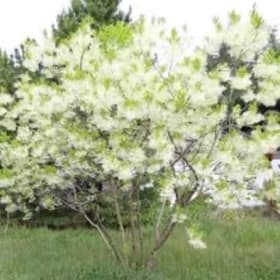
White Fringe Tree
$20
White Fringe Tree
(Current Size: 4')
Description:
A beautiful and desirable landscape tree or shrub, known for its seasonal interest, form, or foliage. Excellent choice for Pacific Northwest gardens.
Mature Size: [Height & width varies by species — to be filled in manually]
USDA Zone: 7–8 (Northwest Oregon & SW Washington)
Light: Full sun to partial shade
Soil: Moist, well-drained; avoid soggy roots
Water:
- During establishment (first 1–2 years): Water deeply once or twice a week
- After establishment: Drought-tolerant to moderate watering depending on species
- Mulch annually to maintain soil moisture and reduce weed pressure
Uses:
Great for residential landscapes, borders, screening, ornamental display, or as a specimen plant.
Care Notes:
- Prune lightly if needed to maintain shape (late winter or early spring)
- Monitor for pests or root rot in poorly drained soils
- Fertilize in spring if growth appears slow
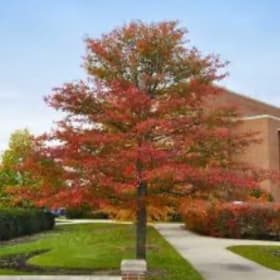
Green Gable Tupelo Nyssa
$40
Green Gable Tupelo Nyssa
(Current Size: 6-8')
Description:
A beautiful and desirable landscape tree or shrub, known for its seasonal interest, form, or foliage. Excellent choice for Pacific Northwest gardens.
Mature Size: [Height & width varies by species — to be filled in manually]
USDA Zone: 7–8 (Northwest Oregon & SW Washington)
Light: Full sun to partial shade
Soil: Moist, well-drained; avoid soggy roots
Water:
- During establishment (first 1–2 years): Water deeply once or twice a week
- After establishment: Drought-tolerant to moderate watering depending on species
- Mulch annually to maintain soil moisture and reduce weed pressure
Uses:
Great for residential landscapes, borders, screening, ornamental display, or as a specimen plant.
Care Notes:
- Prune lightly if needed to maintain shape (late winter or early spring)
- Monitor for pests or root rot in poorly drained soils
- Fertilize in spring if growth appears slow
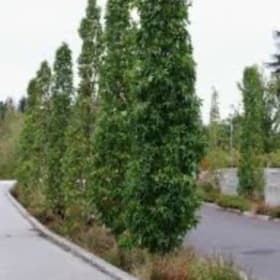
Sweetgum Slender Sillhouettes
$100
Sweetgum Slender Sillhouettes
(Current Size: 12-14')
Description:
A beautiful and desirable landscape tree or shrub, known for its seasonal interest, form, or foliage. Excellent choice for Pacific Northwest gardens.
Mature Size: [Height & width varies by species — to be filled in manually]
USDA Zone: 7–8 (Northwest Oregon & SW Washington)
Light: Full sun to partial shade
Soil: Moist, well-drained; avoid soggy roots
Water:
- During establishment (first 1–2 years): Water deeply once or twice a week
- After establishment: Drought-tolerant to moderate watering depending on species
- Mulch annually to maintain soil moisture and reduce weed pressure
Uses:
Great for residential landscapes, borders, screening, ornamental display, or as a specimen plant.
Care Notes:
- Prune lightly if needed to maintain shape (late winter or early spring)
- Monitor for pests or root rot in poorly drained soils
- Fertilize in spring if growth appears slow
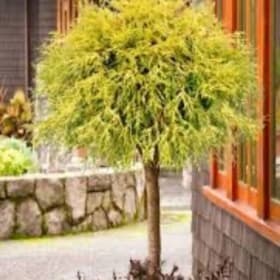
Gold Mop Thread Branch Cypress
$60
Gold Mop Thread branch Cypress (Pom-Pom Topiary)
(Current Size: 3 gal)
Description:
A beautiful and desirable landscape tree or shrub, known for its seasonal interest, form, or foliage. Excellent choice for Pacific Northwest gardens.
Mature Size: [Height & width varies by species — to be filled in manually]
USDA Zone: 7–8 (Northwest Oregon & SW Washington)
Light: Full sun to partial shade
Soil: Moist, well-drained; avoid soggy roots
Water:
- During establishment (first 1–2 years): Water deeply once or twice a week
- After establishment: Drought-tolerant to moderate watering depending on species
- Mulch annually to maintain soil moisture and reduce weed pressure
Uses:
Great for residential landscapes, borders, screening, ornamental display, or as a specimen plant.
Care Notes:
- Prune lightly if needed to maintain shape (late winter or early spring)
- Monitor for pests or root rot in poorly drained soils
- Fertilize in spring if growth appears slow
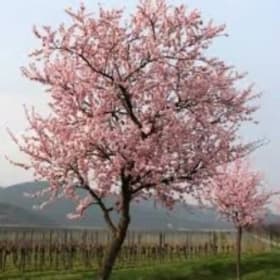
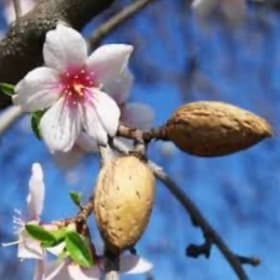
NE Plus Almond Tree
$75
NE Plus Almond Tree
(Current Size: 3-4')
Description:
A beautiful and desirable landscape tree or shrub, known for its seasonal interest, form, or foliage. Excellent choice for Pacific Northwest gardens.
Mature Size: [Height & width varies by species — to be filled in manually]
USDA Zone: 7–8 (Northwest Oregon & SW Washington)
Light: Full sun to partial shade
Soil: Moist, well-drained; avoid soggy roots
Water:
- During establishment (first 1–2 years): Water deeply once or twice a week
- After establishment: Drought-tolerant to moderate watering depending on species
- Mulch annually to maintain soil moisture and reduce weed pressure
Uses:
Great for residential landscapes, borders, screening, ornamental display, or as a specimen plant.
Care Notes:
- Prune lightly if needed to maintain shape (late winter or early spring)
- Monitor for pests or root rot in poorly drained soils
- Fertilize in spring if growth appears slow
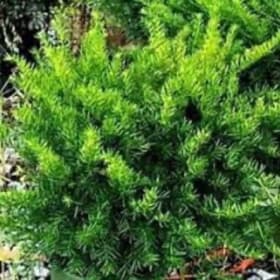
Taxus Yew Dark Green Spreaders
$25
Taxus Yew dark green spreaders
(Current Size: 3-4' tall; B&B)
Description:
A beautiful and desirable landscape tree or shrub, known for its seasonal interest, form, or foliage. Excellent choice for Pacific Northwest gardens.
Mature Size: [Height & width varies by species — to be filled in manually]
USDA Zone: 7–8 (Northwest Oregon & SW Washington)
Light: Full sun to partial shade
Soil: Moist, well-drained; avoid soggy roots
Water:
- During establishment (first 1–2 years): Water deeply once or twice a week
- After establishment: Drought-tolerant to moderate watering depending on species
- Mulch annually to maintain soil moisture and reduce weed pressure
Uses:
Great for residential landscapes, borders, screening, ornamental display, or as a specimen plant.
Care Notes:
- Prune lightly if needed to maintain shape (late winter or early spring)
- Monitor for pests or root rot in poorly drained soils
- Fertilize in spring if growth appears slow
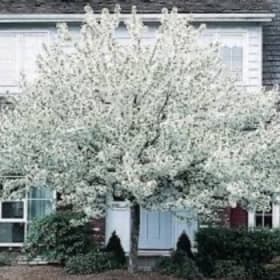
Spring Snow Crab Apple
$120
Spring snow crab Apple
(Current Size: 6-7') #10 container
Description:
A beautiful and desirable landscape tree or shrub, known for its seasonal interest, form, or foliage. Excellent choice for Pacific Northwest gardens.
Mature Size: [Height & width varies by species — to be filled in manually]
USDA Zone: 7–8 (Northwest Oregon & SW Washington)
Light: Full sun to partial shade
Soil: Moist, well-drained; avoid soggy roots
Water:
- During establishment (first 1–2 years): Water deeply once or twice a week
- After establishment: Drought-tolerant to moderate watering depending on species
- Mulch annually to maintain soil moisture and reduce weed pressure
Uses:
Great for residential landscapes, borders, screening, ornamental display, or as a specimen plant.
Care Notes:
- Prune lightly if needed to maintain shape (late winter or early spring)
- Monitor for pests or root rot in poorly drained soils
- Fertilize in spring if growth appears slow
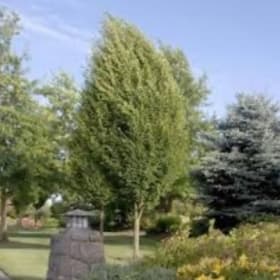
European Hornbeams
$60
European Hornbeams
(Current Size: 10-12')
Description:
A beautiful and desirable landscape tree or shrub, known for its seasonal interest, form, or foliage. Excellent choice for Pacific Northwest gardens.
Mature Size: [Height & width varies by species — to be filled in manually]
USDA Zone: 7–8 (Northwest Oregon & SW Washington)
Light: Full sun to partial shade
Soil: Moist, well-drained; avoid soggy roots
Water:
- During establishment (first 1–2 years): Water deeply once or twice a week
- After establishment: Drought-tolerant to moderate watering depending on species
- Mulch annually to maintain soil moisture and reduce weed pressure
Uses:
Great for residential landscapes, borders, screening, ornamental display, or as a specimen plant.
Care Notes:
- Prune lightly if needed to maintain shape (late winter or early spring)
- Monitor for pests or root rot in poorly drained soils
- Fertilize in spring if growth appears slow
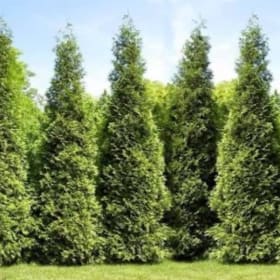
Arborvitae
$15
Arborvitae (thuja)
(Current Size: 3-4')
Description:
A beautiful and desirable landscape tree or shrub, known for its seasonal interest, form, or foliage. Excellent choice for Pacific Northwest gardens.
Mature Size: [Height & width varies by species — to be filled in manually]
USDA Zone: 7–8 (Northwest Oregon & SW Washington)
Light: Full sun to partial shade
Soil: Moist, well-drained; avoid soggy roots
Water:
- During establishment (first 1–2 years): Water deeply once or twice a week
- After establishment: Drought-tolerant to moderate watering depending on species
- Mulch annually to maintain soil moisture and reduce weed pressure
Uses:
Great for residential landscapes, borders, screening, ornamental display, or as a specimen plant.
Care Notes:
- Prune lightly if needed to maintain shape (late winter or early spring)
- Monitor for pests or root rot in poorly drained soils
- Fertilize in spring if growth appears slow
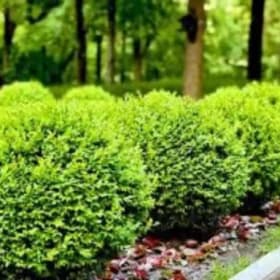
Boxwood
$10
Boxwood 1 gal
(Current Size: 8-10")
Description:
A beautiful and desirable landscape tree or shrub, known for its seasonal interest, form, or foliage. Excellent choice for Pacific Northwest gardens.
Mature Size: [Height & width varies by species — to be filled in manually]
USDA Zone: 7–8 (Northwest Oregon & SW Washington)
Light: Full sun to partial shade
Soil: Moist, well-drained; avoid soggy roots
Water:
- During establishment (first 1–2 years): Water deeply once or twice a week
- After establishment: Drought-tolerant to moderate watering depending on species
- Mulch annually to maintain soil moisture and reduce weed pressure
Uses:
Great for residential landscapes, borders, screening, ornamental display, or as a specimen plant.
Care Notes:
- Prune lightly if needed to maintain shape (late winter or early spring)
- Monitor for pests or root rot in poorly drained soils
- Fertilize in spring if growth appears slow
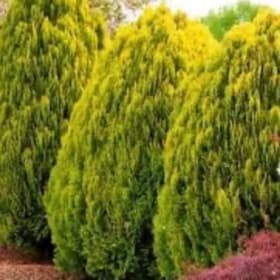
Tiny Tim (Thuja O. tall, full globe style)
$60
Tiny Tim (Thuja O. tall, full globe style)
(Current Size: 3-4')
Description:
A beautiful and desirable landscape tree or shrub, known for its seasonal interest, form, or foliage. Excellent choice for Pacific Northwest gardens.
Mature Size: [Height & width varies by species — to be filled in manually]
USDA Zone: 7–8 (Northwest Oregon & SW Washington)
Light: Full sun to partial shade
Soil: Moist, well-drained; avoid soggy roots
Water:
- During establishment (first 1–2 years): Water deeply once or twice a week
- After establishment: Drought-tolerant to moderate watering depending on species
- Mulch annually to maintain soil moisture and reduce weed pressure
Uses:
Great for residential landscapes, borders, screening, ornamental display, or as a specimen plant.
Care Notes:
- Prune lightly if needed to maintain shape (late winter or early spring)
- Monitor for pests or root rot in poorly drained soils
- Fertilize in spring if growth appears slow

Birdsnest (Norway) Spruce
$40
Birdnest ( Norway) Spruce
(Current Size: #3-5)
Description:
A beautiful and desirable landscape tree or shrub, known for its seasonal interest, form, or foliage. Excellent choice for Pacific Northwest gardens.
Mature Size: [Height & width varies by species — to be filled in manually]
USDA Zone: 7–8 (Northwest Oregon & SW Washington)
Light: Full sun to partial shade
Soil: Moist, well-drained; avoid soggy roots
Water:
- During establishment (first 1–2 years): Water deeply once or twice a week
- After establishment: Drought-tolerant to moderate watering depending on species
- Mulch annually to maintain soil moisture and reduce weed pressure
Uses:
Great for residential landscapes, borders, screening, ornamental display, or as a specimen plant.
Care Notes:
- Prune lightly if needed to maintain shape (late winter or early spring)
- Monitor for pests or root rot in poorly drained soils
- Fertilize in spring if growth appears slow

Spruce tree - young (1 gal) either white or Colorado Spruce
$20
Spruce tree - young (1 gal) either white or Colorado Spruce
(Current Size: 1 gallon)
Description:
A beautiful and desirable landscape tree or shrub, known for its seasonal interest, form, or foliage. Excellent choice for Pacific Northwest gardens.
Mature Size: [Height & width varies by species — to be filled in manually]
USDA Zone: 7–8 (Northwest Oregon & SW Washington)
Light: Full sun to partial shade
Soil: Moist, well-drained; avoid soggy roots
Water:
- During establishment (first 1–2 years): Water deeply once or twice a week
- After establishment: Drought-tolerant to moderate watering depending on species
- Mulch annually to maintain soil moisture and reduce weed pressure
Uses:
Great for residential landscapes, borders, screening, ornamental display, or as a specimen plant.
Care Notes:
- Prune lightly if needed to maintain shape (late winter or early spring)
- Monitor for pests or root rot in poorly drained soils
- Fertilize in spring if growth appears slow

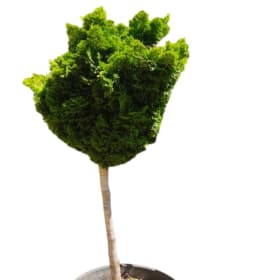
Dwarf Hinoki Cypress
$80
Dwarf Hinoki Cypress (Chamaecyparis obtusa 'Nana Gracilis')
(Current Size: apx 3')
Description:
A beautiful and desirable landscape tree or shrub, known for its seasonal interest, form, or foliage. Excellent choice for Pacific Northwest gardens.
Mature Size: [Height & width varies by species — to be filled in manually]
USDA Zone: 7–8 (Northwest Oregon & SW Washington)
Light: Full sun to partial shade
Soil: Moist, well-drained; avoid soggy roots
Water:
- During establishment (first 1–2 years): Water deeply once or twice a week
- After establishment: Drought-tolerant to moderate watering depending on species
- Mulch annually to maintain soil moisture and reduce weed pressure
Uses:
Great for residential landscapes, borders, screening, ornamental display, or as a specimen plant.
Care Notes:
- Prune lightly if needed to maintain shape (late winter or early spring)
- Monitor for pests or root rot in poorly drained soils
- Fertilize in spring if growth appears slow
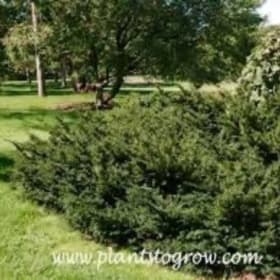
Yew Everlow shrub
$30
Yew Everlow shrub
(Current Size: #3-5)
Description:
A beautiful and desirable landscape tree or shrub, known for its seasonal interest, form, or foliage. Excellent choice for Pacific Northwest gardens.
Mature Size: [Height & width varies by species — to be filled in manually]
USDA Zone: 7–8 (Northwest Oregon & SW Washington)
Light: Full sun to partial shade
Soil: Moist, well-drained; avoid soggy roots
Water:
- During establishment (first 1–2 years): Water deeply once or twice a week
- After establishment: Drought-tolerant to moderate watering depending on species
- Mulch annually to maintain soil moisture and reduce weed pressure
Uses:
Great for residential landscapes, borders, screening, ornamental display, or as a specimen plant.
Care Notes:
- Prune lightly if needed to maintain shape (late winter or early spring)
- Monitor for pests or root rot in poorly drained soils
- Fertilize in spring if growth appears slow

Golden Japanese Grasses
$5
Golden Japanese Grasses
(Current Size: 1 gallon)
Description:
A beautiful and desirable landscape tree or shrub, known for its seasonal interest, form, or foliage. Excellent choice for Pacific Northwest gardens.
Mature Size: [Height & width varies by species — to be filled in manually]
USDA Zone: 7–8 (Northwest Oregon & SW Washington)
Light: Full sun to partial shade
Soil: Moist, well-drained; avoid soggy roots
Water:
- During establishment (first 1–2 years): Water deeply once or twice a week
- After establishment: Drought-tolerant to moderate watering depending on species
- Mulch annually to maintain soil moisture and reduce weed pressure
Uses:
Great for residential landscapes, borders, screening, ornamental display, or as a specimen plant.
Care Notes:
- Prune lightly if needed to maintain shape (late winter or early spring)
- Monitor for pests or root rot in poorly drained soils
- Fertilize in spring if growth appears slow
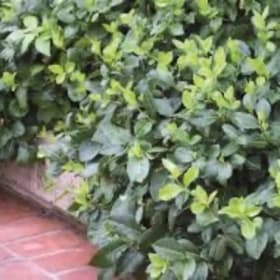

Purple leaf winter creeper
$5
Purple leaf winter creeper
(Current Size: 1 gallon)
Description:
A beautiful and desirable landscape tree or shrub, known for its seasonal interest, form, or foliage. Excellent choice for Pacific Northwest gardens.
Mature Size: [Height & width varies by species — to be filled in manually]
USDA Zone: 7–8 (Northwest Oregon & SW Washington)
Light: Full sun to partial shade
Soil: Moist, well-drained; avoid soggy roots
Water:
- During establishment (first 1–2 years): Water deeply once or twice a week
- After establishment: Drought-tolerant to moderate watering depending on species
- Mulch annually to maintain soil moisture and reduce weed pressure
Uses:
Great for residential landscapes, borders, screening, ornamental display, or as a specimen plant.
Care Notes:
- Prune lightly if needed to maintain shape (late winter or early spring)
- Monitor for pests or root rot in poorly drained soils
- Fertilize in spring if growth appears slow
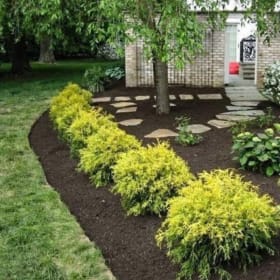
Sungold Thread Branch Cypress
$15
Sungold thread branch cypress
(Current Size: 24-30")
Description:
A beautiful and desirable landscape tree or shrub, known for its seasonal interest, form, or foliage. Excellent choice for Pacific Northwest gardens.
Mature Size: [Height & width varies by species — to be filled in manually]
USDA Zone: 7–8 (Northwest Oregon & SW Washington)
Light: Full sun to partial shade
Soil: Moist, well-drained; avoid soggy roots
Water:
- During establishment (first 1–2 years): Water deeply once or twice a week
- After establishment: Drought-tolerant to moderate watering depending on species
- Mulch annually to maintain soil moisture and reduce weed pressure
Uses:
Great for residential landscapes, borders, screening, ornamental display, or as a specimen plant.
Care Notes:
- Prune lightly if needed to maintain shape (late winter or early spring)
- Monitor for pests or root rot in poorly drained soils
- Fertilize in spring if growth appears slow
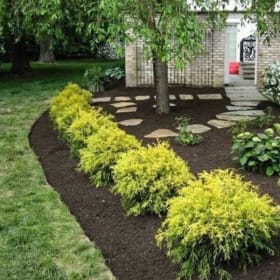
Small Sungold Mop Cypress
$5
small Sungold thread branch cypress (golden mop, 1 gal)
(Current Size: 1 gallon)
Description:
A beautiful and desirable landscape tree or shrub, known for its seasonal interest, form, or foliage. Excellent choice for Pacific Northwest gardens.
Mature Size: [Height & width varies by species — to be filled in manually]
USDA Zone: 7–8 (Northwest Oregon & SW Washington)
Light: Full sun to partial shade
Soil: Moist, well-drained; avoid soggy roots
Water:
- During establishment (first 1–2 years): Water deeply once or twice a week
- After establishment: Drought-tolerant to moderate watering depending on species
- Mulch annually to maintain soil moisture and reduce weed pressure
Uses:
Great for residential landscapes, borders, screening, ornamental display, or as a specimen plant.
Care Notes:
- Prune lightly if needed to maintain shape (late winter or early spring)
- Monitor for pests or root rot in poorly drained soils
- Fertilize in spring if growth appears slow
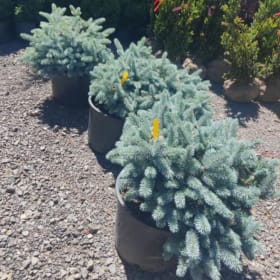
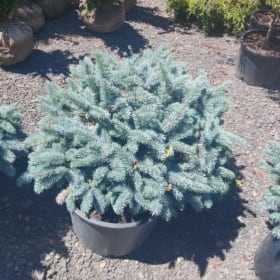
Dwarf Blue Spruce
$75
Dwarf blue spruce
(Current Size: 3-5 gallon)
Description:
A beautiful and desirable landscape tree or shrub, known for its seasonal interest, form, or foliage. Excellent choice for Pacific Northwest gardens.
Mature Size: [Height & width varies by species — to be filled in manually]
USDA Zone: 7–8 (Northwest Oregon & SW Washington)
Light: Full sun to partial shade
Soil: Moist, well-drained; avoid soggy roots
Water:
- During establishment (first 1–2 years): Water deeply once or twice a week
- After establishment: Drought-tolerant to moderate watering depending on species
- Mulch annually to maintain soil moisture and reduce weed pressure
Uses:
Great for residential landscapes, borders, screening, ornamental display, or as a specimen plant.
Care Notes:
- Prune lightly if needed to maintain shape (late winter or early spring)
- Monitor for pests or root rot in poorly drained soils
- Fertilize in spring if growth appears slow
Did you know? We fundraise with Zeffy to ensure 100% of your purchase goes to our mission!