
Offered by
Harris County Master Gardener Association
About this shop
HCMG Fruit Tree and Tomato Sale at Genoa Friendship Gardens, Winter 2026
Add a donation for Harris County Master Gardener Association
$
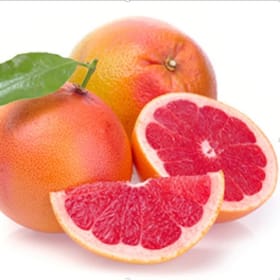
Grapefruit, Rio Red - 3 gallon
$34
•Mature size: 10’-20’ x 6’-15’
•Large fruit; few seeds
•Smooth, thin rind
•Yellow with red blush when mature
•Deep red flesh
•Ripens mid to late November
•Holds well on tree until March
•Cold hardy to mid 20’s

Grapefruit, Ruby Red - 3 gallon
$34
•Mature size: Up to 20’-25’
•Seedless
•Excellent quality and sweetness
•Thin skinned
•Pulp is distinctive red, but color will fade as tree ages
•Cold hardy to mid 20’s

Lemon, Improved Meyer - 3 gallon
$34
•Mature size: 10’ x 10’
•Hybrid between a lemon & a sweet orange
•Very fragrant flowers
•Thin skin
•Moderate seed count
•Freezes to ground in hard freeze and produces again in 18 months
•Ripens August to January
•Cold hardy to high 20’s

Lemon, Improved Meyer DWARF - 3 gallon
$45
•Mature size: 4’-8’ x 3’-4’ in pot; 10’-12’ x 8’-10’ in ground
• Hybrid between a lemon & a sweet orange
•Thin skinned
•Tangy, juicy, and slightly sweeter than classic lemon varieties
•Good container plant
•Ripens August - January

Lime, Key DWARF - 3 gallon
$45
Mature size: 4-12'. Can be trimmed to 3 - 8' in pots.
Small, round, thin skinned limes. Pale green when ripe.
Fruits within 3 years.
Needs frost protection below 32 degrees.
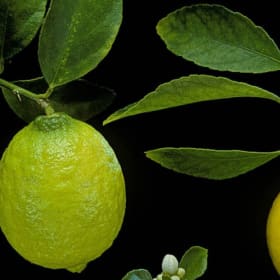
Lime, Persian - 3 gallon
$34
Also known as Tahiti lime or Bearss lime
Mature size 10-20 feet high X 10-15 feet wide. Compact tree with dark green leaves and very few small thorns.
Small fruit, with thin dark green skin gradually turning light green, then yellow at full maturity. Fruit is somewhat larger than the Mexican or Key lime.
Very aromatic, juicy and acidic with few or no seeds.
Ripens mid-September to early October.
Doesn’t hold well on the tree after reaching full maturity.
Not frost tolerant.

Mandarin, Page - 3 gallon
$34
•Mature size: 8’-10’ x 4’-6’
•Excellent container plant
•Cross between Minneola tangelo and Clementine mandarin
•Rind thin and easy to peel
•Sweet and juicy
•Ripens November to January
•Cold hardy to low 20’s
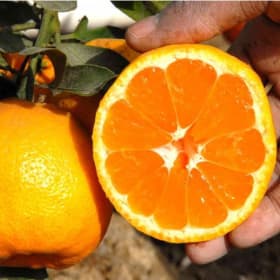
Satsuma, Miho - 3 gallon
$34
•Mature size: 10’-12’ x 13’-15’
•Few, if any seeds
•Named Texas Superstar in 2010
•Easy to peel and breaks into segments
•Ripens late October to November
•Hold well on tree through December
•Cold hardy to low 20’s

Satsuma, Owari Frost - 3 gallon
$34
•Mature size: 10’-12’ x 13’-15’
•Few, if any seeds
•Named Texas Superstar in 2010
•Easy to peel and breaks into segments
•Ripens late October to November
•Hold well on tree through December
•Cold hardy to low 20’s

Satsuma, Seto - 3 gallon
$34
•Mature size: 13’-15′
•Seedless
•Rind is smooth, thin and bright red-orange when mature
•High quality fruit
•Ripens late September to October
•Holds well on tree through December
•Cold hardy to low 20’s

Orange, Blood (Moro) - 3 gallon
$34
•Mature size: 8’-12’ x 8’-12’
•Very few seeds
•Thin, bright, red-blushed rind
•Red, juicy, very sweet flesh at full maturity
•Ripens early to mid January
•Holds well on tree until March
•Cold hardy to mid 20’s
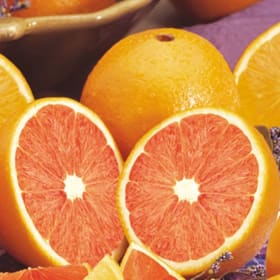
Orange, Cara Cara (Pink Navel) - 3 gallon
$34
•Mature size: 8’-12’ x 8’-12’
•Seedless
•Cross between Washington navel and the Brazilian Bahia navel
•Bright orange skin
•Pinkish-red flesh
•Sweet, tangy flavor
•Cold hardy to mid 20’s

Orange, Navel N-33 - 3 gallon
$34
Also known as the Texas Navel.
Medium to large, round-headed tree with deep green foliage. Fruit is large, with moderately thick rind. Rich
flavor, with nicely balanced sugar and acid. Very juicy and seedless. Moderately easy to peel and separate into segments.
Ripens early to mid November and holds well on the tree until end of January.

Apple, Anna - 3 gallon
$24
•Mature size: 20’-30’ x 15’
•Self-fertile
•Pollinate with Golden Dorsett or Ein Shemer for higher harvest
•Sweet and crisp
•Yellow skin with slight blush
•Stores 2 months
•Ripens late June - July
•100 - 300 chill hours required
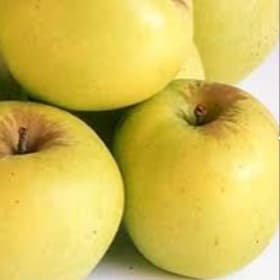
Apple, Golden Dorsett - 3 gallon
$24
•Mature size: 10’-20’ x 10’-20’
•Self-sterile
•Good cross-pollinator with Anna
•Golden Delicious type
•Yellow skin w/slight blush
•Sweet and firm
•Stores 2 months
•Ripens mid to late June
•100 chill hours required

Avocado, Brazos Belle - 3 gallon
$45
•Mature size: Up to 20’ – 25’
•Mexican variety
•Shiny, paper-thin skin
•High oil content
•Rich, nutty flavor
•Ripens September to October
•Cold hardy to mid 20’s

Avocado, Mexicola Grande - 3 gallon
$45
Mature size: 25-30 feet X 25 feet. Spreading tree similar to the Mexicola, with fruit 15-25% larger. Fruit has a somewhat rounder shape with a better seed to flesh ratio.
The skin is paper-thin and purple to black in color. High quality flesh with a high oil content.
COl hardy to the upper teens, ripens in September.
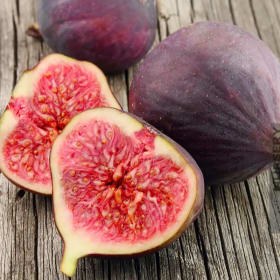
Fig, Celeste - 3 gallon
$24
•Mature size: 5’-10’ x 5’-10’
•Small to medium fruit
•Rich, sweet flavor
•Color ranges from purple to brown, tinged with bronze
•Pulp is amber colored
•Most cold hardy of all Texas fig varieties
•Good fresh or preserved
•Ripens mid to late June
•Closed eye
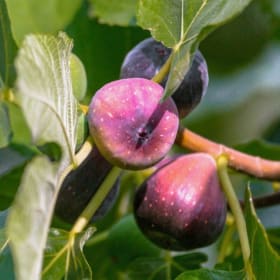
Fig, LSU Purple - 3 gallon
$24
Mature size: 8-10 height. Vigorous, upright tree. LSU introduction.
-Medium sized fruit with mild flavor, high sugar content, and white flesh.
Pulp is light amber to light red when ripe.
-Has a small eye making it resistant to spoilage . Enjoy fresh or dried.
-Grows well in containers. Heat-tolerant.
-Ripens from July through frost.

Nectarine, Snow Queen - 3 gallon
$24
•Mature size: 12’ x 15’ tall & wide
•Freestone
•Bright white flesh
•Sweet and juicy
•Ripens late June-early July
•250 – 300 chill hours required
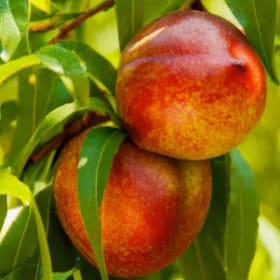
Nectarine, Panamint - 3 gallon
$24
Mature Size: 12-16 ft. Summer prune to maintain 8 ft.
Aromatic red-skinned, yellow freestone fruit, with fine balance of tart and sweet. Very low chill, so best selection for warm winter climates. Use as fresh eating, desserts, pies, canning, and preserves.
Self Fertile.

Peach, Sam Houston - 3 gallon
$24
•Mature size: 15’-30’ x 15’-30’
•Self-fertile
•Freestone
•Ideal for canning, baking and eating fresh
•Fruit is red-blushed with low acidity and superior flavor
•Ripens late spring and early summer
•500 chill hours required

Peach, Tropic Snow - 3 gallon
$24
•Mature size: up to 18’
•Self-fertile
•Semi-freestone
•Low acidity
•Medium-sized fruit
•Yellow with red blush
•White flesh
•Extremely sweet flavor
•Ripens mid to late June
•225 chill hours required

Peach, May Pride - 3 gallon
$24
Semi-dwarf tree, maturing to 12-15 feet. Very early ripening peach for warmer climates. Delicious and sweet. Produces beautiful pink blossoms.
Ripens in May. Self-fruitful.
Low chill hour requirement 150-250

Plum, Methley - 3 gallon
$24
•Mature size: 10’-20’ x 10’-20’
•Self-fertile
•Medium, reddish-purple skin with deep crimson flesh
•Great fresh or for preserves
•Heat and drought tolerant
•Disease resistant
•Ripens early June
•250 chill hours required

Pear, Acres Home - 5 gallon
$24
Discovered in Houston Acres Home area.
-Mature size: 18-20 feet.
-Well adapted to hot humid climate of Houston/Gulf Coast.
-Large, sweet, soft fruit.
-Low chill hour requirement 300-350.

Olive, Arbequina - 3 gallon
$34
-Mature size 8-10 x 8-10 feet.
-Recognized for its aromatic ripeness, low bitterness, pungency and stability.
-Self pollinating, low polyphenol content, small fruit and cold hardy.

Pecan, Chocktaw Pawnee - 7 gallon
$98
Mature size: 130' tall by 75" wide.
Self fertile but yields increase with a pollinator.
Not just a source of delicious pecans. Also a visual treat with its vast canopy. Adaptability to different soil
types makes it a versatile choice for orchards. Originated from a cross between 'Success' and 'Mahan'.
Large, round nuts and robust growth. Scab and disease resistant. Wood used in furniture making.

Pomegranate, Texas Pink - 3 gallon
$24
-Mature size: 8-15 feet. Compact single or multi-stemmed.
-Large rosy-pink , with juicy arils
-Bright red to pink flowers
Cold tolerant; drought tolerant once established.

Blackberry, Ouachita - 1 gallon
$12
Thornless variety from Univ Arkansas.
Large, firm berries that ripen June/July
-Self-pollinating
Needs 300-500 chill hours
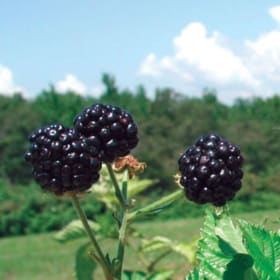
Blackberry, Prime Ark Freedom - 1 gallon
$12
-Thornless, erect, self-supporting canes
-Primocane-fruiting on new canes early summer and again on older canes in fall
-Large, sweet berries
-Cold hardy, requires 300-500 chill hours

Rabbiteye Blueberry, Pink Lemonade - 3 gallon
$20
Mature height 4-5 feet.
-Unique pink berries, ripening mid to late season
-A Southern highbush/rabbiteye hybrid. Self-fertile bur benefits from cross pollination with other rabbiteye
-Needs acidic soil
-Needs 200-300 chill hours

Rabbiteye Blueberry, Premiere - 3 gallon
$18
Mature height 6-10 feet
-Large dark berries late spring to early summer
-Heat tolerant
-Cross pollination with other rabbiteye improves fruit production
-Needs acidic soil
-Requires 500-550 chill hours

Rabbiteye Blueberry, Tifblue - 3 gallon
$18
-Mature size 6-10 feet tall and wide
-High yielding rabbiteye blueberry, with good disease resistance and heat tolerance.
-Large sweet berries ripen June-July.
Needs acidic soil
-Needs another rabbiteye for cross-pollination (Powderblue, Brightwell or Pink Lemonade)
Chill hours: 500-700
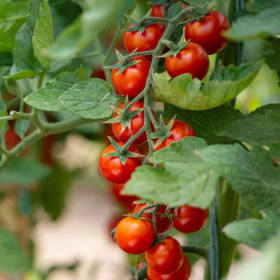
Tomato, Red Cherry, small - 4" pot
$4
-Indeterminate heirloom variety
-Mature 65-80 days from transplant
-Produces prolific amounts of small 0.5-0.75 inch fruits.
Sweet and acidic; good for snacking
-Vines grow to 8 feet; needs support

Tomato, Better Boy - 4" pot
$4
-Indeterminate, vining, high yield
-Large slicing tomatoes, balanced flavor
-Mature 70-75 days from transplant
-Full sun, water consistently
-Needs vining support
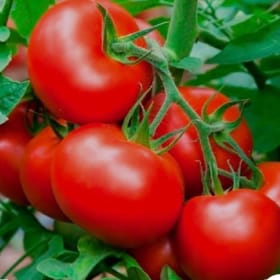
Tomato, Celebrity - 4" pot
$4
-Determinate hybrid, growing 3-4 feet
-High-yielding, firm slicing tomato, crack-resistant
-Mature 70-80 days after transplant
-Full sun, consistent watering
-Support due to heavy fruit set

Tomato, Tomato Sweetie - 4" pot
$4
-Indeterminate heirloom variety
-Clusters of 15-20 small red cherry tomatoes (0.5-1.5 inch)
-Vines 6 feet tall, needs support
-Matures 65-70 days after transplant--Excellent snacking tomato

Tomato, Black Krim - 4" pot
$4
-Indeterminate heirloom tomato producing medium-large beefsteak-style tomatoes
-Vines grow 4-6 feet; needs support
-Matures 80 days post transplant

Tomato, Early Girl, Bush variety - 4" pot
$4
-Determinate tomato; grows 3-4 feet tall
- Concentrated harvest, 50-60 days from transplant
- Good choice for container gardening
- Round tennis ball sized fruit
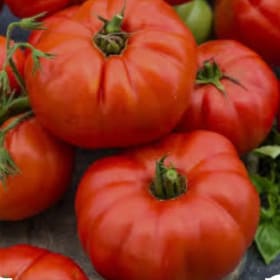
Tomato, Beefsteak - 4" pot
$4
-Indeterminate plants produce large (up to 2 pounds) slicing tomato
-Vines grow to 8 feet; needs strong support
-Full sun and consistent watering.
-Recommended spacing 3-4 feet apart
-Mature 80-100 days
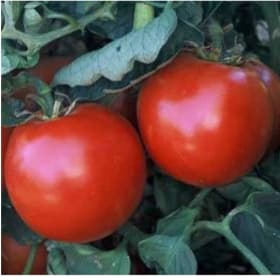
Tomato, Abe Lincoln - 4" pot
$4
-Indeterminate heirloom tomato
-Produces large (up to 1 pound) tomatoes in clusters
-Matures 80-90 days
-Vines grow 5-7 feet, requiring support
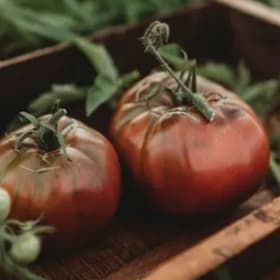
Tomato, Cherokee Purple - 4" pot
$4
-Indeterminate heirloom variety
-Large 10-12 ounce fruits, dusky purplish skin
-Mature 75-80 days
Requires strong support

Tomato, Roma - 4" pot
$4
-Determinate variety, growing 3-4 feet
-Compact, bushy growth
-Matures 75 days
-Full sun, consistent water
-Benefit from staking/caging

Tomato, Jubilee - 4" pot
$4
-Indeterminate heirloom variety
-Large golden orange slicing tomato
-All-American Selections winner; mildly sweet, less acidic than red tomatoes
-Vines require support

Tomatillos - 4" pot
$4
-Native to Mexico and Guatemala
-Prefer well drained sandy soil
-cold sensitive.
-The best growing conditions are 80 to 90°F days
with 60 to 70°F nights, low humidity, and
sparse rainfall.
-matures 65 to 85 days after transplanting
-The fruit are picked just as the husk, or calyx, bursts.

Microlife Multipurpose 6-2-4 organic fertilizer - 40 lbs
$55
The very first MicroLife, multi-purpose, fantastic performer and proven for all Turfgrasses, Ornamentals, Perennials, Trees, Flowers and Vegetables. 100 % slow release and will not burn. You can depend on this product to serve you well for increasing all plant performance. Provides over 100 + nutrients, minerals, vitamins, natural plant hormones, natural plant stimulators, essential sugars/amino acids/carbon/protein and billions of beneficial microbes representing 73 different species.
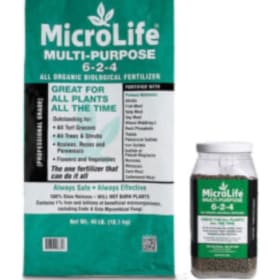
Microlife Multipurpose 6-2-4 organic fertilizer - 7 lbs
$17
The very first MicroLife, multi-purpose, fantastic performer and proven for all Turfgrasses, Ornamentals, Perennials, Trees, Flowers and Vegetables. 100 % slow release and will not burn. You can depend on this product to serve you well for increasing all plant performance. Provides over 100 + nutrients, minerals, vitamins, natural plant hormones, natural plant stimulators, essential sugars/amino acids/carbon/protein and billions of beneficial microbes representing 73 different species.
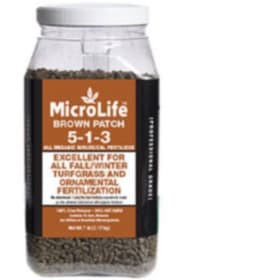
MicroLife Brown Patch 5-1-3 7 lbs
$17
From the MicroLife Website:
Use for St. Augustine with Brown Patch Problems, New Sod/Plant Installs, Ornamentals.
With MicroLife Brown Patch you are in engaging in biological warfare with the good microbes in MicroLife Brown Patch fighting the bad microbes. Plus you get the MicroLife fertilization which correctly feeds your plants, improves your soil and prevents continued disease infection with over 100 + nutrients, minerals and 72 specific beneficial microbe species.

Microlife Mycorrhizal Plus - 7 lbs
$17
The most complete and strongest bio inoculant package for all new and existing plantings.
- Probiotics that accelerate all plants & improve all soils
- 12 strains of Mycorrhizal fungi & 73 species and strains of beneficial microbes on a Humate, Seaweed, Yucca base
- Plants will grow bigger and healthier roots than ever before
- Completely safe and will not burn
Did you know? We fundraise with Zeffy to ensure 100% of your purchase goes to our mission!