
Hosted by
House Of Helping Hands
About this event
Art Auction with a Purpose
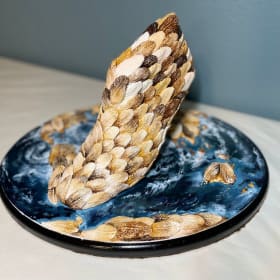


Together We Soar
$1,900
Starting bid
Acrylic on air dry clay on wood 7.5"x11"x14" by Jun’x Pado’s Artworks Worldwide harmony is still a myriad of steps in front of us. And with recent conflicts that beset the world lately, we can see that these wars do not only affect the small regions of the world where they originated but also affect the entire planet— a reminder that we are, indeed, a single global tribe. With countries preferring to side one over another, communities being torn apart and families being separated or destroyed, there is a greater need for us to bridge our differences be they racial, religious, economic or cultural. This artwork represents the ideals of a united world where geographic challenges are bridged and racial divides are blurred out or, to put more accurately, blended together. This starts with us putting ourselves in each other’s shoes and plucking our individually colored plumage in order to wear one that speaks only of our collective humanity so that we will no longer treat each other according to what color our exterior shows or what language we speak or what flags we raise. Who are we to decide which group of people has more right to live than another? Afterall, a bird cannot lift up and fly with just a single feather.

Jeepney for Puppy
$7,200
Starting bid
Acrylic on Canvas 60"x60" by Jun’x Pado’s Artworks This painting was inspired by my advocacy for the preservation and restoration of our natural environment. I believe that environmental education, particularly regarding waste management, begins at home and must be instilled in the younger generation. The central message of this artwork is the importance of the "3Rs"—Reduce, Reuse, Recycle. Through the use of symbolic juxtaposition, I aim to communicate the urgency and hope that surround environmental efforts. The recycling symbol is a key visual element, intended to immediately resonate with viewers and prompt reflection on their own habits. The elephant-shaped cart represents the strength and support of large organizations that are committed to recycling and environmental efforts. The inclusion of the Blue’s Cluescharacter symbolizes the importance of nurturing environmental awareness in children—our future stewards of the Earth. Additionally, the use of green serves as a call for nature’s healing—both for the present and for generations to come. Through this artwork, I hope to spark awareness and inspire collective action toward a cleaner, more sustainable world.

Let's Smile for a While
$4,600
Starting bid
Acrylic on Canvas 48"x48" by Jun’x Pado’s Artworks I created this artwork to inspire viewers to recognize the value of friendships, relationships, and happiness in enriching our lives and supporting overall well-being. Through this piece, I want to convey a strong message: recreation and relaxation are essential in reducing stress and cultivating a sense of calm. The use of purple throughout the composition symbolizes enlightenment and encourages viewers to reflect on what it means to live a purpose-driven life. This artwork continues my exploration of symbolic juxtaposition to convey layered meaning. The smiley face serves as a clear reminder to make time for happiness and to maintain a positive outlook. The bicycle represents how life becomes more manageable and enjoyable when we are supported by a strong social network. Finally, the smiling children embody the pure, innocent joy that comes from simply being together. Through this piece, I hope to remind others that joy, connection, and balance are not luxuries—they are essential to a healthy and fulfilling life.
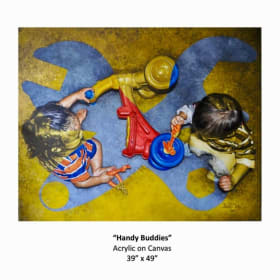
Handy Buddies
$3,800
Starting bid
Acrylic on Canvas 39"x49" by Jun’x Pado’s Artworks This artwork is inspired by the core values of cooperation, helpfulness, and teamwork as essential in achieving a shared vision. Through the use of symbolic juxtaposition, I aim to highlight how creative thinking and problem-solving are vital tools for progress and transformation. The tools depicted represent various paths to economic development and poverty alleviation—each a means of rebuilding and empowering communities. The children at work symbolize individuals driven by a deep concern for the future of the Philippines, representing the joint efforts of both the government and private sectors in fostering a more progressive nation. The use of gold in the piece symbolizes free-flowing energy, resilience, and tolerance—qualities necessary to sustain development and unity. Ultimately, this artwork serves as a reminder that the spirit of collaboration and civic responsibility must be nurtured from a young age so it may thrive into adulthood. Working together is not just a practice but a lifelong commitment to collective progress
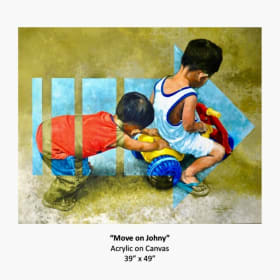
Move on Johny
$3,800
Starting bid
Acrylic on Canvas 39"x49" by Jun’x Pado’s Artworks This painting was inspired by the value of moving forward together as a family, with a focus on collaboration, generosity, and the collective pursuit of success. Through this piece, I aim to highlight the importance of helping not just within the family unit, but also within the broader community. A central theme of the artwork is the positive impact of migration, particularly how overseas remittances can sustain economic growth and help alleviate poverty in countries like the Philippines. This piece is part of my ongoing art portfolio, where I explore the use of symbolic juxtaposition to communicate meaningful narratives. The arrow symbolizes progress and the drive to achieve success. The boy in the white shirt represents families in the Philippines receiving financial and emotional support from loved ones working abroad. In contrast, the boy in the red shirt stands for those family members—migrants—who labor tirelessly in foreign countries to provide a better life for their families back home. The use of yellow green throughout the artwork represents growth, resilience, and hope. Ultimately, I hope this piece resonates with viewers by reflecting the power of hard work, dedication, and familial collaboration in achieving shared dreams and uplifting entire communities.

Greatness
$4,800
Starting bid
Alex Silver Artist of Have A Nice Day Paint Co. Phone: (310) 995-9945 Web: handpaintco.com To honor the amazing spirit of Bob Marley, this board is dedicated the iconic musician for all of his inspiring beliefs and perspective he shared with the world. Hidden in the board are messages of "good vibes" and "peace". Written along the boarders reads a famous quote by Bob Marley that I resonate with ," The greatness of man is not in how much wealth he acquires, but in his integrity and his ability to affect those around him positively." - Bob Marley Instagram: @h.a.n.d.art

Only From The Heart
$3,800
Starting bid
Alex Silver Artist of Have A Nice Day Paint Co. Phone: (310) 995-9945 Web: handpaintco.com Inspired by the teachings of Rumi, Only From the Heart reminds us that when we put our heart first, we can achieve our greatest potential. When we strive to make love the center of everything we do, it creates a ripple effect positively throughout our communities. Written along the boarders reads, “ Only from the heart, can you touch the sky. ” - Rumi Instagram: @h.a.n.d.art

Talking To You
$3,800
Starting bid
Alex Silver Artist of Have A Nice Day Paint Co. Phone: (310) 995-9945 Web: handpaintco.com Inspired by the feeling of talking to your one true love, this board represents all the giddy feelings you get deep inside when you find your soulmate. Instagram: @h.a.n.d.art

Spring
$4,800
Starting bid
Alex Silver Artist of Have A Nice Day Paint Co. Phone: (310) 995-9945 Web: handpaintco.com This board represents the freshness that the season of Spring brings. Words that describe Spring are layered and hidden within the board. Instagram: @h.a.n.d.art
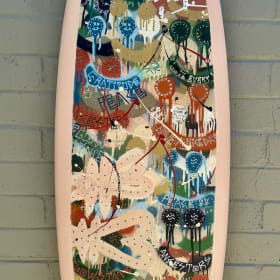
Importance
$4,800
Starting bid
Alex Silver Artist of Have A Nice Day Paint Co. Phone: (310) 995-9945 Web: handpaintco.com This board reflects the things that matter most. Layered into its surface are handwritten reminders of life’s true essentials — love, peace, gratitude, ancestry, and more — each word a quiet meditation on what grounds us. Instagram: @h.a.n.d.art

January 7th
$5,200
Starting bid
W.48"x H.72"x D.2.5" by Alex Silver Artist of Have A Nice Day Paint Co. Phone: (310) 995-9945 Web: handpaintco.com Instagram: @h.a.n.d.art This piece was created in the exact moments my family home was burning down in the LA fires. The idea of creating something new while something so special of mine was ending was the reason why this piece was made. After sitting around for hours watching the news of the fires slowly enter our neighborhood, I immediately went into my studio to paint. This piece not only symbolizes the sunset and the moon of January 7th, but also represents how one's artistic pursuit is a form of healing.

At the Turn
$4,800
Starting bid
W.72"x H.48"x D.1.5" by Alex Silver Artist of Have A Nice Day Paint Co. Phone: (310) 995-9945 Web: handpaintco.com This piece was created using a new technique combining layered paint, hand-cut stencils, and sand from my favorite beach to add texture and depth. It shows a winding road through the mountains, symbolizing the unknown paths we follow — only revealing what’s ahead once we reach the turn. Instagram: @h.a.n.d.art

Moon Phases
$3,800
Starting bid
W.48"x H.38" x D.1.5" by Alex Silver Artist of Have A Nice Day Paint Co. Phone: (310) 995-9945 Web: handpaintco.com This piece explores the phases of the moon using the same process of layered paint and hand-cut stencils. The technique creates subtle dimension and movement, reflecting the quiet rhythm of lunar change and the passing of time Instagram: @h.a.n.d.art

TAJ MAHAL AT SUNSET
$8,200
Starting bid
Agra, India 40" X 32" Acrylic by Irfan Murtaza https://www.artbyirfanmurtaza.com/galleries An immense mausoleum of white marble, built in Agra between 1631 and 1648 by order of the Mughal emperor Shah Jahan in memory of his favorite wife, the Taj Mahal is the jewel of Muslim art in India and one of the universally admired masterpieces of the world’s heritage. Ustad-Ahmad Lahori was the main architect of the Taj Mahal. Although, Taj Mahal is made of white marbel, however, at the time of sunset, there is a time when Taj Mahal changes it’s color to mild pink. The reflection of sunset is a beautiful addition to it’s beauty.

MISSION SAN JUAN CAPISTRANO
$5,800
Starting bid
San Juan Capistrano, California 32" X 40" by Irfan Murtaza https://www.artbyirfanmurtaza.com/galleries Mission San Juan Capistrano, historic landmark and museum, is the Birthplace of Orange County. It was founded more than two hundred years ago as the 7th of 21 missions statewide and features a chapel still standing where Saint Serra once celebrated Mass. Today, it is a monument to California’s multi-cultural history, embracing its Native American, Spanish, Mexican and European heritage. Originally built as a self sufficient community by Spanish Padres and Native Americans, the Mission was a center for agriculture, industry, education and religion. Famous for the Annual Return of the Swallows, Mission San Juan Capistrano is the “Jewel of the California Missions” and welcomes over 300,000 visitors each year. Mission San Juan Capistrano has been home to many people over its 240 years of history. Its history consists of memories and stories of its past inhabitants and present visitors. It is a place of historical, cultural, and religious significance, as well as a place of inspiration and education. Mission San Juan Capistrano was permanently founded by Junipero Serra on November 1, 1776, as the seventh of 21 missions to be established in California by the Spanish. It had originally been started at the end of the October 1775, but it had to be abandoned after only a week.
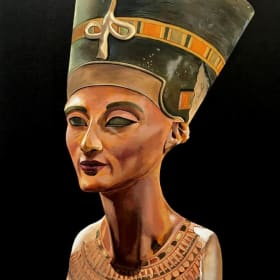
NEFERTITI
$6,400
Starting bid
24" x 36" Acrylic by Irfan Murtaza https://www.artbyirfanmurtaza.com/galleries Neferneferuaten Nefertiti (c. 1370 – c. 1330 BC) was an Egyptian queen and the Great Royal Wife (chief consort) of Akhenaten, an Egyptian Pharaoh. Nefertiti and her husband were known for a religious revolution, in which they worshipped one god only, Aten, or the sun disc. With her husband, she reigned at what was arguably the wealthiest period of Ancient Egyptian history. Some scholars believe that Nefertiti ruled briefly as Neferneferuaten after her husband’s death and before the accession of Tutankhamun, although this identification is a matter of ongoing debate. If Nefertiti did rule as Pharaoh, her reign was marked by the fall of Amarna and relocation of the capital back to the traditional city of Thebes. Nefertiti had many titles including Hereditary Princess; Great of Praises, Lady of Grace, Sweet of Love; Lady of The Two Lands; Main King’s Wife, his beloved; Great King’s Wife, his beloved, Lady of all Women; and Mistress of Upper and Lower Egypt.

SARCOPHAGUS
$6,400
Starting bid
24" x 36" Acrylic The original picture was taken by "Kenneth Garrett" by Irfan Murtaza https://www.artbyirfanmurtaza.com/galleries A sarcophagus (plural sarcophagi or sarcophagus) is a box-like funeral receptacle for a corpse, most commonly carved in stone, and usually displayed above ground, though it may also be buried. The word “sarcophagus” comes from Greek. Sarcophagi were most often designed to remain above ground. The earliest stone sarcophagi were used by Egyptian pharaohs of the 3rd dynasty, which reigned from about 2686 to 2613 B.C.E.
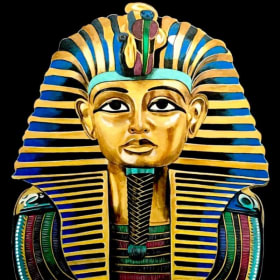
KING TUT
$6,400
Starting bid
24" x 36" Acrylic by Irfan Murtaza https://www.artbyirfanmurtaza.com/galleries Tutankhamun (c. 1342 – c. 1325 BCE) was an ancient Egyptian pharaoh who was the last of his royal family to rule during the end of the 18th dynasty (ruled c. 1334 – 1325 BCE). His father was the heretical king Akhenaten. His mother is his father’s sister, identified through DNA testing as an unknown mummy referred to as; “The Younger Lady” who was found in KV35. He took the throne at eight or nine years of age under the unprecedented vizier ship of his eventual successor, Ay, to whom he may have been related. Tutankhamun married his own half-sister Ankhesenamun. He reigned for about 9 years. During Tutankhamun’s reign, the position of Vizier had been split between Upper and Lower Egypt.

COLOSSEUM
$4,100
Starting bid
Rome, Italy 24" X 36" by Irfan Murtaza https://www.artbyirfanmurtaza.com/galleries The Colosseum, also known as the Flavian Amphitheatre is an oval amphitheater in the center of the city of Rome, Italy. Built of travertine limestone, tuff (volcanic rock), and brick-faced concrete,[1] it was the largest amphitheater ever built at the time and held 50,000 to 80,000 spectators. The Colosseum is just east of the Roman Forum. Construction began under the emperor Vespasian in AD 72 and was completed in AD 80 under his successor and heir, Titus Further modifications were made during the reign of Domitian (81–96). These three emperors are known as the Flavian dynasty, and the amphitheater was named in Latin for its association with their family name (Flavius). The Colosseum could hold an estimated 50,000 to 80,000 spectators at various points of its history over the centuries, having an average audience of some 65,000; it was used for gladiatorial contests and public spectacles such as mock sea battles (for only a short time as the hypogeum was soon filled in with mechanisms to support the other activities), animal hunts, executions, re-enactments of famous battles, and dramas based on Roman mythology. The building ceased to be used for entertainment in the early medieval era. It was later reused for such purposes as housing, workshops, and quarters for a religious order, a fortress, a quarry, and a Christian shrine. Although substantially ruined because of earthquakes and stone-robbers, the Colosseum is still an iconic symbol of Imperial Rome and is listed as one of the New7Wonders of the World. It is one of Rome’s most popular tourist attractions and also has links to the Roman Catholic Church, as each Good Friday the Pope leads a torchlit “Way of the Cross” procession that starts in the area around the Colosseum.

Pillars of Interior Mosque Zul Hulaifa
$7,550
Starting bid
Madinah, Saudi Arabia 40"X46" Acrylic The mosque was first built during the time of Umar II ibn ‘Abdul-Aziz, who was the Umayyad governor of Medina from 706-712 (87-93 AH) and has been renovated several times since, the last major renovation being during the reign of King Fahd (r. 1982–2005), who increased the area of the mosque by many times its original size and added several modern facilities. The current mosque building was built during the reign of King Fahd. It is in the shape of a square with an area of approximately 6,000 square meters (65,000 ft2) inside a 36,000 m2 (388,000 ft2) square-shaped enclosure. It consists of two sets of galleries separated by a wide yard of approximately 1000 square meters (11,000 ft2). The galleries are shaped as arches ending with long domes. At the center of the mosque is a spring of water housed inside a dome. The portion of the enclosure that does not include the mosque, measuring around 20,000 m2 (216,000 ft2), includes multiple restrooms and areas for changing into ihram and performing wudu. Most of the inner area is pathways, galleries, and trees. All 13 domes are located on the roof of the mosque, while the 5 minarets are located around the enclosure. One of the mosque’s minarets stands distinct from the others, square at the bottom but round at the top in a diagonal shape, rising to a height of 64 meters (210 ft.). The mosque is built in an Islamic architectural style, with Mamluk and Byzantine influences. by Irfan Murtaza https://www.artbyirfanmurtaza.com/galleries
Did you know? We fundraise with Zeffy to ensure 100% of your purchase goes to our mission!