


Tybee Island Catholic Women’s Club's 2026 Plant Sale
Add a donation for Tybee Island Catholic Women’s Club
$

CALIBRACHOA PASSION Hanging Basket: Blackberry Tart Mix
$18
•Abundant, small petunia-like flowers bloom from planting until the first frost. It is heat tolerant, does not require deadheading, and attracts hummingbirds.

GERANIUM Hanging Basket Savannah Pink Splash
$18

GERANIUM Hanging Basket Savannah Really Red
$18

ACHILLEA (Yarrow) New Vintage Red
$9
Feathery flat headed blooming plants. Bee Friendly, Attracts Butterflies, Attracts Hummingbirds, Attracts Birds, Full Sun, 12 – 24” tall, blooms early summer through fall. The lacy foliage looks delicate, but Yarrow is a rugged plant, thriving in hot, dry sites, including sidewalk gardens. Use it for erosion control or as an addition to pollinator gardens.
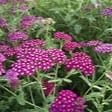
ACHILLEA (Yarrow) New Vintage Violet
$9
Feathery flat headed blooming plants. Bee Friendly, Attracts Butterflies, Attracts Hummingbirds, Attracts Birds, Full Sun, 12 – 24” tall, blooms early summer through fall. The lacy foliage looks delicate, but Yarrow is a rugged plant, thriving in hot, dry sites, including sidewalk gardens. Use it for erosion control or as an addition to pollinator gardens.

ACHILLEA (Yarrow) Yellow Terracotta
$9
Feathery flat headed blooming plants. Bee Friendly, Attracts Butterflies, Attracts Hummingbirds, Attracts Birds, Full Sun, 12 – 24” tall, blooms early summer through fall. The lacy foliage looks delicate, but Yarrow is a rugged plant, thriving in hot, dry sites, including sidewalk gardens. Use it for erosion control or as an addition to pollinator gardens.
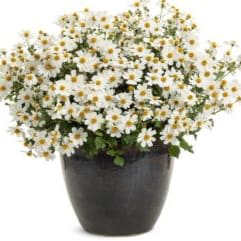

BIDENS Campfire Marshmallow
$10
The large, pure white flowers surround a golden yellow center. Strong heat tolerance and pure white, self-cleaning flowers are the highlights of this all-season bloomer. Large blossoms on densely mounded plants are highly attractive to pollinators.
This new pure white bidens adds a cool touch to full sun landscapes and containers from spring to fall. A showy tuft of gold in the center of each blossom draws in pollinating bees and the petals shed cleanly once spent, leaving the plant with a tidy appearance.
Continuous Bloom or Rebloomer, Long Blooming, Fall Interest, Heat Tolerant, Deadheading Not Necessary
Attracts: Bees
Plant Type: Annual
Garden Height: 8 - 14 Inches
Spacing: 10 - 16 Inches
Spread: 16 - 20 Inches
Light Requirement: Part Sun to Sun The optimum amount of sun or shade each plant needs to thrive: Full Sun (6+ hours), Part Sun (4-6 hours), Full Shade (up to 4 hours).
Bloom Time: Planting To Hard Frost
Maintenance Notes: Self-cleaning, no dead-heading necessary. This plant can be trimmed back at anytime if you feel it is outgrowing its space. This is a low-key easy to grow plant. It will perform best with moist soil, but can handle some drought stress.

COLEUS Beale Street
$9
Most coleus varieties flourish with at least dappled shade and direct sun limited to morning hours. Too much sun or intense midday rays leave foliage scorched and faded; too little light causes weak growth. A balance is important for coleus beauty and health Coleus do well in pots and planters, as long as they are planted in free-draining potting soil, fertilized regularly and given the right amount of sun. Avoid windy locations because coleus can be prone to breakage.

COLEUS Flamethrower Salsa Verde
$9
Most coleus varieties flourish with at least dappled shade and direct sun limited to morning hours. Too much sun or intense midday rays leave foliage scorched and faded; too little light causes weak growth. A balance is important for coleus beauty and health Coleus do well in pots and planters, as long as they are planted in free-draining potting soil, fertilized regularly and given the right amount of sun. Avoid windy locations because coleus can be prone to breakage.

COLEUS Stained Glass Flashbulb
$9
Most coleus varieties flourish with at least dappled shade and direct sun limited to morning hours. Too much sun or intense midday rays leave foliage scorched and faded; too little light causes weak growth. A balance is important for coleus beauty and health Coleus do well in pots and planters, as long as they are planted in free-draining potting soil, fertilized regularly and given the right amount of sun. Avoid windy locations because coleus can be prone to breakage.
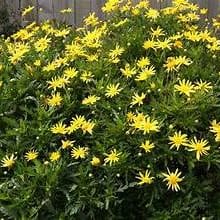
EURYOPS Bush Daisy Sonneschein
$9
Bright cheerful flowers cover this plant, attracting butterflies to the garden. Unique, finely divided leathery foliage has a shrublike habit. Great in rock gardens or beds. Needs protection from sudden frost and harsh winters.
Blooming Season: Summer - Autumn
Plant Habit: Mounded
Characteristics: Attracts Butterflies, Heat Tolerant
Water: Medium
Spacing: 36 - 48"
Height: 6 - 20"
Width: 8 - 10"
Exposure: Sun

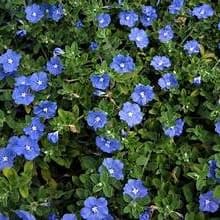
EVOLVOLUS Beach Bum Blue
$9
A heat-loving plant, evolvulus thrives in the middle of a hot summer and continues to impress all the way through fall. One of the most remarkable characteristics of evolvulus is that its flowers come in one of the most elusive colors in the horticultural world: a bright, true blue.
With its showy blue blooms held against silvery-green foliage, this plant flourishes in a garden bed as a low-growing, drought-tolerant groundcover or in a container. A close relative of morning glory (yet not toxic), the flowers tend to have a few of the same quirks, including closing up at the end of the day and re-opening the following morning.

GAURA Belleza Dark Pink
$9
Gaura is a Native North America wildflower that's easy to grow and adds whimsy, color and movement to your garden beds for you and pollinators to enjoy all summer long! Often called wand flower or butterfly flower, Gaura's butterfly shaped flowers produces nectar filled blooms that bees and butterflies will love. This deep rosey colored cultivar is truly unique and could be planted in groups or stand alone in a clump forming habit.


GRASS PENNISETUM Regal Princess
$10
Pennisetum 'Regal Princess' thrives in full sun and is hardy in zones 6-9.
•Prune your plants in late winter or early spring, just before new growth begins. Cut back to 6-12 inches above ground to encourage robust regrowth.
•Flowering typically occurs in late summer to early fall, showcasing the plant's stunning plumes. This is when Pennisetum 'Regal Princess' truly shines, attracting attention in any garden setting.
•Expect a moderate growth rate of 1-2 feet per year, making it a manageable addition to your landscape. In optimal conditions, the overall lifespan of this ornamental grass ranges from 3-5 years, providing lasting beauty in your garden.
•Expect this ornamental grass to take about 2 to 3 years to reach its full size. During this time, it will establish a robust presence in your landscape.


PACHYSTACHYS Golden Shrimp
$11
•This evergreen shrub or subshrub will typically reach up to two feet in height; slender white flowers emerge from showy, overlapping golden yellow bracts; blooms primarily in summer.
•Mounded Evergreen, grows to 3’ x 4’.
•Likes full sun to partial shade, and
•average to moist soil


PENTA Butterfly Deep Pink
$9
Butterfly Pentas prefer full sun in a moist well-drained area or a raised bed that has been enriched with liberal amounts of organic matter. Use a 2 to 4 inch layer of an organic hardwood mulch around individual plants. This will conserve moisture in the soil; however Butterfly Pentas do not like soggy soil for any extended period of time. Uses: Garden borders, cut flower garden, containers and butterfly gardens. Habit: Round, Spreading. Light: Full Sun Flower. Colors: Blush (light pink to white), cherry red, deep pink, light lavender, and red. Bloom Time: Spring, summer, early autumn. Size: Width: 1.5 ft.,Height: 1.5-2 ft. Garden Spacing: 15” apart. Attracts: Butterflies as well as bees and hummingbirds.

PENTA Butterfly Red
$9
Butterfly Pentas prefer full sun in a moist well-drained area or a raised bed that has been enriched with liberal amounts of organic matter. Use a 2 to 4 inch layer of an organic hardwood mulch around individual plants. This will conserve moisture in the soil; however Butterfly Pentas do not like soggy soil for any extended period of time. Uses: Garden borders, cut flower garden, containers and butterfly gardens. Habit: Round, Spreading. Light: Full Sun Flower. Colors: Blush (light pink to white), cherry red, deep pink, light lavender, and red. Bloom Time: Spring, summer, early autumn. Size: Width: 1.5 ft.,Height: 1.5-2 ft. Garden Spacing: 15” apart. Attracts: Butterflies as well as bees and hummingbirds.

PENTA Butterfly White
$9
Butterfly Pentas prefer full sun in a moist well-drained area or a raised bed that has been enriched with liberal amounts of organic matter. Use a 2 to 4 inch layer of an organic hardwood mulch around individual plants. This will conserve moisture in the soil; however Butterfly Pentas do not like soggy soil for any extended period of time. Uses: Garden borders, cut flower garden, containers and butterfly gardens. Habit: Round, Spreading. Light: Full Sun Flower. Colors: Blush (light pink to white), cherry red, deep pink, light lavender, and red. Bloom Time: Spring, summer, early autumn. Size: Width: 1.5 ft.,Height: 1.5-2 ft. Garden Spacing: 15” apart. Attracts: Butterflies as well as bees and hummingbirds.


PLECTRANTHUS Mona Lavender
$9
Upright stems are densely covered with dark-green ovate leaves with toothed edges. The glossy leaves are evergreen with purple undersides, making this a beautiful house plant year-round. Native to Tropical South Africa, Plectranthus 'Mona Lavender' likes warm temps and prefers shade.
Mature plants will reach a height of up to 2 ft.
Just when most plants are slowing down in autumn, this flowering beauty sends up tall spikes of tubular lavender flowers spotted with purple. It's the shorter daylight hours that trigger blooming.
Pinch and prune. Pinching off new stem tips will promote branching and keep the plant compact. (Don't toss them out -- you can easily propagate them for more plants.) Flowers grow at the tips of new branches, so you'll get more blooms this way. Also, cut off flower spikes when flowers have faded to encourage more blooms.


RUDBECKIA Denver Daisy
$9
•Gorgeous short-lived perennials that are often loved as annuals. While many of these charming plants can survive a few winters, they also have a knack for self-seeding, which is a bonus. This lovely midsized variety boasts large, cheerful golden-yellow daisies, with a striking black cone hugged by a big mahogany-red eye. You'll get to enjoy these beautiful blooms for months on a compact, bushy plant.
•They're not just pretty; they're also fantastic as cut flowers. By regularly removing faded blossoms, you can help extend the flowering season even more. Plus, the seed heads add lovely winter interest and work beautifully in dried arrangements. Once established, they are quite drought-tolerant, making them a wonderful addition to mixed containers.
Height: 1’-2’
Spread: 1’-2’
Bloom: June-September
Light: Full Sun-Part Sun
Water: Low-Medium
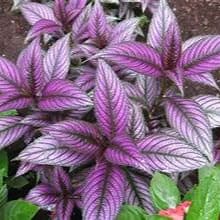

STROBILANTHUS Persian Shield
$9
Strobilanthes, also commonly known as Persian shield, is an annual plant or herbaceous perennial, depending on the climate. It is called a "Persian shield" because it looks like a little pointed armor shield ready for battle, with a flashy, purplish iridescence and a silvery metallic sheen.
Persian shield is native to Myanmar, not Persia, as its name implies. It grows best in tropical climates with dappled light, ample moisture, and consistent temperatures above 45°F.
•Requires warm growing conditions with dappled sunlight and moist, slightly acidic soil.
•Grows in full sun in northern climates, although it prefers partial sun in warmer, hotter climates.
•Only plant outdoors when the soil has warmed, and nighttime temperatures remain above 50°F.
•Pinch back plants to encourage bushier, healthier growth.
•Partial to full sun, annual except in zones 9-11
•1.5-3 ft. tall and 1.5-2 ft. wide at maturity
•Houseplant adaptable, heat & drought tolerant
•Purple black foliage


SUNPATIEN Rose Glow
$9
SunPatiens are low-maintenance plants that do well in virtually any spot with ample sun: containers, window boxes, hanging baskets, mass plantings in flower beds and borders, or as an edging plant along garden paths or walkways.


SUNPATIEN White
$9
SunPatiens are low-maintenance plants that do well in virtually any spot with ample sun: containers, window boxes, hanging baskets, mass plantings in flower beds and borders, or as an edging plant along garden paths or walkways.


TICWC Ball Cap
$15
Keep the sun off your face and out of your eyes with this nice 100%cotton pink ball cap
Did you know? We fundraise with Zeffy to ensure 100% of your purchase goes to our mission!