Hosted by
Wild Space Gallery
"You are Here" Wild Space Gallery Exhibition Silent Auction

"Pitcher Plant Bog", Laurie Meehan Elmer
$400
Starting bid
Florida is home to six native species of carnivorous pitcher plants, thriving in wet, nutrient-poor habitats like this vibrant bog. Protecting places like this through the Florida Wildlife Corridor helps preserve biodiversity and keep wild Florida connected.

"Bobcat Using a Culvert", fStop Foundation/William Freund
$200
Starting bid
A bobcat traverses through a wildlife underpass. With almost 1000 people a day moving to Florida the challenges and dangers faced by Florida wildlife are many. But dedicated work is being done by so many people and agencies in the state to create wildlife crossings and help save the Florida Wildlife Corridor before it's too late.
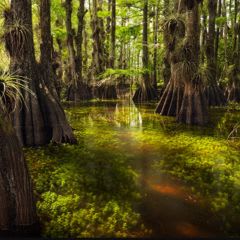
"Gator Hook Greens", Paul Marcellini
$2,000
Starting bid
Warm light illuminates the underwater vegetation in a cypress dome in Big Cypress National Preserve, revealing the quiet beauty of this unique wetland ecosystem. These domes support rich biodiversity and play a vital role in Florida’s hydrology and wildlife habitat.

"Manatee Hug", David Moynahan
$200
Starting bid
Two Florida manatees embrace in Wakulla Springs, the world’s largest and deepest freshwater spring. These gentle herbivores rely on warm water to survive winter, feeding on seagrass and vegetation in freshwater and estuarine systems. Wakulla Springs connects to the Gulf through the Floridan Aquifer and supports a rich diversity of wildlife. Protecting this habitat is vital to the health of Florida’s spring systems and the species that depend on them.

"7 Sisters Eye", Tessa Skiles
$200
Starting bid
This photograph was taken in the Seven Sisters Spring cave system, part of Florida’s vast network of over 1,000 springs. Within the Florida Wildlife Corridor, 171 first and second magnitude springs help sustain ecosystems and wildlife. Springs form when rainwater seeps into the ground, dissolving limestone and carving underground rivers and caves. Where the aquifer meets the surface, water emerges through sinkholes, creating the clear, life-giving springs integral to Florida’s landscape.

"Snail Kite", Mac Stone
$300
Starting bid
A male Everglades Snail Kite, an endangered raptor native to South Florida, swoops gracefully over restored wetlands in search of its sole prey: the elusive apple snail. Once pushed to the brink by habitat loss, this iconic bird now finds hope in an unlikely ally: an invasive snail species
that has helped revive its population. This image captures a rare moment of survival and adaptation in one of America's most fragile ecosystems.
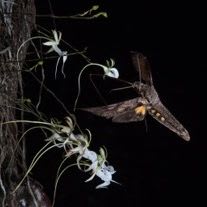
"The Real Orchid Thief", Mac Stone
$300
Starting bid
Giant sphynx moth pollinating a ghost orchid. The ghost orchid is an unusual and unusually beautiful flower found only in Cuba and the flooded forests of South Florida, where about 2,000 remain. An umbrella species, ghost orchids survive only in intact forests with high levels of
humidity, which protect them from winter freezes, drought, and wildfire. Only one in 10 ghost orchids produce a flower each year. These rare orchids were long thought to be pollinated by a single insect: the giant sphinx moth. But camera trap photographs by Carlton Ward Jr. and
fellow National Geographic Explorer Mac Stone have upended what scientists thought they knew about this iconic flower, and how it reproduces. During the summer months, one in 10 orchids will produce an ephemeral flower, of which one in 10 will successfully
attract a pollinator.
Did you know? We fundraise with Zeffy to ensure 100% of your purchase goes to our mission!