

Virtual Library of Orthodox Books
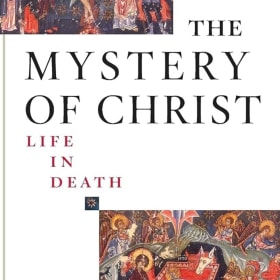
The Mystery of Christ Life in Death by Fr. John Behr
£
The book explores how Christ’s voluntary self-giving transforms death into life, darkness into light, and flesh into word.
Fr. Behr details how Christ is born within those who are "born again" in the Church, enabling believers to continue the incarnation of the Word by glorifying God in their bodies.
It challenges modern historical-critical methods, inviting readers to encounter Christ through the lens of early Church Patristics.
0
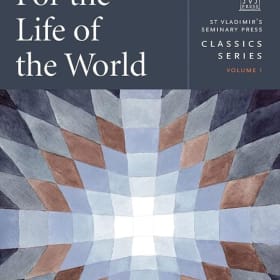
For the Life of the World by Alexander Schmemann
£
Fr. Schmemann argues against separating the "spiritual" and "material" worlds. He suggests that God created the world to be a "sacrament" of His presence—a gift through which humanity communes with Him.
The book posits that humanity's primary function is not simply to think (homo sapiens) or consume, but to act as a priest of creation, offering the world back to God in thanksgiving (Eucharist).
Schmemann targets secularism not merely as an absence of religion, but as a malfunction that separates life from worship. He illustrates how the Church's liturgy reveals the true meaning of life against secular emptiness.
Successive meditations examine the cosmic reality of everyday functions through Church practices, transforming things like eating, washing (Baptism), marriage, healing, and even facing death into holy, purposeful encounters with the Kingdom of God
0
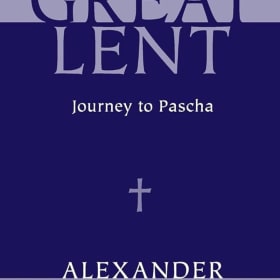
Great Lent Journey to Pascha by Alexander Schmemann
£
A masterpiece of liturgical theology written by Fr. Alexander Schmemann. Originally published in 1969, this highly influential book unpacks the deep spiritual meaning, liturgical rites, and devotional treasures of the Orthodox Christian path leading up to Easter (Pascha).
Fr. Schmemann famously defines the true atmosphere of Great Lent as a state of "bright sadness" (Greek: Χαρμολύπη). It represents a quiet sorrow over our separation from God, beautifully balanced by the radiating joy and anticipation of Christ's upcoming Resurrection.
The book serves as an expert guide explaining the historical and spiritual mechanics of essential Lenten services, including the Liturgy of the Presanctified Gifts, the Prayer of St. Ephraim the Syrian, and the Great Canon of St. Andrew of Crete.
Rather than a simple legalistic period of dietary rules, Schmemann portrays Lent as a school of repentance and a targeted spiritual journey. It is meant to soften the human heart, realign priorities, and recover our lost communion with God.
He bridges ancient Church rubrics with contemporary existence, explaining how practices like fasting, the Lenten prayer rhythm, and stepping back from worldly noise act as a vital spiritual reset for modern believers.
0
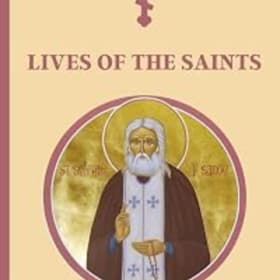
Lives of the Saints by Alexander Egger
£
Designed specifically to bridge traditional Eastern Christian heritage with a contemporary Western audience, this multi-part book series serves as a highly digestible entry point into the inspiring histories, trials, and triumphs of Orthodox holy figures.
Egger approaches the text as a compiler rather than a primary author. He curates historically faithful materials and simplifies complex hagiographies so they are approachable for children, adult converts, and anyone looking to deepen their faith.
Reflecting the compiler's own international background, the books heavily feature a diverse tapestry of saints. While there is a strong focus on popular Russian Orthodox figures (such as St. John of Shanghai and San Francisco), the volumes also deliberately spotlight lesser-known holy men and women from Scotland, Sicily, Milan, and Gaza.
Scotland: Early Celtic Luminaries
St. Drostan of Deer (6th Century): A devoted disciple of St. Columba. He established the famous monastery of Old Deer in Aberdeenshire and lived out his final years as a hermit, widely known for his deep humility and wonderworking.
St. Maelrubha of Applecross (c. 642–722): An Irish-born missionary monk who founded a spiritual stronghold at Applecross in the Scottish Highlands. He evangelized the Picts amid brutal tribal warfare and was eventually martyred by pagan raiders.
St. Kessog (6th Century): A missionary bishop who preached the Gospel across western Scotland and the Lennox area, operating from his monastic base on Inchtavannach island on Loch Lomond.
0
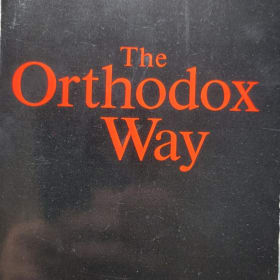
The Orthodox Way by Metropolitan Kallistos Ware
£
This book serves as a companion volume to his historical text, The Orthodox Church, shifting the focus from structural history to the living, mystical, and experiential heart of the faith.
Metropolitan Kallistos frames Christianity not as a rigid system of rules or legal concepts, but as a dynamic "Way" or path of lifelong spiritual ascent toward God.
The book beautifully balances cataphatic theology (what we can say about God) with apophatic theology (approaching God through holy mystery, silence, and what lies beyond human words).
He describes the Holy Trinity not as a dry abstract doctrine, but as a perfect, loving relationship of three Persons into which humanity is invited.
A central theme of the text is how human beings are created in the image and likeness of God, called to actively participate in the Divine nature through Christ and the Holy Spirit.
Ware provides deep insight into internal prayer, specifically detailing the invocation of the holy Name through the ancient practice of the Jesus Prayer.
0
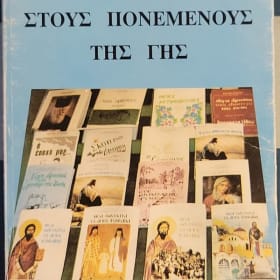
Στους Πονεμένους της Γής - Ευγενία Κλειδαρά
£
To the hurt of the earth by Eugenia Kleidara.
Elder Eugenia Kleidara (1929–2013) was an emblematic figure of Orthodoxy. She served for decades as Abbess of the Holy Monastery of Saints Raphael, Nicholas and Irene in Mytilene. She left behind an enormous body of work with more than 150 books, with most focusing on the miracles of the Saints of Lesvos.
Many of her works have been translated into foreign languages, while some have been approved by the Ministry of Education for Higher Education.
The book focuses on the Christian life, offering spiritual guidance, words of comfort and teachings for people who are tested by the difficulties and pain of life. The book is published in 281 pages and includes spiritual admonitions that act as a balm for the human soul.
0
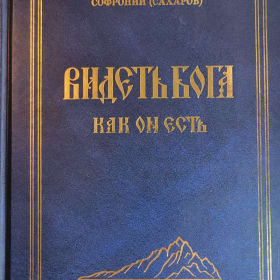
Видеть Бога как Он есть, Архимандрит Софроний Сахаров
£
Limited Print Hardback: To See God as He is by Archimandrite Sophrony Sakharov (1896–1993).
Written toward the end of his life, this book is considered Elder Sophrony’s definitive spiritual masterpiece. It is heavily autobiographical, detailing his personal ascetic struggles, profound theological insights on the nature of the human person, and deep mystical experiences regarding the Uncreated Light and the knowledge of God.
0
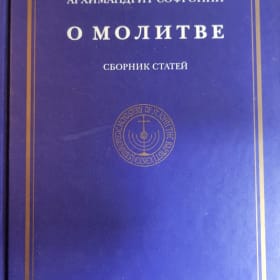
О МОЛИТВЕ, Архимандрит Софроний
£
On Prayer by Archimandrite Sophrony Sakharov (1896–1993), disciple of Saint Silouan the Athonite. Prepared by Elder Sophrony toward the end of his life, this spiritual classic is split into two primary parts. The first focuses on the deep theological foundations of Orthodox asceticism and the relation between God and man. The second acts as a practical guide to the spiritual practice of the Jesus Prayer.
0
UK Postage Add-On
£5
⚠️ Important Notice for Postal Delivery: If you require delivery within the UK, please ensure you select this UK Postage Add-On 1 or more times for multiple books and provide your full shipping address and email.
0
Did you know? We fundraise with Zeffy to ensure 100% of your purchase goes to our mission!