We use cookies to improve your experience on our platform. By clicking “Accept all cookies”, you agree to the storing of cookies on your device to enhance site navigation, analyze site usage and assist in our marketing efforts.
Cookies required for basic website functionality.
Cookies used to deliver content most relevant to you and your needs.
Cookies used to deliver content most relevant to you and your needs.
Cookies that help understand the performance of the website, how users interact with it and to identify bugs.
How is Zeffy free?
How is Zeffy free?
Zeffy relies entirely on optional contributions from donors. At the payment confirmation step - we ask donors to leave an optional contribution to Zeffy.
QR codes for Australian not-for-profits: uses, benefits and free setup guide (2026)
July 30, 2026
⚡TL;DR — The Short Answer
QR codes are one of the cheapest, fastest ways to connect offline supporters with your online donation form, event tickets, and volunteer sign-ups, and Zeffy generates them automatically at zero cost.
Instant mobile access to any Zeffy form with no technical setup and no platform fee.
Fits every AU channel: EOFY direct-mail appeals, gala table tents, trivia-night signage, and annual reports.
For DGR-endorsed charities, pair the code with "Donations of $2 or more are tax-deductible" and your ABN to deliver the canonical AU trust line alongside the scan.
Static codes suit stable content; dynamic codes let you update the destination after materials are printed and track scan numbers.
Codes without a clear call-to-action underperform; codes printed too small, in low light, or on glossy stands often fail to scan.
For small-to-mid Australian charities and not-for-profits, the window to capture a donation is often shorter than the time it takes to type a URL. Whether you are running an EOFY appeal in June, managing the table tents at a gala dinner, or handing out flyers at a community fete, QR codes give donors an instant path from a printed piece to a live donation form on their phone.
There is also a practical consolidation case. Many Australian charities are currently stitching together separate tools for donations, event ticketing, memberships, and donor management. A single platform that generates a QR code for every form, automatically and at no cost, reduces that burden considerably.
This guide covers what QR codes are, how to generate one free with Zeffy, and the placement strategies that work across every channel Australian not-for-profits use most.
Quick Response (QR) is a two-dimensional code you can scan using a smartphone camera. In the blink of an eye, it takes the user to the desired online page.
Here is how it works:
1. Open the smartphone camera and choose the scanner option
2. Point the camera at the QR code and hold it steadily until the link appears
3. Tap the link and go straight to the website or page
These codes have black squares arranged in a pattern on a white background. The unique square pattern contains data, like a URL. Phone cameras and similar devices can read this data and take you to the linked website, social media page, PDF, or landing page.
While most smartphones today have built-in QR code scanners, others can use free QR code scanner apps, including:
QR and Barcode Scanner
QR code reader app
Kaspersky QR Scanner
Free QR Scanner
Not-for-profits can use QR codes to link any page they want supporters to access, such as their website, event registration page, or donation form.
Types of QR codes for not-for-profits
1. Static QR codes
A static QR code contains fixed information that does not change once created. It is like a permanent digital barcode that stores data such as a website URL, contact information, or plain text. When scanned, it always leads to the same destination or displays the same content.
Static codes are simple to create and do not require ongoing management, making them ideal for print materials or long-term use.
They cannot be edited after generation. If you need to update the information, you will have to create a new code. They are best for stable, unchanging content or links.
2. Dynamic QR codes
A dynamic QR code is an advanced version of the static one. Not-for-profits can use these QR codes for time-sensitive information that needs to change.
Dynamic codes are also trackable, allowing you to see how many times they are scanned. The data can help your not-for-profit determine if its campaigns are gaining traction. You can make adjustments to the campaign marketing strategy by analysing the information.
For instance, a not-for-profit can use a dynamic code to promote a time-bound donation match campaign. This code allows the organisation to update the latest donation match status to incentivise donors.
How can a QR code benefit your not-for-profit?
There are plenty of benefits to QR code donations.
QR codes make it easy for people to donate to your cause with their devices. They provide a safe and convenient way for supporters to learn about your not-for-profit and show generosity.
The immediate access QR codes offer can create a sense of urgency, encouraging people to donate on the spot rather than postponing their decision.
Here is how these codes can benefit your organisation.
Cost-efficient
Most QR code generators are inexpensive to use and easy to integrate. You can generate and share QR codes to accept payments, promote fundraising events, offer invite links, and more with a few clicks.
You do not need technical knowledge or expertise to use these codes, saving resources on hiring external help.
Accessible and flexible
These patterned custom QR codes are a great way to promote mobile donations and flexible giving options. Anyone with a smartphone can access a payment link for online donations by scanning the code, with no delay or lengthy process.
QR codes can link to diverse content types, including websites, videos, contact information, or social media profiles. This flexibility makes them ideal for diverse use cases, from boosting marketing efforts and educating supporters to managing fundraising events.
Supporter and donor engagement
Placing QR codes on posters, flyers, and event tickets can drive traffic to a not-for-profit's website or social media. Organisations can lead supporters toward interactive content like videos, stories, or surveys, expanding reach and growing the supporter base.
Not-for-profits can further link QR codes to feedback forms or surveys to gather valuable insights from donors and volunteers. All these aspects help increase engagement in different ways.
Create a free QR code for donations in 7 steps with Zeffy
You can use several free online QR code generators to create unique codes. Go to the app and provide the link to a donation page, website, or any other online form, and the QR code generator will set up the code.
Zeffy takes the fundraising and QR code experience to the next level. As a 100% free fundraising platform with a built-in QR code generator, Zeffy simplifies the donation process and empowers your team for success.
When you create a fundraising campaign with Zeffy, it automatically generates a QR code at no cost at all.
Here are some simple steps to set up a QR code for donations with Zeffy:
1. Access your Zeffy dashboard by logging into your account
2. Go to the "Forms" section on the dashboard
3. Hover over the form you want to share and click "Edit"
4. At the top of the form page, click the "Share my Form" button
5. A pop-up window with sharing options will appear
6. Click on the "QR code" option in the pop-up window
7. Click "Copy Image" to copy the QR code to your clipboard for pasting into communication materials, or click "Download Image" to save the QR code as a PNG file on your device
Generate your own QR code instantly
Already have a donation page URL and want to generate a QR code right now? Use the tool below: paste your link, generate your code, and download it for print or digital use. For end-to-end fundraising with zero fees, the Zeffy steps above give you a QR code connected directly to your payment processing and donor management.
QR code strategies by channel
Generating a QR code is only half the job. Where you place it, how large you print it, and what you link it to determine whether it actually gets scanned. Here is what works across the five channels Australian not-for-profits use most.
Direct mail
Direct mail is one of the highest-performing channels for not-for-profit QR codes because recipients are already engaged: they chose to open the envelope.
Placement: Position the QR code in the lower-right third of the letter or on a tear-off reply card. This mirrors the natural reading path and keeps the code visible without competing with your headline or ask.
Sizing: Print at a minimum of 1 inch x 1 inch (2.5 cm x 2.5 cm). For postcards, 1.5 inches x 1.5 inches (3.8 cm x 3.8 cm) gives you more reliable scan performance across phone models.
Resolution: Export your QR code as a PNG or SVG at 300 DPI or higher. Anything below 200 DPI risks pixelation when printed, which causes scan failures. If your printer requests a vector file, SVG format scales without quality loss.
Best practice: Use a dynamic QR code so you can update the destination URL if your campaign page changes after mail has been sent. Include a short URL beneath the code so recipients who cannot scan can still find the page.
AU trust line: For DGR-endorsed charities, print "Donations of $2 or more are tax-deductible" and your ABN alongside the code. This is the canonical trust line that appears on nearly every Tier-1 AU charity donation piece (ATO DGR overview; donors can verify your DGR status at ABN Lookup).
What to link: A pre-filled donation form with the appeal amount already selected reduces friction and increases conversion. If your platform supports UTM parameters, tag the URL so you can attribute gifts to the direct-mail piece specifically.
Email newsletters
Email is a digital channel, so a QR code in an email is most useful when you expect recipients to read on a desktop and give on a mobile device, or when you want them to save something to use offline.
Placement: Embed the QR code midway through the email or in a dedicated "Give by phone" section near the primary CTA button. Do not replace the button with the QR code: include both.
Sizing: Display at 150 to 200 pixels wide within the email template. This renders cleanly on desktop without overwhelming the layout.
Resolution: Use PNG at 150 DPI minimum for email; the screen rendering is forgiving, but avoid upscaling a small image.
Best practice: Add alt text to the QR code image ("Scan to donate on your phone") so screen readers describe it and it remains usable if images are blocked. Test across Gmail, Outlook, and Apple Mail before sending.
EOFY timing: EOFY appeal emails (May to June) are the highest-value moment to pair a desktop-read email with a phone-scanned QR code. The AU giving calendar peaks at 30 June, not December, because donors are actively looking to lock in a tax-deductible gift before the financial year ends (ATO, Not-for-profit organisations hub; ACNC).
What to link: A mobile-optimised donation page or event registration. Segment your list and use different QR codes for different segments so you can track which audience responds best.
Event signage
Events are the most time-sensitive environment for QR codes. Attendees are present for a limited window, and a code that fails to scan is a missed opportunity.
Placement: Display codes at eye level on table tents, retractable banners, and seat-back cards. Avoid placing codes near reflective surfaces (glossy acrylic stands, metallic backdrops) that create glare. At registration tables, position the code facing the guest, not the volunteer.
Sizing: For a table tent, 2 inches x 2 inches (5 cm x 5 cm) minimum. For a retractable banner viewed from 1 to 2 metres away, print at 4 inches x 4 inches (10 cm x 10 cm) or larger. A general rule: for every foot (30 cm) of intended scanning distance, add roughly 0.4 inches (1 cm) to the QR code's side length.
Resolution: 300 DPI for all printed event materials. If you are printing a large-format banner (90 cm wide or more), request that your print vendor check the QR code with a scanner before the run is completed.
Best practice: Test every printed QR code on both iOS and Android before the event. Assign one volunteer to do a pre-event scan audit. Have a backup: either a printed URL or a short link displayed alongside the code.
AU event types: Gala dinners, trivia nights, quiz nights, golf days, and fetes are the typical AU not-for-profit event formats where table-tent QR codes perform well. For galas with a silent auction segment, QR codes on table tents can link directly to the mobile-bidding page, connecting attendees to Zeffy's auction tools or a similar AU-native mobile-bidding platform at the moment they are most engaged.
What to link: Your Zeffy donation form, volunteer sign-up, or event check-in page.
Social media posts
QR codes in social media content serve a different purpose than in print: they bridge a digital post to a specific action, particularly useful in Stories, Reels, and image carousels where clickable links are limited.
Placement: For Instagram Stories and Facebook Stories, place the QR code in the lower half of the frame, away from the swipe-up zone and platform UI elements. For static feed posts, centre the QR code in a dedicated slide within a carousel.
Sizing: QR codes in social media images should occupy at least 25 to 30% of the image width so they are large enough to scan from a second device if a follower is viewing on desktop.
Resolution: Export at 72 DPI for web and social, but start from a 300 DPI source file to ensure the pattern remains crisp after social platform compression.
Best practice: Add a visible instruction ("Screenshot and scan to donate") because most users do not instinctively know to screenshot a QR code from their feed. For platforms that allow a link-in-bio, use both the bio link and the QR code in content to capture both behaviour types.
EOFY timing: EOFY appeals (May to June) pair well with social QR codes: donors are actively looking to lock in a tax-deductible gift before 30 June, and a scannable code that lands them on a DGR-receipted form removes the last step. For peer-to-peer campaigns, a social QR code pointing to your team-fundraising portal can also drive registrations in the weeks leading up to a community event.
Annual reports have a longer shelf life than almost any other not-for-profit communication. A QR code in an annual report can keep driving engagement and donations for twelve months or more.
Placement: Include one primary QR code on the inside front cover or the opening letter from the CEO or Chair, linking to a digital version of the full report. Add secondary QR codes next to specific program sections linking to videos, impact stories, or related donation pages.
Sizing: 1.5 inches x 1.5 inches (3.8 cm x 3.8 cm) for report body placement. For the cover, 2 inches x 2 inches (5 cm x 5 cm) is appropriate and adds visual weight that signals intentionality.
Resolution: 300 DPI minimum. Annual reports are often printed professionally, so request a pre-press proof that includes a QR code scan test before the full run.
Best practice: Use a dynamic QR code so you can update the destination if the linked page changes mid-year without reprinting. Include a short URL alongside each code. If your report is also distributed as a PDF, make the QR code image a clickable hyperlink as well so digital readers can tap directly.
AU compliance note: ACNC-registered charities file an Annual Information Statement (AIS) with the ACNC each year. The printed annual report is a separate supporter-facing document. Linking a QR code from the annual report to the full digital version keeps the print piece concise while giving engaged donors the depth they want.
What to link: Your interactive digital annual report, a tribute giving page, or a general donation form with a reference to the report year pre-filled in the notes field. Donors reading an annual report are already engaged: a low-friction giving link captures that momentum.
QR code do's and don'ts for Australian charities
Do: Keep a quiet zone
The blank space surrounding the pixels is the quiet zone. The QR code will become unscannable without this blank space. Keep the area around the code and the blank space clean and avoid blurring the edges.
Do: Include brand colours, logos, or images
Adding your not-for-profit's brand logo, image, and name on the form with the QR code helps attract more donors. Use your branding elements and colours to trigger brand recall.
Donors will scan to donate only when they recognise and trust your organisation.
Do: Check the links
Check whether the link is correct and working. Use dynamic codes for time-sensitive links. Regularly examine your links to keep your content up to date.
This simple but important check adds credibility, making your not-for-profit look professional. It gives donors and supporters access to your organisation at all times.
Do: Test, test, test!
Before printing your QR code, conduct rounds of tests. Scan the QR code and see if it is legible on different devices. Low-pixel quality printing can make your QR code unscannable. Test the code before putting it on all materials.
Don't: Use QR codes just for donation pages
There are several ways to use QR codes that are not limited to the donation page alone. From including unique QR codes in direct mail for easy giving on a mobile device to printing them on marketing materials at an event, a QR code takes the friction out of donating.
QR codes are also useful for engaging and connecting with donors by sharing interactive content or promotional material. This will further your cause and encourage them to contribute to your organisation.
Don't: Forget a call-to-action (CTA)
A QR code alone may not work without a clear and compelling CTA. The convenient code ensures that when donors take action, it is easier, faster, and more flexible. It may not bring the same results if you overlook a CTA that triggers the action.
A clear CTA encourages the supporter to take the desired action. For example, "Donate Now" or "Support Our Cause" to drive more scans and donations.
10+ ways Australian charities can use QR codes beyond donations
Donation collection is the most obvious use case, but it is far from the only one. Not-for-profits that get the most mileage from QR codes treat them as a universal bridge between their physical presence and their digital ecosystem. Here are more than ten proven ways to put them to work.
1. Point-of-sale giving at retail partners
Partner with a local café or independent grocer to place a QR code at the register. Customers who want to round up their purchase or make a small donation can scan and give in seconds. In Australia, round-up giving at the register tends to work best when framed as a straightforward donation rather than a tip, because AU supporters respond to a direct giving ask rather than an opt-in gratuity.
The setup takes minutes. You print your Zeffy donation form's QR code, frame it, and hand it to your partner business. There is no app to install and no hardware to buy. Your retail partner becomes a passive fundraising channel with zero ongoing effort from your team.
This approach works especially well for organisations with strong community name recognition. The register moment is low-pressure: customers who want to give can, and those who do not simply will not. That removes the awkwardness of a direct ask and makes spontaneous giving feel natural.
2. Volunteer recruitment
Place QR codes on flyers, yard signs, or event banners that link directly to your volunteer sign-up form. Instead of asking people to "search your website later" (they will not), you capture interest in the moment. Link to a pre-filled form with the specific event or role already selected to reduce drop-off.
Volunteer interest is highest right after someone has a positive interaction with your organisation: at an event, after a presentation, or when they see your work firsthand. A QR code lets you act on that moment before it fades.
If you are recruiting for a specific program, create a separate QR code for each role or shift. It is a small extra step that dramatically reduces how much back-and-forth your volunteer coordinator has to do.
3. Event check-in
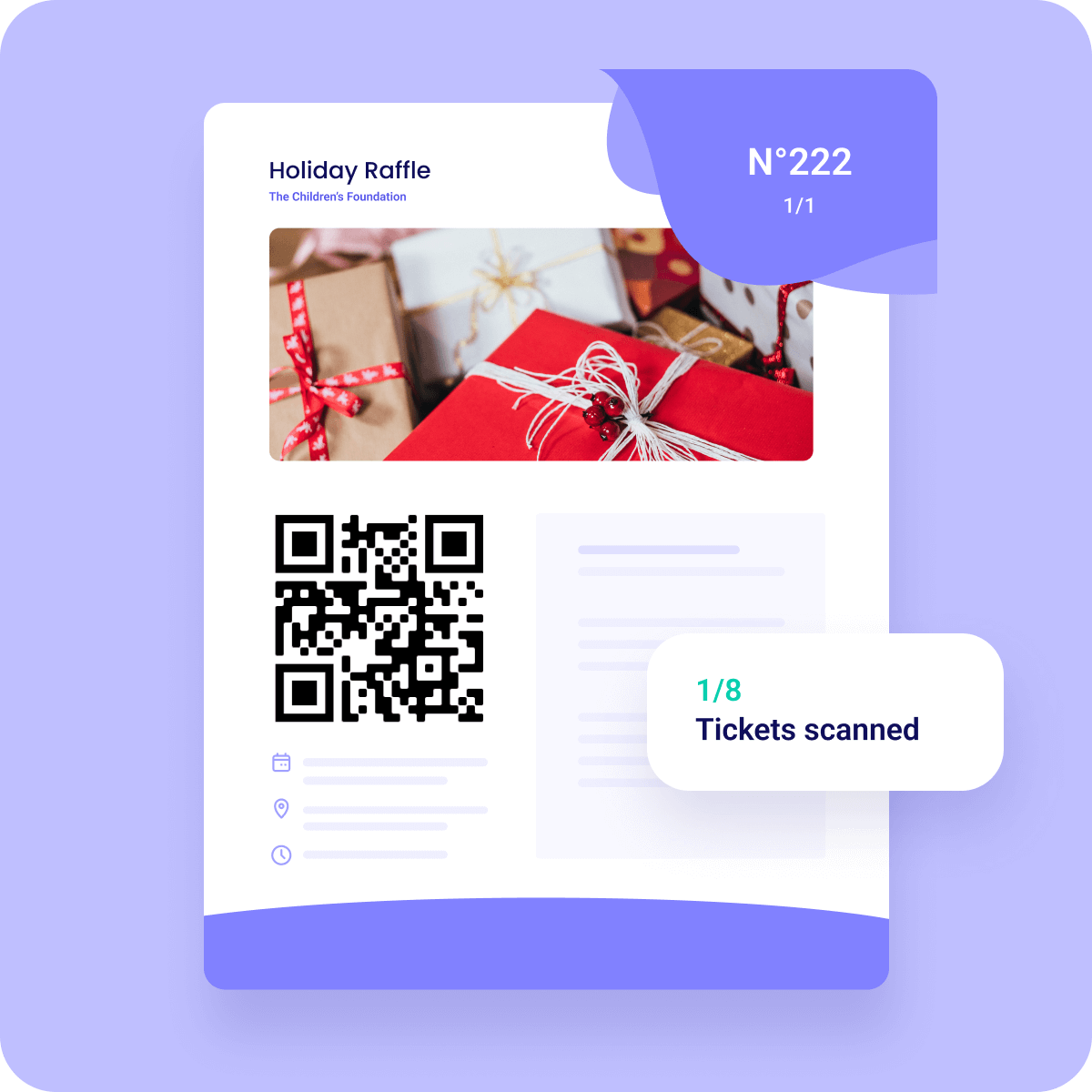
Speed up check-in at fun runs, trivia nights, gala dinners, and community events by assigning each registered attendee a unique QR code. Staff scan codes at the door rather than hunting through printed lists. Zeffy's event ticketing tools and many AU-native ticketing platforms can generate these automatically, consolidating ticketing, QR code generation, and donor management in one free platform.
Long check-in lines frustrate guests before your event even starts. Scanning QR codes takes about two seconds per person. A table of two staff members can handle hundreds of check-ins in the time it used to take to flip through paper lists for a dozen guests.
This approach also reduces errors. No more crossed-off names, illegible handwriting, or missing registrations. The scan confirms attendance digitally, and your data is ready to export for follow-up emails the next morning.
4. Awareness campaigns
A QR code on a poster, transit ad, or direct-mail piece can route passersby to a campaign video, impact story, or petition, turning a static impression into an active engagement. Animal shelters frequently use this on adoption posters to show video profiles of individual animals.
Static printed materials have always had the same limitation: they can only say so much. A QR code removes that ceiling entirely. Your poster becomes a gateway to a three-minute video, a full impact report, or a real-time campaign update, whatever will move your audience most.
The key is matching the destination to the context. A transit ad gets a few seconds of attention, so link to something short and emotionally direct. A direct-mail piece gets more time, so a longer story or an interactive impact calculator makes sense there.
5. Social media growth
Growing your follower count offline is hard. A QR code printed on program booklets, merchandise, or table tents can link to your Instagram, Facebook, or LinkedIn page. Add a clear prompt like "Follow us for impact updates" to give people a reason to scan.
Attendees at your events are already warm: they care about your cause. That is the best possible moment to ask them to stay connected. A table tent with a QR code and a simple line like "See the difference your donation makes: follow us on Instagram" can convert an in-person supporter into a long-term digital audience member.
You can also use this approach on merchandise. A t-shirt or tote bag with a QR code on the inside label turns every piece into a soft recruitment tool.
6. Feedback and surveys
After an event or program, hand out cards or display a sign with a QR code linking to a short survey. Response rates are dramatically higher when participants can complete the survey on their phone before they leave the room.
Most not-for-profits collect almost no real-time feedback from program participants, not because people do not want to share it, but because the process is too cumbersome. A QR code displayed at the end of a session lets you collect honest, in-the-moment responses while they still matter.
Keep the linked survey short: five questions or fewer. You will get better completion rates and more honest answers. Use the data to improve future programming and share what you learned with your board and funders.
7. Annual reports and impact updates
Instead of mailing bulky printed reports, include a QR code that links to your interactive digital annual report. This works well on donor acknowledgement letters and EOFY appeals, giving supporters a deeper dive without inflating printing costs.
Printed annual reports are expensive to produce and rarely read cover to cover. A one-page summary with a QR code linking to the full digital version gives you the best of both worlds: a physical touchpoint that does not break your printing budget, and a rich digital experience for supporters who want more.
This also lets you keep the content current. If you finalise donor totals or project outcomes after print materials have already been mailed, you can update the linked digital report without reprinting anything.
8. Membership sign-ups
Membership-based not-for-profits, including museums, community-language schools, sports clubs, and incorporated associations, can use QR codes at welcome desks, events, and exhibit exits to route visitors directly to a membership enrolment page.
The best time to ask someone to join is when they are actively enjoying what you offer. A QR code at the exit of a museum gallery or the end of a community class catches visitors at peak enthusiasm. Pair it with a simple value statement ("Members get free admission year-round") and you have a compelling pitch that takes about ten seconds to act on.
You do not need any special equipment. Print the code, laminate it, and place it anywhere foot traffic naturally slows down: near exits, at coat check, or beside the reception desk.
9. Petition signing
Advocacy organisations can deploy QR codes at tabling events, town halls, or on printed collateral to collect petition signatures digitally. This also lets you capture email addresses for follow-up organising.
Paper petitions have a real problem: the data-entry burden on your staff after the event is significant, and handwriting is often illegible. A digital form reached by QR code gives you clean, exportable data from the first signature. You can see exactly how many people signed, when, and from which event or location if you use UTM parameters.
It also lowers the barrier for passersby. Someone who does not want to stop and talk to a tabling volunteer can still scan, sign, and walk on, and you have captured their email for future outreach.
10. Educational content and resources
Libraries, health not-for-profits, and literacy organisations use QR codes to extend programming beyond the room. A parenting workshop might include a QR code on a take-home sheet linking to video tutorials, reading lists, or translated resources.
Most programs end when the session ends. A QR code on a take-home sheet extends your impact into the days and weeks that follow. Participants can revisit instructions, watch a demonstration again, or share resources with family members who were not in the room.
This is especially powerful for health and social-service organisations where following through on the information shared in a session directly affects outcomes. Linking to translated materials also makes your programming more accessible to multilingual communities without adding printing costs.
11. Tribute and memorial giving pages
Place a QR code in a memorial program or on a tribute plaque that links to a dedicated giving page honouring a specific person. It transforms a printed keepsake into an ongoing fundraising touchpoint.
Tribute giving pages are some of the highest-converting donation pages not-for-profits operate: people give in memory of someone they loved, and the motivation is deeply personal. A QR code printed inside a memorial program or affixed to a tribute bench keeps that page accessible long after the initial moment of grief has passed.
Families often share these programs with relatives who were not present. Each copy becomes a potential giving touchpoint, reaching donors your organisation would never have found through standard outreach.
Implementation tip for all use cases: Always link to a mobile-optimised page, as most scans happen on phones. Test each QR code on both iOS and Android before printing, and use a URL shortener or UTM parameter so you can track how many scans each placement generates.
Concluding thoughts on QR codes for donations
QR codes are more than just a tech trend: they are a practical tool that can transform how supporters interact with your not-for-profit. By providing instant, contactless access to your donation pages, direct-mail appeals, event registrations, or informational content, QR codes can significantly boost engagement and contributions.
As you implement QR codes in your strategy, Zeffy's 100% free fundraising software not only generates QR codes but also provides a full suite of tools to manage donations, events, and supporter engagement, at no cost to your organisation.
A note on data and privacy: the landing pages your QR codes point to should honour the Australian Privacy Principles under the Privacy Act 1988 (Cth). Collect only what you need, store it securely, and vet any third-party tools that handle your donors' personal information. This is particularly important for not-for-profits growing their digital donor base through offline-to-online QR code journeys.
By embracing this technology, you are not just modernising your approach: you are creating more accessible pathways for supporters to contribute to your cause.
Yes. Zeffy generates a QR code automatically for every fundraising form you create, at no cost. You can download it as a PNG file and use it on any printed or digital material. Third-party QR code generator tools are also available for free online if you already have a donation page URL hosted elsewhere.
QR code generator is a tool that converts a URL, text string, or other data into a scannable QR code image. You paste the link to your donation form or event registration page, and the generator creates the patterned square image you can download and place on print materials, signage, emails, or social media. Zeffy includes a built-in generator that is connected directly to your payment processing and donor management, so there is nothing extra to set up.
QR codes work best wherever your supporters encounter your organisation in a physical or low-click context: direct-mail pieces, event signage (gala dinners, trivia nights, fun runs, fetes), printed annual reports, merchandise, and social media posts where a direct link is not available. For Australian charities, EOFY appeals in May and June are a particularly high-value moment, because donors are actively looking to lock in a tax-deductible gift before 30 June.
Not-for-profits use QR codes to bridge offline materials with online actions. Common uses include linking to donation forms on direct-mail appeal letters, pointing to event registration pages on event signage, routing social media followers to peer-to-peer fundraising portals, speeding up event check-in with unique attendee codes, and directing annual report readers to a digital version. For DGR-endorsed charities, pairing the code with "Donations of $2 or more are tax-deductible" and your ABN adds the trust signal donors expect on a receipt-ready form.
The best option for an Australian not-for-profit is one that generates the code automatically as part of your fundraising workflow, so you never have to move between tools. Zeffy does exactly this: every form you create (donation, event ticket, membership, peer-to-peer) generates a QR code instantly, with no platform fee, no transaction fee, and no cost ever. If you already have a standalone donation page on another platform, free third-party generators (such as QR Code Generator or Canva's built-in tool) let you create a basic code from any URL.
Look for people who attend related events, follow relevant Facebook groups, or subscribe to aligned newsletters.These aren’t just potential donors—they’re your future advocates.
Look for people who attend related events, follow relevant Facebook groups, or subscribe to aligned newsletters.These aren’t just potential donors—they’re your future advocates.





.webp)

