We use cookies to improve your experience on our platform. By clicking “Accept all cookies”, you agree to the storing of cookies on your device to enhance site navigation, analyze site usage and assist in our marketing efforts.
Cookies required for basic website functionality.
Cookies used to deliver content most relevant to you and your needs.
Cookies used to deliver content most relevant to you and your needs.
Cookies that help understand the performance of the website, how users interact with it and to identify bugs.
How is Zeffy free?
How is Zeffy free?
Zeffy relies entirely on optional contributions from donors. At the payment confirmation step - we ask donors to leave an optional contribution to Zeffy.
WordPress for Nonprofits 2026: $0 Donate Button Setup
June 16, 2026
⚡TL;DR — The Short Answer
Right fit for: small-to-mid nonprofits (under $1M budget, no dedicated IT staff) with at least one technical volunteer who can keep a website updated.
Pick WordPress.org (self-hosted) almost every time. WordPress.com locks you out of the free plugins that make WordPress worth using for a nonprofit.
Realistic total cost: $10 to $15 a year for a domain, $36 to $360 a year for hosting, optional one-time theme cost. No mandatory plugin fees if you pick free tools.
The silent leak isn't hosting. It's the donation layer on top. A 3% to 6% fee on $50,000 in annual giving costs $1,500 to $3,000 a year, every year, forever.
Simplest donate-button path: install Zeffy's free WordPress plugin, paste your campaign URL, drop one shortcode. $0 platform fee, $0 transaction fee, $0 card fee.
Don't have a website volunteer with bandwidth? Skip WordPress for now. A free Zeffy organization page (your fundraising hub) or a hosted donation page, plus your social bios, may do more for you in 2026.
For most small nonprofits, the WordPress decision isn't WordPress.com vs WordPress.org. It's whether you have a volunteer who can keep the site updated and embed the donate button, and which donation layer won't quietly skim 3% to 6% off every gift you fight to earn.
This guide is written for that reality. If you're a one-person team or a board of volunteers at a sub-$1M nonprofit with no IT staff, you'll get straight answers on what to skip, what to pay for, and the lowest-friction way to get a working donate button on your site by tonight.
WordPress.com vs WordPress.org: which should your nonprofit choose?
This is the question Reddit threads and community forums see most often, and it confuses almost every first-time nonprofit. The names are nearly identical, but the products are not. WordPress.org is the free, open-source software you install on your own hosting account. WordPress.com is a paid hosting service that runs that software for you, with restrictions on which plugins and themes you can use.
WordPress powers 41.5% of all websites globally (per W3Techs, as of June 2026), and almost all of that is WordPress.org.
Question
WordPress.com
WordPress.org (self-hosted)
Cost
Free tier with WordPress.com subdomain; paid plans from about $4 to $45 per month
Free software; you pay for hosting ($3 to $30 per month) and a domain ($10 to $15 per year)
Hosting
Included (managed by WordPress.com)
You choose your own host
Plugin access
Limited on Free/Personal/Premium tiers; full plugin library only on Business plan ($25/month) and up
Full access to 60,000+ free plugins, no plan gating
Customization
Restricted on lower tiers
Full control over themes, code, and design
Technical skill needed
Low
Low to moderate (install is one click; updates are ongoing)
Ideal for
Nonprofits that want a hosted site and won't need plugins like the Zeffy donate button, GiveWP, or Wordfence
Nonprofits that want a real donation embed, SEO control, and the full plugin ecosystem
A simple decision tree:
If you have no volunteer who can maintain a website: skip WordPress for now. Use a hosted Zeffy donation page and share the link from your social bios and email signature. Come back to WordPress when you have capacity.
If you have one technical volunteer with recurring availability: WordPress.org plus a budget host plus a free donate-button plugin. This is the right answer for most small nonprofits.
If you want hosting handled for you and don't mind paying for plugins: WordPress.com Business plan ($25/month) so you can install the donation plugins you'll actually need. Lower tiers will block them.
If you're membership-heavy (dues, member directory, gated content): consider Wild Apricot instead. See When WordPress isn't the right choice.
For a small nonprofit: WordPress.org wins almost every time. The plugin gate on lower WordPress.com tiers blocks the free tools that make WordPress worth using.
The real cost of running a nonprofit WordPress site
Most "cost of a WordPress site" guides give you a single number. That number is wrong because WordPress is a stack, and the stack is built from parts you can swap. Here is the honest breakdown you can audit yourself.
Component
Typical annual cost
Notes
Domain name (.org)
$10 to $15 per year
One mandatory cost. Buy through a registrar like Namecheap or your host.
Hosting
$36 to $360 per year
Budget shared hosting starts around $3 per month; managed WordPress hosting runs $20 to $30 per month.
Theme
$0 to $200 one-time
10,000+ free themes are available. Premium themes (Divi, Astra Pro) are usually one-time or annual.
If you pay for GiveWP add-ons, WPForms Pro, or a premium security suite.
Volunteer or staff time
Real but unbudgeted
Plan on 2 to 4 hours a month for updates, backups, and small content edits.
Add the rows you actually pick and you'll see a realistic range. A volunteer-run setup on a budget host with all-free plugins runs roughly $50 to $80 a year. A polished setup with managed hosting and a premium theme runs $400 to $700 a year.
The number that actually matters
Hosting is a fixed cost. That is not where small nonprofits leak money. The real silent leak is the fundraising layer that sits on top of your site. A typical free donation tool quietly skims 3% to 6% of every donation in platform fees and credit card processing. On $50,000 in annual giving, that's $1,500 to $3,000 a year, every year, forever.
So when you're comparing donation plugins, the question isn't "what does the plugin cost?" It's "what percentage of every gift never reaches my mission?" For a small org that runs on individual gifts, that question dwarfs the cost of hosting. We come back to it in Best WordPress donation plugins compared.
For a small nonprofit: budget around $50 to $150 a year for the website itself, then put your real attention on the fundraising layer. The fee leak on top of WordPress costs more than WordPress ever will.
The fix is not a cheaper plugin, it is a $0 one. Zeffy's free WordPress donate button plugin adds no platform fee, no transaction fee, and no card fee on top of your giving, so the 3 to 6 percent leak drops to zero.
Host selection is a real decision, but it isn't a complicated one. For a small nonprofit with no IT staff, you want: a one-click WordPress install, decent uptime, support that answers when something breaks, and a price you can defend at the next board meeting. Discounts are a bonus, not a reason to choose.
You may have seen claims that Bluehost, SiteGround, WP Engine, or DreamHost offer free or discounted hosting for nonprofits. As of mid-2026 we could not verify any of these programs at primary source. If a discount matters to your decision, check the vendor's own current nonprofit page before you commit.
Host
Monthly starting cost
One-click WP install
Right fit when
Bluehost
~$3 to $13
Yes
You want the cheapest entry point and don't mind that community sentiment has shifted in recent years; verify current reviews before committing.
SiteGround
~$3 to $8 (intro)
Yes
You want a solid mid-tier shared host with strong support; intro pricing renews higher.
WP Engine
~$20 to $30
Yes (managed)
You can budget for managed hosting and want the platform to handle backups, staging, and security.
DreamHost
~$3 to $17
Yes
You want a budget shared or VPS host with a long-standing reputation in the open-source community.
For a small nonprofit: if your budget is tight, a shared plan on SiteGround or DreamHost ($3 to $5 a month) is the right answer. If you can spend $20 a month and want fewer maintenance headaches, managed WordPress hosting on WP Engine pays for itself in the time your volunteer doesn't spend troubleshooting.
How to set up WordPress for your nonprofit (step by step)
This is the WordPress.org path. If you picked WordPress.com instead, your host is already chosen and most of the install is automatic.
Step 1: Pick a hosting plan and a domain
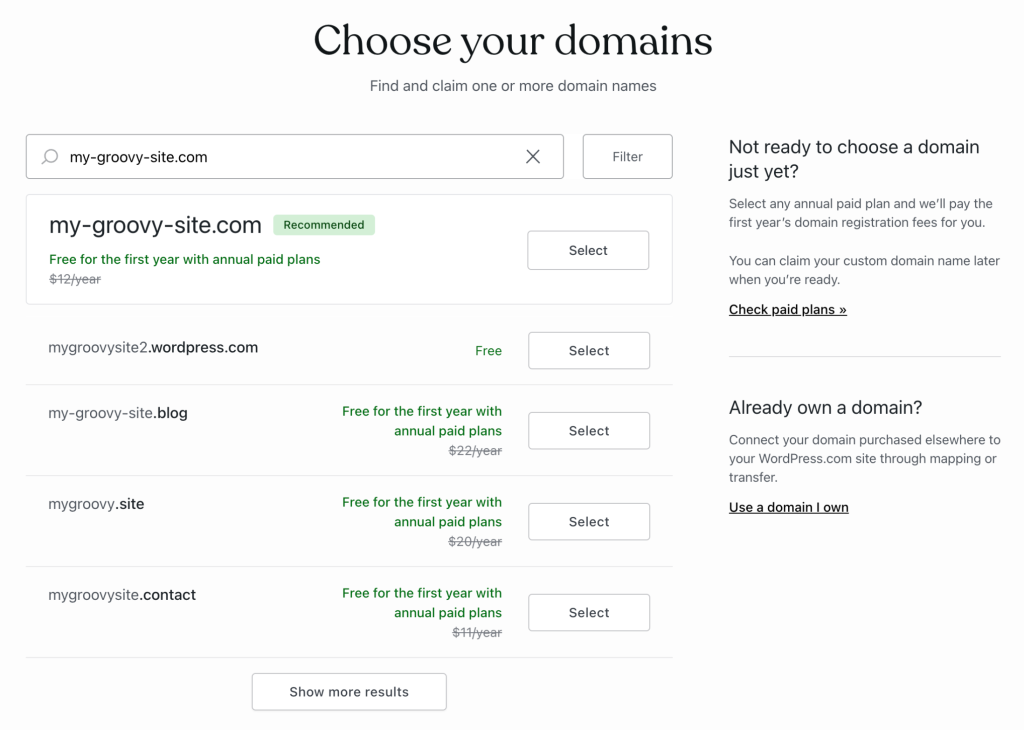
Sign up with one of the hosts above and choose a domain at checkout (most include the first year free). A few rules: keep it short, use the .org extension where you can, avoid hyphens and numbers, and make sure it's easy to say out loud.
Step 2: Install WordPress
Every major host has a one-click WordPress installer in the control panel, usually labeled "Install WordPress" or "WordPress" under "Website" or "Applications." Run it, set your admin username and password, and write them down. You'll log in at yoursite.org/wp-admin.
Step 3: Pick a theme
From the dashboard, go to Appearance > Themes > Add New. Browse free themes or upload a premium one. Preview a few. Pick one that's nonprofit-friendly and mobile-responsive, then click Install and Activate. See 8 best WordPress themes for nonprofits for picks.
Step 4: Add the essential pages
From Pages > Add New, create at minimum:
Home: who you are, what you do, one big "Donate" call to action.
About: mission, history, board or team.
Donate: your donation form or embedded donate button (see How to accept donations).
Contact: phone, email, mailing address, and a contact form.
Blog or News: updates, impact stories, and event recaps.
Step 5: Connect Google for Nonprofits (one thing, not "integration" in general)
The Google for Nonprofits program includes Google Workspace, Google Ad Grants, the YouTube Nonprofit Program, and Google Earth and Maps. For most small orgs, the highest-leverage piece to wire up first is your GA4 measurement ID so you can see traffic. Create a GA4 property at analytics.google.com, copy the measurement ID (it starts with G-), and paste it into a plugin like Site Kit by Google or your theme's analytics field. That's it; do this before you do anything else.
Step 6: Add your donate button
This is the step where most small nonprofits stall. Don't skip it and don't postpone. The full walkthrough is below in How to accept donations on your WordPress site.
For a small nonprofit: the install itself is easy. The thing that breaks small-org WordPress sites is going six months without an update because the volunteer is busy. Pick a host with auto-updates turned on and you'll skip 80% of the maintenance pain.
Best WordPress donation plugins compared: GiveWP vs Charitable vs Zeffy vs Donorbox
This is the decision that matters most for your nonprofit's bottom line. Four options dominate the small-org conversation. We rank them on five criteria a non-developer volunteer (and your finance committee) will actually care about.
The criteria:
1. Effective fee on a $50 donation through a WordPress embed
2. Setup friction for a non-developer volunteer
3. Donor data you get back (CRM, receipts, recurring)
4. Recurring giving and payment methods (Apple Pay, Google Pay, ACH, PayPal)
5. Honest fit with WordPress as the website layer
Plugin
Fee on a $50 gift
Setup friction
Donor data included
Payment methods
Honest fit with WordPress
Zeffy
$0. $50 in, $50 out.
Lowest. Install plugin, paste campaign URL, drop one shortcode.
Free donor CRM, automatic tax receipts, recurring giving, all included.
Cards, Apple Pay, Google Pay, ACH, PayPal on the embedded form.
Donor records, receipts, recurring on free tier. Advanced CRM gated behind Pro ($150/month).
Cards, Apple/Google Pay via Stripe, PayPal. Recurring on free tier.
Donation layer on top of WordPress. Same class as Zeffy.
GiveWP
Payment processor fee (Stripe ~2.9% + $0.30, roughly $1.75 off $50). Free core; add-on bundles historically ~$149 to $499 per year.
Moderate. Full WP plugin install, configure gateways, build forms.
On-site forms with strong customization. Receipts and recurring on paid add-ons.
Stripe, PayPal, Authorize.net, others via add-ons.
The most established WordPress-native donation plugin. By GiveWP's own number, $350M+ raised across 100,000+ active installs (see GiveWP's page). Check current add-on pricing on givewp.com/pricing before quoting.
WP Charitable
Payment processor fee only. Free Lite; paid annual licenses historically ~$99 to $299 per year.
Moderate. Lighter weight than GiveWP but still a real WP plugin.
Lite is basic; recurring, Stripe, and PDF receipts gated behind upgrade.
Stripe, PayPal on paid tiers; gateway options grow with the license.
The lighter-weight GiveWP alternative. Check current pricing on wpcharitable.com/pricing.
PayPal Donate
1.99% + $0.49 for verified 501(c)(3) (roughly $1.49 off $50, about 3%); standard nonprofit rate 2.89% + $0.49 (about 4%).
Lowest. Generate a button, paste HTML.
No IRS-compliant tax receipts, no donor CRM, no recurring-giving dashboard.
PayPal balance, cards. Apple/Google Pay coverage varies by product and region.
Payment processor, not a fundraising platform. Pair with a real donation layer.
Stripe (raw)
2.9% + $0.30 (roughly $1.75 off $50, about 3.5%); reduced 2.2% nonprofit rate for some categories.
High. API keys, webhooks, a forms plugin to glue together.
A charges table. You build receipts, donor profiles, and recurring dashboards yourself.
Cards, Apple Pay, Google Pay, ACH. PayPal not native.
Infrastructure, not a fundraising platform. Most other plugins on this list ride on Stripe.
A few honest notes:
Zeffy is the only $0 option here. Every other plugin in this table either charges a platform fee, sits on top of a payment processor's per-transaction fee, or both. Zeffy's free WordPress donate button plugin carries no platform fee, no transaction fee, no credit card fee. Ever. The model is donor-funded: when someone gives, they're shown an optional contribution to Zeffy, which they can adjust or skip.
GiveWP has the deepest on-site form customization. If you have a developer or a paid agency and your fundraising calls for highly branded forms with custom fields and conditional logic, GiveWP earns its license fee.
Donorbox is a real product with a real fee. If your nonprofit isn't eligible for Zeffy (Zeffy serves registered nonprofits in the US and Canada), Donorbox is a credible second choice. Just budget for the fee.
What you get back after the gift matters as much as the fee. A plugin that hands you a Stripe charge and nothing else creates manual work forever. Zeffy includes free donor management built in, so the donor record is created at the moment of the gift.
For a small nonprofit: if Zeffy fits your eligibility, it's the only choice that doesn't leak money. If it doesn't, pick GiveWP if you have a developer, PayPal Donate if you truly just need a button today, or Donorbox if you want a hosted form with low setup friction.
8 best WordPress themes for nonprofits (free and paid)
Quick picks by nonprofit type:
Small grassroots org: Benevolent (free) or Grassroots.
Established charity: Divi (paid, multi-use) or Charity Foundation.
Membership-leaning org: Maisha (free, event-friendly) or consider Wild Apricot instead.
1. NGO Non-Profit (free)
Vibrant, modern, responsive layout that works across devices. Built-in SEO, WooCommerce-ready, multiple payment options, footer widgets, block editor styles. ✅ Realistic pick for a volunteer-run site.
2. Benevolent (free)
Made for small nonprofits and grassroots initiatives. Customizable panel, slider, four custom widgets, multiple CTAs, social integration, stats section. ✅ Realistic pick.
3. Charity House (free)
Sleek and versatile with header/footer customization, blog post formats, custom widgets, and a grid layout. RTL-ready and translation-ready. ✅ Realistic pick.
4. VW Charity NGO (free)
Highly adaptable for mission, blog, or portfolio formats. E-commerce options, testimonials, color and logo customization, social icons, built-in SEO. ✅ Realistic pick.
5. Divi (paid)
The most popular all-purpose WordPress theme with several nonprofit layouts. Drag-and-drop visual editor, custom CSS, full-site customization. ❌ Skip unless you can budget the annual or lifetime license and want unlimited use across sites.
6. Grassroots (paid)
Warm, community-focused design with events calendar, dedicated blog, contact widgets, staff and sponsor pages, and donation plugin support. ✅ Realistic pick for local org sites.
7. Charity Foundation (paid)
From ThemeForest, with built-in Stripe and PayPal integration, animation effects, events calendar, visual page builder, and RTL support. ❌ Skip unless you want the bundled donation system; otherwise you'll layer plugins on top anyway.
8. Maisha (free)
Feature-rich with a customizable header slider (video options), events calendar, WooCommerce integration, community features, multiple widget areas, and newsletter subscriptions. ✅ Realistic pick for event-heavy orgs.
For a small nonprofit: a free theme is fine. Spending $80 on a premium theme isn't going to win you donors; spending two hours writing a clear homepage will. Pick a clean free theme and move on.
Essential WordPress plugins every nonprofit needs
Organized by job. Pick one from each category; you don't need every plugin in the list.
Events
The Events Calendar + Event Tickets: free core plugins for displaying events and selling tickets. Pro add-ons unlock recurring events and more.
Email
Mailchimp for WordPress: free, connects your forms to your Mailchimp list.
Newsletter plugin: free, sends from your own server (no per-contact pricing).
SEO
Yoast SEO or Rank Math: both free, both good. Pick one.
Security
Wordfence: free firewall and malware scanner, the most-installed WP security plugin.
Forms
WPForms Lite or Gravity Forms: WPForms Lite is free; Gravity Forms is paid but the standard for serious form work.
Accessibility
WP Accessibility: free, fixes common accessibility issues like skip links and label problems.
For a small nonprofit: the right plugin count is small. Five or six free plugins covering donations, security, SEO, forms, email, and accessibility is plenty. Every additional plugin is something that can break or need an update.
How to accept donations on your WordPress site
This is the section to bookmark and share with your website volunteer. The comparison lives in Best WordPress donation plugins compared; this is the tutorial.
1.Install the plugin. From your WP dashboard, go to Plugins > Add New, search "Zeffy donate button," click Install and Activate.
2.Paste your campaign URL. In the plugin settings, paste the URL of the Zeffy donation form you've already created (sign up at zeffy.com first; setup is a 10-minute task).
3.Drop the shortcode. Open the page where you want the button (your Donate page is the obvious one), add a Shortcode block, and paste [zeffy-donate-button]. Publish.
Total time: 10 to 15 minutes. No payment-gateway keys, no webhooks, no developer. Every donation goes to you, and the donor's record syncs to your free Zeffy CRM automatically. For the full walkthrough, see the full plugin setup walkthrough in Zeffy's help center.
Adopt a Golden Atlanta, a Georgia golden-retriever rescue, raised over $240,000 across 1,700+ Zeffy transactions with their donation form embedded directly on their WordPress site. That's the model: site stays on WordPress, donation layer sits on top, none of the gift goes to platform fees.
The GiveWP path (at a higher level)
If you've chosen GiveWP, the setup is longer:
1. Install GiveWP from Plugins > Add New.
2. Configure a payment gateway: connect Stripe (free core) or PayPal. Other gateways require paid add-ons.
3. Build a donation form in the GiveWP form builder. You'll set amounts, recurring options, and which fields to collect.
4. Place the form on your Donate page via shortcode or the GiveWP block.
5. Set up tax receipts (basic in core; PDF receipts via the Receipt Attachments add-on).
Plan on an hour or two for a clean setup, plus any add-on licenses you need.
A note on security and PCI
Whatever plugin you pick: your site needs an SSL certificate (every reputable host includes one for free now), and you should use a PCI-compliant payment gateway like Stripe, PayPal, or a hosted form like Zeffy's. Don't store card data on your own site, ever. That's the rule that keeps you out of trouble.
For a small nonprofit: the Zeffy path takes 15 minutes and skims 0% off every gift. The GiveWP path takes longer and costs more, but earns its place if you need highly branded on-site forms. Either way, get the button live this week; a half-built donate page costs you more in lost gifts than any plugin will.
WordPress security and compliance for nonprofits
Three things matter for a nonprofit site that takes donations: keep the connection encrypted, don't handle card data yourself, and protect donor records.
SSL certificate
Every page on your site should load over HTTPS, not just the donate page. Every reputable host includes a free SSL certificate (via Let's Encrypt) in their plans. If your site shows "Not Secure" in the browser bar, fix that today.
PCI hygiene
Use a PCI-compliant payment gateway (Stripe, PayPal) or a hosted donation form (Zeffy, Donorbox, GiveWP with Stripe). Never store credit card data on your own server or in your own database. The rule of thumb: if a card number ever touches your WordPress install, you've done it wrong.
GDPR for donor data
GDPR applies to nonprofits with no carve-out (per gdpr-info.eu). If you collect personal data from anyone in the EU or UK (including a single overseas donor), you need a privacy policy, a lawful basis for processing, and a way for the donor to access or delete their record. Many WordPress privacy plugins (Iubenda, Complianz) generate the required policies; your donation platform handles the donor-record side.
Security plugins and backups
Wordfence Free for firewall and malware scanning.
UpdraftPlus Free for automatic backups to Dropbox or Google Drive (set it to weekly at minimum).
Two-factor authentication on every admin account.
Update schedule
Turn on automatic updates for plugins and themes. Update WordPress core within a week of any release. Old, unpatched plugins are the most common way nonprofit sites get hacked.
For a small nonprofit: the donor trust you've spent years building can be erased by one breach. Five plugins, free SSL, and a weekly backup is enough. Don't overthink it; do all five today.
When WordPress isn't the right choice for your nonprofit
WordPress is the right answer for a lot of nonprofits, but not all. Here are the honest cases when something else is a better fit.
If your org is mostly social-first: you may not need WordPress at all
If most of your supporters find you on Instagram, TikTok, or Facebook, and your one website volunteer is genuinely impossible to schedule, a WordPress site can become dead weight. Your time is better spent on a free Zeffy organization page (your fundraising hub) or a single donation page, linked from your social bios and email signature. The site can wait until you have capacity. This is "you may not need WordPress yet," not "Zeffy replaces WordPress." Zeffy is the donation layer.
If you mostly need a fundraising hub, not a full website: a free Zeffy organization page
Before you commit to a full WordPress build, know that Zeffy gives every nonprofit a free organization landing page: one shareable link that pulls your donation forms, events, memberships, campaigns, and shop into a single branded hub with your logo and colors. For a small org whose main web need is giving people one place to donate and see what you are running, that page can be your public front door, linked from your social bios and email signature. It is not a full-website replacement, so it has no About page, staff bios, or long program write-ups; when you need those, build the WordPress site. Until then, the free Zeffy page covers the fundraising essentials at no cost.
If you're design-focused with minimal technical capacity: Squarespace
If your brand needs to look beautiful and you have zero technical bandwidth, Squarespace is fine. It costs more, the templates are polished, and the trade-off is less customization and a slimmer plugin ecosystem. For arts orgs and design-led nonprofits, that trade-off often makes sense.
If you're membership-heavy: Wild Apricot
If your nonprofit runs on membership dues, member directories, and gated content, a membership-management platform like Wild Apricot will save you from bolting four plugins onto WordPress to fake the same functionality.
The honest WordPress trade-offs
Maintenance is real: updates, backups, the occasional plugin conflict.
Plugin compatibility issues happen, especially with paid plugins from smaller vendors.
Security is on you (well, on your volunteer).
The learning curve is gentle but it isn't zero.
If those trade-offs are too much for your team right now, that's useful information. Don't build a half-finished WordPress site you can't maintain; pick the simpler path until you have capacity.
For a small nonprofit: WordPress.org is the right choice if you have a volunteer with bandwidth and a clear plan for who maintains it. If you don't, a hosted donation page plus your social presence does more for you in 2026 than a stale WP site will.
Maintaining your nonprofit WordPress site
A maintenance checklist your volunteer can actually keep:
Weekly (15 minutes)
Check for plugin and theme updates; apply if available.
Skim comments and pending submissions.
Look at the homepage on a phone to confirm nothing is broken.
Monthly (45 minutes)
Verify the most recent backup actually exists and is restorable.
Run a Wordfence scan.
Test the donate button end-to-end with a $1 donation.
Quarterly (1 to 2 hours)
Audit your plugins: deactivate and delete anything you no longer use.
Run a Google PageSpeed check on the homepage and your donate page.
Review broken links (Broken Link Checker plugin).
Annually (2 to 3 hours)
Review whether your theme is still actively maintained.
Evaluate your hosting plan; renewal pricing often jumps in year two.
Revisit your privacy policy and donation receipts for compliance changes.
For a small nonprofit: two hours a month of disciplined maintenance prevents the disaster month where everything breaks at once. Put it on the volunteer's calendar as a recurring event.
Yes, with proper setup. The non-negotiables: free SSL on every page, a PCI-compliant payment gateway like Stripe or PayPal (or a hosted donation form like Zeffy), Wordfence Free for firewall and scanning, weekly backups, two-factor authentication on admin accounts, and updates within a week of release. Do all of that and your WordPress site is as safe for donations as any major platform.
Yes. The high-level steps: export your content from Wix or Squarespace, set up your new WordPress site with hosting and a theme, import the content (Squarespace has an export-to-WordPress format; Wix is harder and may require a paid migration tool or manual rebuild of pages), redirect old URLs to new ones to preserve SEO, and test every page before pointing your domain at the new host. Budget a weekend for a small site or hire a freelancer for $200 to $500 if you'd rather not.
Typical estimates: 2 to 8 hours for a basic site (a few pages, a theme, a donate button) if you already have your content written. 20 to 40 hours for a custom site with more pages, advanced design, multiple integrations, or a custom theme. The number that matters most is how much content you already have; rebuilding a site is fast, writing the content is slow.
WordPress.com is a hosted service that runs WordPress for you, with restrictions on plugins and themes on lower-priced plans. WordPress.org is the free open-source software you install on your own hosting account. WordPress.org wins for almost every nonprofit because the free plugin ecosystem (including most donation plugins) only runs on self-hosted WordPress or on the WordPress.com Business plan ($25/month) and up.
The WordPress.org software is free for everyone, including nonprofits. You'll still pay for a domain ($10 to $15 per year) and hosting ($36 to $360 per year). Themes and plugins can be free or paid; a fully-free stack is realistic for a small nonprofit. The donation plugin you choose is where the cost question really lives: see Best WordPress donation plugins compared.
Get weekly fundraising tips from nonprofits experts
Thank you! Your submission has been received!
Oops! Something went wrong while submitting the form.
Keep reading :
Nonprofit software
Nonprofit Website Builders: 9 Best Options
Need a nonprofit website but short on time or budget? Explore top website builders and discover how Zeffy helps grassroots nonprofits start fundraising — no website needed.
Check out the best nonprofit website examples and best practices to make yours stand out. Learn what to include on your site, what to leave out, and creative ideas.
The Ultimate Guide to Nonprofit Web Design in 2025
A well-designed website boosts online presence and drives meaningful engagement. Explore our 7-step web design process and best practices for nonprofit success.
Look for people who attend related events, follow relevant Facebook groups, or subscribe to aligned newsletters.These aren’t just potential donors—they’re your future advocates.
Look for people who attend related events, follow relevant Facebook groups, or subscribe to aligned newsletters.These aren’t just potential donors—they’re your future advocates.







.png)


.webp)

