We use cookies to improve your experience on our platform. By clicking “Accept all cookies”, you agree to the storing of cookies on your device to enhance site navigation, analyze site usage and assist in our marketing efforts.
Cookies required for basic website functionality.
Cookies used to deliver content most relevant to you and your needs.
Cookies used to deliver content most relevant to you and your needs.
Cookies that help understand the performance of the website, how users interact with it and to identify bugs.
How is Zeffy free?
How is Zeffy free?
Zeffy relies entirely on optional contributions from donors. At the payment confirmation step - we ask donors to leave an optional contribution to Zeffy.
How to Plan a Charity Event: 9 Steps + Top Ideas for 2026
July 10, 2026
Charity events are powerful catalysts for change, bringing communities together to support meaningful causes. They also serve as an opportunity to attract new supporters, engage donors, and build meaningful relationships to further your cause.
Planning a successful charity event requires more than good intentions. It demands careful planning, creativity, and strategic execution. Whether you are a seasoned charity professional or a passionate volunteer, excelling at charity event planning can significantly amplify your organisation's impact and reach.
In this comprehensive guide, we walk you through the nine essential steps to planning and hosting a memorable charity event. We share creative ideas, practical tips for maximising supporter engagement, and strategies for creating experiences that resonate with your community.
Defining measurable objectives is essential for planning a successful charity event. Identify the event's purpose and how it aligns with your charity's mission to create a solid foundation for your planning efforts.
While generating revenue is crucial for every charitable cause, consider whether alternative fundraising methods, such as a foodbank collection or a clothes donation drive, might better serve your mission. Tailor your proposed charity event to best serve the needs of your organisation.
There are typically five purposes for organising a charity event:
Focusing specifically on raising funds
Requesting giving in non-monetary forms (gifts in kind)
Attracting attention and volunteers to the cause
Appreciating and thanking supporters
Connecting and building relationships with new donors
2. Define a budget
Unexpected expenses may arise at any time when hosting charity events. Develop a detailed charity event budget to anticipate and manage all costs effectively, ensuring the maximum amount reaches your cause.
Make your financial plan as accurate as possible. Revisit past event data to analyse what worked and where you can reduce costs. For instance, if you have received a venue discount for being a registered charity, consider reusing that location or negotiating a similar arrangement with your next venue.
Explore strategies used by other charities to minimise costs while organising exceptional events.
Pro tips to set a budget for your charity event
Opt for a single-plate meal instead of a buffet, or provide light refreshments
Limit gifts to small, low-cost items that can be purchased in bulk, such as coasters, pens, and keyrings
Find someone within your network or volunteer base to donate their time and offer live entertainment such as music
3. Decide on the type of charity event to host
Choosing the right type of event is critical to engaging your target audience and securing their support. Would your supporter base be more inclined to participate in a sponsored walk, a summer fete, a quiz night, or a challenge event?
Turn to your supporter database or CRM to understand preferences. Look at your past events that were a hit with your audience and develop a fresh, distinctive charity event idea for your next gathering.
Recognisable UK event formats that consistently work well include summer fetes, quiz nights, coffee mornings (the Macmillan Coffee Morning format has made this a universally recognised template in the UK), sponsored walks and runs, Christmas fairs, gala dinners, and raffle nights.
Incorporate engaging elements such as musical performances, special guests, or charity stalls to attract more supporters and create a memorable experience.
If your event includes a raffle, check the rules first
Running a raffle at your event is an effective way to raise extra funds, but the Gambling Act 2005 means the rules depend on how you sell the tickets.
Incidental non-commercial lotteries: if tickets are sold and the draw takes place entirely at the event itself (a classic dinner raffle or fete tombola), no registration is required. This is the simplest route for most community events.
Small society lotteries: if you sell tickets in advance to the public before the event, you must register with your local licensing authority (council). Registration costs £40 initially and £20 per year to renew. The rules set a £20,000 cap per single draw, a £250,000 annual aggregate, a maximum single prize of £25,000, and require that at least 20% of proceeds go to your cause.
One important note: Gift Aid does not apply to raffle ticket purchases. The ticket price is payment for a chance to win, not a donation, so it falls outside the Gift Aid scheme.
4. Choose a venue
Selecting a venue that aligns with your event type and theme is important. If you are organising an outdoor charity challenge, you will need a spacious open area. A gala dinner calls for something more formal; a coffee morning works equally well in a church hall, village hall, or office.
Here are some further considerations when choosing a venue for your charity event:
Budget constraints
Availability and accessibility
Location and public transport links
Parking
Amenities and services
Size and capacity
5. Partner with local businesses
Begin your partnership search within your inner circle and expand outward. Local businesses you know well are excellent starting points. They may be more inclined to help, as partnering with your event can increase their visibility and attract new customers.
Check with your trustees and volunteers to see if they have any suggestions. Reach out to companies that sponsor charities in your area. Even when a financial contribution is not possible, businesses can offer gifts in kind, the formal UK sector term for non-monetary support recorded at market value in your charity's accounts. A local pub might sponsor the venue for a quiz night; a florist might donate table centrepieces for a gala dinner; a supermarket might provide prizes for your raffle. Keep a written note of each gift's market value for your records.
Tips to keep in mind when reaching out to local businesses
Be prepared to negotiate and adapt partnership benefits to meet a business's needs
Provide a clear explanation of how you plan to use their contribution
Consider offering perks such as naming rights or exclusive event passes
Highlight how your charity's mission aligns with their values
6. Look for volunteers
Assess the scope of your event to determine the number of volunteers you need. Create a detailed task list to guide your recruitment efforts, avoiding both over-staffing and under-preparation.
Reach out to past volunteers and ask for recommendations, prioritising those with relevant experience. Match skills to responsibilities, optimise schedules, and offer incentives to boost engagement. Equip your volunteers with the necessary tools and training to ensure a smooth event.
7. Sell tickets for your event
Diversify your revenue streams by offering multiple ways for supporters to contribute. Ticket sales form the backbone of charity event funding, so consider implementing a reliable online ticketing system.
A note on UK ticketing platforms: most UK charities running a £10 to £20 fete or quiz-night ticket face a difficult fee calculation. Eventbrite is dominant but expensive on cheaper tickets, roughly £1 or more per ticket plus card processing, which can eat into a community event's entire profit margin. Ticket Tailor is the UK B Corp favourite for tickets above £10, charging a flat fee per ticket rather than a percentage. TicketSource charges organisers nothing but passes a booking fee to the buyer, which can deter price-sensitive attendees. See the Zeffy vs Eventbrite comparison for a full breakdown of what these fee structures mean for your event income.
Cash is also dying at community fundraisers. UK VoC research consistently shows that supporters at fetes, village halls, and quiz nights increasingly arrive without cash. Having a card payment option at the door is now essential, not optional. Zeffy's free tap-to-pay turns a smartphone into a contactless point-of-sale terminal at no cost, with no paid hardware required.
Gift Aid and ticket sales: the ticket price itself is not Gift Aid eligible, because the buyer is paying for goods or services (a seat at the event). However, if you include a clearly separated optional donation field on your booking form, that additional gift can be Gift Aid claimed, provided the donor signs a Gift Aid declaration. (HMRC Gift Aid guidance) This is a real revenue lever that many small UK charities overlook.
Pro tip: consider offering different ticket tiers or a VIP package to accommodate various supporter preferences and increase fundraising potential, while providing exclusive benefits to your most dedicated supporters.
8. Promote your charity event
Promoting your charity event is crucial to attract supporters, raise awareness, and maximise fundraising potential. Use a combination of digital and traditional approaches to reach a wide audience and generate interest.
Leverage social media platforms to create engaging posts and videos showcasing your upcoming event. Run social media competitions and ticket giveaways to generate excitement and encourage sharing.
Craft a compelling announcement and share it with local media outlets such as newspapers and community magazines. Reach out to local radio stations to secure a slot where you can discuss your cause and encourage attendance.
Data protection note: any supporter email list you build for event promotion must comply with UK GDPR and the Privacy and Electronic Communications Regulations (PECR). The Fundraising Regulator's Code of Fundraising Practice, which came into effect on 1 November 2025, sets out clear requirements on marketing consent. If you are contacting supporters by email, ensure you have a lawful basis, typically consent or legitimate interest, before sending.
9. Send out thank you messages
The final step in your charity event plan is to show appreciation for everyone who made your event a success. Prompt, personal thanks plays a key role in cultivating long-term relationships.
Send personalised thank you notes or digital e-cards to everyone who participated, including guests, sponsors, and volunteers. For your most generous supporters, a handwritten note with a small token of appreciation goes a long way.
Top 10 ideas for your next charity event
1. Themed historical reenactment day
2. Guided nature hike
3. Art exhibit
4. Salon-style dinner
5. Break the record party
6. Virtual escape room
7. Virtual paint and sip
8. Online book editing workshop
9. Virtual home tour
10. Magic show online
In-person charity event ideas
1. Themed historical reenactment day
Step back in time with this unique and engaging charity event idea. Historical reenactments are gatherings where community members dress in period costumes and recreate aspects of a historical era or event.
Decide on a theme from any period: Tudor England, the Victorian era, the WWII home front, the Roaring Twenties, or medieval times all work beautifully for UK audiences.
To make the event more interesting, include theme-related activities such as crafting, cookery demonstrations, or weaving workshops. You can also offer prizes for the best historically accurate costume or the best family or group in themed dress.
It is a family-friendly event idea that will attract a diverse audience while offering an entertaining and educational way to support a charitable cause. Your charity can raise money by selling tickets for the event and setting up donation stations throughout the day.
2. Guided nature hike
Whether you are looking to foster a sense of community or hoping to raise money, a guided nature hike is a wonderful way to do both.
Ask your supporter group to come together and enjoy everything the natural environment offers. Get help from a local park ranger or a nature enthusiast within your network to lead the expedition.
Charge a fee for participation and then add special extras such as a picnic lunch, a snack basket, or refreshments. You might also rent binoculars for those interested in spotting butterflies, birds, or other wildlife at close quarters. Put together a list of species that can be easily seen in the area to encourage participation from nature lovers.
You can even turn the hike into a friendly contest, where participants mark off insects or creatures they spot along the way.
3. Art exhibit
Bring art lovers together for a good cause with a charity art show. Organise it as a competition for local artists or community members, charging a small entry fee and offering professional judging with prizes.
You can also partner with artists who are willing to sell their work for your cause. Art exhibits are versatile events that can stand alone or complement other fundraising activities, offering a creative way to engage your community.
4. Salon-style dinner
Host an intimate gathering inspired by the great salon tradition, a small group of people brought together to discuss a topic that matters, in a setting that encourages real conversation.
Keep the guest list short (no more than 12 to 14 people) and choose a thought-provoking topic connected to your charity's mission. The intimacy is the point: this event helps enlist supporters, uncover new ideas, spread awareness, and engage donors in a way that a large gala simply cannot.
Best practices for hosting a salon-style dinner:
Host it in the home of a trustee or key supporter
Consider catering or preparing the dinner in advance
Hire servers so that the hosts can fully participate in the conversation
Invite new donors and trustees, keeping the guest list short and focused
Choose a thought-provoking topic related to your charity's mission
Use the evening to build genuine understanding and awareness around your cause
5. Break the record party
Challenge your supporters to make history while raising funds for your cause. Choose an achievable record that aligns with your charity's mission and appeals to a range of age groups.
Offer both individual and team participation options, with prizes for different categories to boost engagement. Secure an appropriate venue, arrange entertainment, and invite local media to cover this exciting and distinctive charity event.
Virtual charity event ideas for raising funds
6. Virtual escape room
Host a virtual escape room experience where participants solve puzzles and challenges in teams online. This interactive charity event idea encourages collaboration and teamwork, fostering a sense of community and shared purpose.
You can host this event over a video conferencing platform such as Zoom or a dedicated online escape room platform.
Start the event on your chosen video platform, where you introduce the event, the charity, and the escape room theme and rules. Assign each team to an escape room session. Some platforms allow multiple teams to compete simultaneously. Offer prizes to the winning team and runners-up.
Use the escape room storyline to educate participants about your charity's cause, the challenges you face, and the impact of their contribution.
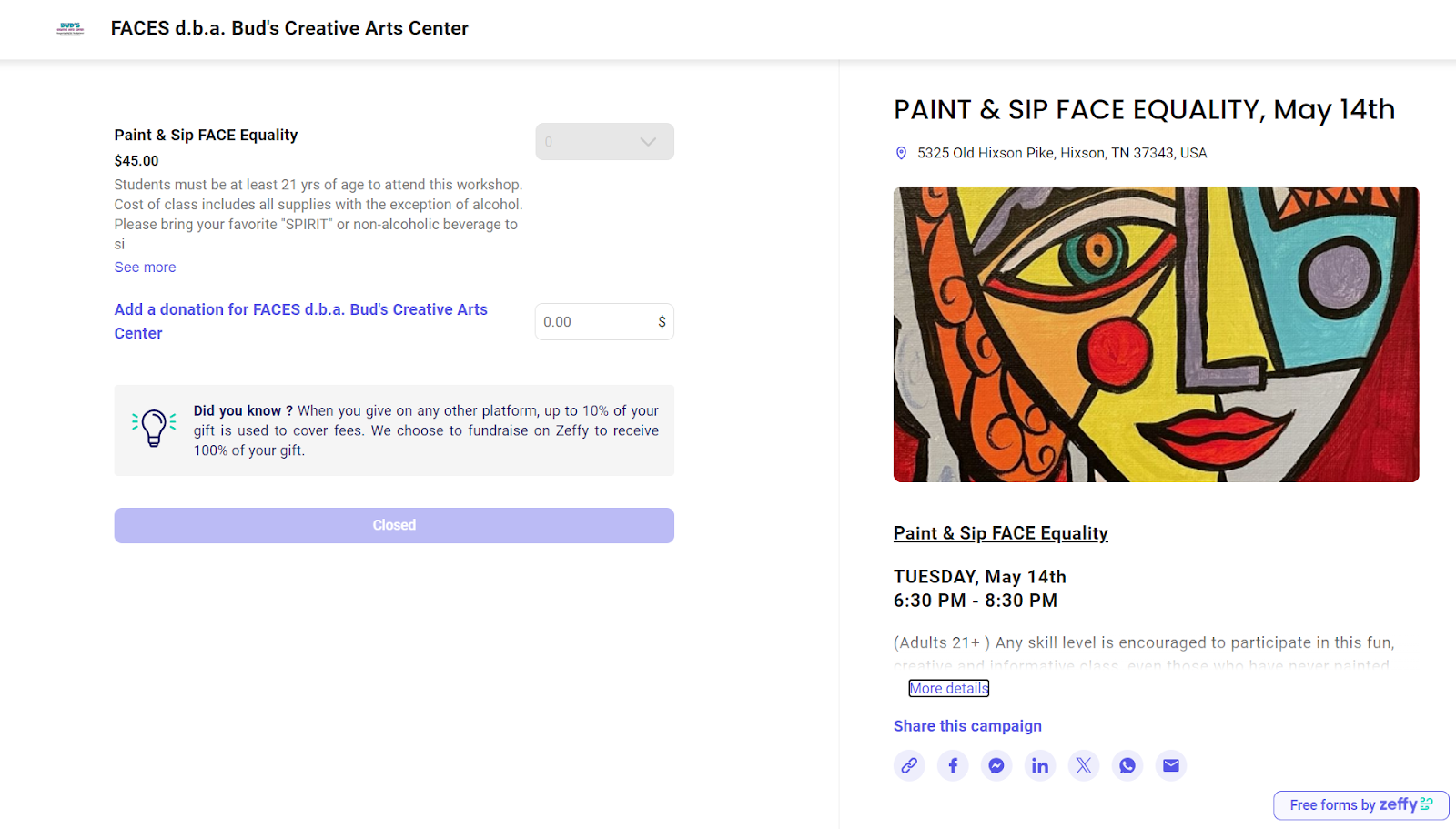
7. Virtual paint and sip
Invite supporters and volunteers to participate in a virtual paint-and-sip session. Have canvases, brushes, and a set of paints delivered to each participant's home, along with a bottle of wine or a soft drink of their choice.
An artist or someone from your team can guide participants step by step, painting a scene or image that relates to your charity's work.
Encourage participants to share their finished artwork on their social media platforms. Ask them to tag your charity so that you can reach their networks and grow your supporter base.
8. Online book editing workshop
Many of your supporters will harbour a passion for writing. Give them a chance to develop their skills with a book editing workshop. Hire a professional editor to help participants refine their writing drafts and share editing resources, tips, and advice on the publishing process.
This is a cost-effective charity event idea. Your editor may host the session for free, given that they do not need to travel. They also gain visibility for their own work while raising money for your charity.
9. Virtual home tour
Let your supporters virtually tour beautifully decorated homes or gardens in your locality. Partner with a local estate agent and ask whether they would showcase some of their most impressive properties. Someone from your team or a volunteer with knowledge of interior design can host the session.
Charge a fee for entry, and consider offering home décor books or small gift packs to participants who make a larger donation.
10. Magic show online
Transform the traditional magic show into an online charity event using a video conferencing platform such as Zoom or Google Meet. Hire a professional magician and partner with nearby schools, childcare providers, and other children's organisations to spread the word.
Organise the event at a weekend when parents can catch up on their own tasks, or join in, while their children enjoy a magic performance. Most parents welcome the opportunity to treat their children to magic without leaving home.
Sell tickets to the online event. For an additional fee, you can organise a meet-and-greet session with the magician at your next fundraising event.
Wrapping up on charity events
A well-planned charity event can unite your community, raise funds, and spread awareness for your cause, taking your mission forward.
When planning your next charity event, draw inspiration from the ideas in this guide and make sure you have the right tools to maximise your event's success.
Zeffy's free event ticketing makes it easy for charities and community groups to plan, promote, and host events, whether virtually or in person. Unlike other platforms, Zeffy charges no platform fee and no transaction fee, so every pound raised stays with your cause.
Some of the most effective charity fundraiser events combine a clear cause with an enjoyable experience. Popular options include quiz nights, summer fetes, sponsored walks or runs, coffee mornings, gala dinners, raffle nights, Christmas fairs, and virtual events such as online escape rooms or paint-and-sip sessions. Community-focused events such as foodbank collection drives (for example through the Trussell Trust network), charity shop donation days, and sponsored challenge events are also well-established in the UK. The best event for your charity is one that suits your supporters, fits your budget, and aligns with your mission.
There is no shortage of challenge event formats that work brilliantly for UK charities. Sponsored walks, fun runs, cycling challenges, and swimming marathons all have strong track records. The Ice Bucket Challenge of 2014 showed how a simple, shareable challenge can go viral and raise significant sums. Other options include abseil challenges, skydives, head-shaving events, or bespoke virtual challenges where supporters set their own targets over a week or month. Choose a format that suits your supporter base and provides a clear, tangible fundraising goal.
charity golf day is one of the most popular fundraising formats for mid-sized UK charities and corporate supporters. Book a local golf club well in advance and agree a package that includes green fees and catering. Sell entry by team (typically four players) and consider adding a sponsorship package for local businesses to sponsor individual holes. To raise additional funds on the day, a silent auction or raffle works well alongside the golf. If you run a raffle at the event where tickets are sold and the draw takes place on the day itself, it qualifies as an incidental non-commercial lottery under the Gambling Act 2005 and requires no registration. If you sell tickets in advance, you will need to register as a small society lottery with your local council. For a silent auction, UK platforms such as Givergy and GalaBid offer mobile bidding tools that work well at gala-style events.
Get weekly fundraising tips from nonprofits experts
Thank you! Your submission has been received!
Oops! Something went wrong while submitting the form.
Keep reading :
Nonprofit guides
How to Organise a Fundraising Event: A 10-Step Guide for UK Charities (2026)
A practical 10-step guide for UK charity fundraising managers, trustees, and community groups planning their first or next fundraising event. Covers goal-setting, budgeting with Gift Aid guidance, event formats suited to UK audiences, choosing the right tech stack, Gambling Act raffle rules, and turning one-time attendees into regular givers.
Best event registration software for small UK charities (2026 guide)
Running events is one of the most effective ways UK charities raise funds and build supporter relationships. But the registration software you choose can quietly eat into every pound you raise. This guide compares the leading event registration platforms available to UK charities in 2026, from Zeffy and Eventbrite to Ticket Tailor, TicketSource, TryBooking and more, with honest takes on UK fees, Gift Aid handling, and what actually works for small, volunteer-led teams.
50+ Fundraising Event Ideas for UK Charities in 2026
Planning a fundraising event when you're short on staff, budget, and time? This guide gives small UK charities, PTAs, village hall committees, and community groups 50+ proven fundraising ideas, from Macmillan-style coffee mornings to online quiz nights, all easy to run with volunteers and free to manage on Zeffy.
Look for people who attend related events, follow relevant Facebook groups, or subscribe to aligned newsletters.These aren’t just potential donors—they’re your future advocates.
Look for people who attend related events, follow relevant Facebook groups, or subscribe to aligned newsletters.These aren’t just potential donors—they’re your future advocates.










%201.avif)


.webp)

