We use cookies to improve your experience on our platform. By clicking “Accept all cookies”, you agree to the storing of cookies on your device to enhance site navigation, analyze site usage and assist in our marketing efforts.
Cookies required for basic website functionality.
Cookies used to deliver content most relevant to you and your needs.
Cookies used to deliver content most relevant to you and your needs.
Cookies that help understand the performance of the website, how users interact with it and to identify bugs.
How is Zeffy free?
How is Zeffy free?
Zeffy relies entirely on optional contributions from donors. At the payment confirmation step - we ask donors to leave an optional contribution to Zeffy.
Verdict: Are raffles legal in Delaware? Yes, for eligible nonprofits, one Board permit at a time. Can you sell the tickets online? No. Can you sell them in person and take a card through Zeffy, PayPal or a similar platform? Also no, and that is the part most guides miss: 10 DE Admin. Code 102 § 2.2 bars "third party payers" as well as on-line raffles, so the bar follows the money rather than the channel. The charitable organization itself must handle the monies, which in practice means cash or check taken in person.
What works: In-person paper ticket sales, home-printed or QR-code tickets sold in person, a Board-approved permit filed through DELPROS, and clean bookkeeping kept by the nonprofit itself.
What doesn't: Online raffle ticket sales, card payments processed through a third-party payer, virtual drawings, prize substitutions without approval, and any promotion before your permit is approved.
Best for: Delaware-based 501(c) nonprofits, volunteer fire companies, veterans' groups, fraternal societies, and civic associations that can staff in-person ticket sales and file the After Occasion Report on time.
Worth considering if: You want the raffle mechanic but can move paper tickets by hand. If you cannot staff in-person sales, a direct donation drive or a ticketed drawing-event gala is a cleaner fit.
Raffles are legal in Delaware for eligible nonprofits, but the state regulates them tightly. The Board of Charitable Gaming, part of the Division of Professional Regulation, approves each raffle application. Confirm your organization's eligibility on the Board's page before you apply.
To truly understand your compliance obligations, you need to read the actual rule. Delaware's is unusually direct:
The charitable organization is responsible for the handling of all monies, bookkeeping and receipts in a raffle. The Board will not approve on-line raffles or raffles involving third party payers, such as PayPal or similar entities.
Two things follow from that sentence, and they are the whole story of raffles in Delaware.
One: online raffle sales are not allowed. Not through your website, not through a payment link, not through a QR code that opens a checkout page. The drawing itself must be in person, and the sale itself must be in person.
Two: the rule names "third party payers, such as PayPal or similar entities." That is a category, not a list. It covers PayPal, Venmo, Cash App, Stripe-powered checkouts, and yes, Zeffy. Any platform that stands between the donor's card and the nonprofit's bank account is a third-party payer under this rule. The nonprofit itself has to handle the money.
For a small Delaware nonprofit: the state has made the platform question easy. Do not look for a workaround. Sell tickets in person, take cash or check, and keep the books yourselves.
Who can run a raffle in Delaware
Eligible organizations must be based in or operate in Delaware and must direct raffle proceeds to their charitable mission as stated in their bylaws. Confirm your organization type on the Board of Charitable Gaming's raffle page before filing, since eligibility categories are set by the Board and can be updated.
Your organization also needs federal tax-exempt status with the IRS, usually 501(c)(3) tax-exempt status, 501(c)(4), or 501(c)(7). For-profit businesses, political campaigns, and individuals cannot run a raffle in Delaware.
Delaware raffle permit requirements
Delaware does not require a permit for every raffle. Whether you need one depends on your ticket price and prize value.
You do need a permit if:
You are charging more than $5 per ticket for a single drawing, or
You are charging more than $15 total for a series of drawings, or
Your prizes have a combined retail value of $5,000 or more.
You do not need a permit if your tickets are $5 or less and your prize value is under $5,000.
If you do need a permit, you must have it in hand before you promote the raffle at all, including social media posts and casual word of mouth. Always confirm the current thresholds and application steps on the Delaware Board of Charitable Gaming raffle page before you file, and check your own permit status before you start selling.
For a small Delaware nonprofit: if you are close to any of those thresholds, apply. The application is inexpensive, and running a permit-required raffle without one is the fastest way to lose future raffle privileges.
How to apply for a raffle license in Delaware
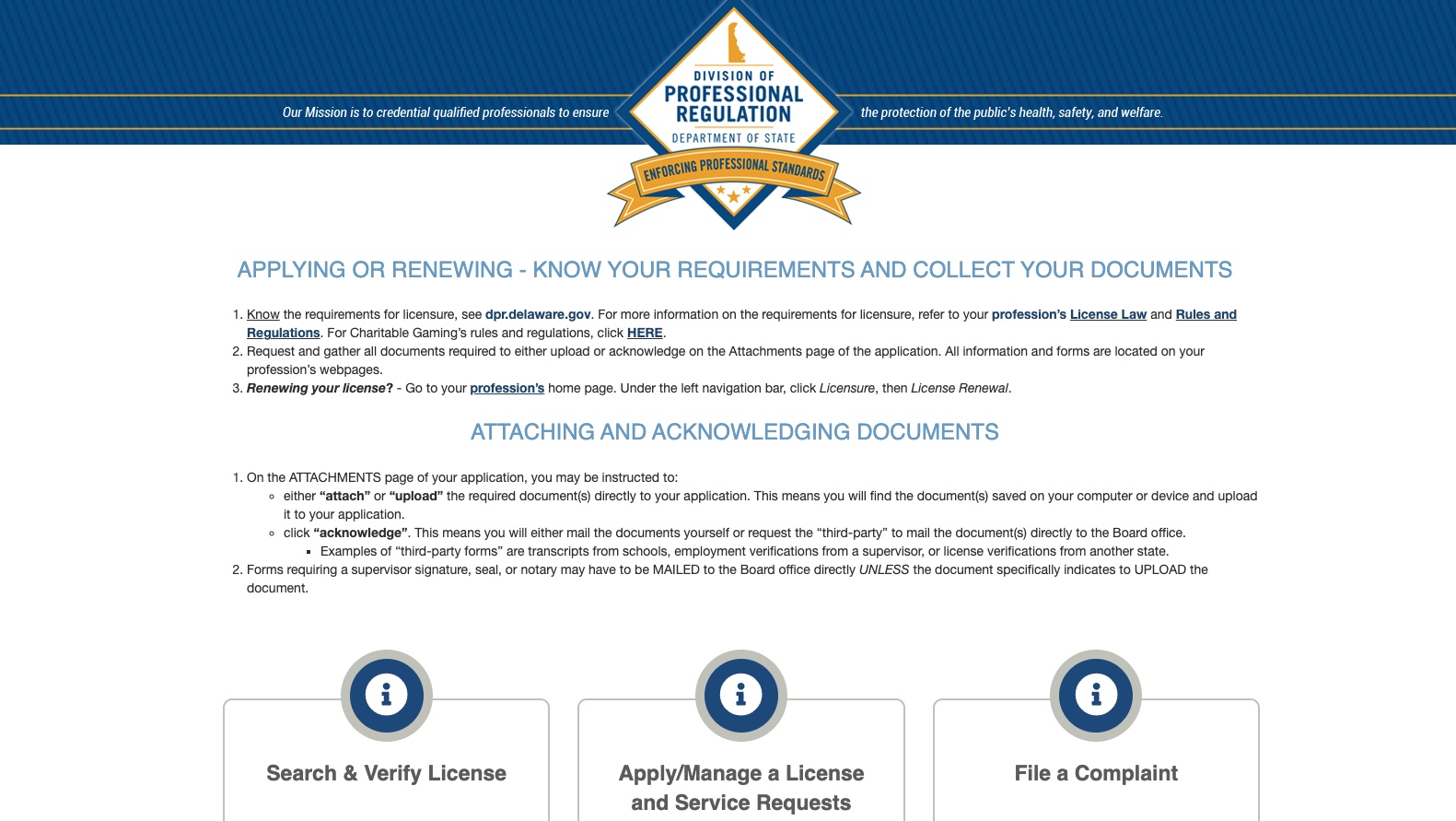
Delaware processes raffle applications through DELPROS, the state's online licensing portal.
2. Click "Apply/Manage a License and Service Requests."
3. Register a new user account, or log in if you already have one.
Step 2: Fill out the raffle application
Have these details ready:
Your organization's legal name, Delaware address, and IRS tax-exempt status
Contact information for responsible officers
Date and location of the drawing
Ticket price
A description of each prize and its retail value (be specific, since vague prize descriptions slow approval)
The estimated number of tickets and expected revenue
Step 3: Upload supporting documents
You will need to attach:
A copy of your articles of incorporation, bylaws, or similar governing documents showing your mission
A prize record listing each prize and its retail value (the Board's addendum form, if required)
If your point of contact has changed, a record keeper designation letter
If you are a local chapter, a letter from your parent organization confirming affiliation
If you are applying under a group IRS exemption, a current group exemption letter
If the drawing is held somewhere other than your organization's address, a letter from the property owner and any lease or rental agreement
Check the Board's raffle page for the current forms and file names before you upload. If you have overdue reports from past Delaware raffles, your new application will not be approved until those are filed.
Step 4: Pay the application fee
The Board of Charitable Gaming publishes the current application fee, payment method, and mailing address on its raffle page. Confirm the current fee and address there before mailing your payment, since these can change.
How long does raffle permit approval take?
The Board of Charitable Gaming reviews applications at its scheduled meetings, so timing depends on the meeting calendar. File as early as you can and check your DELPROS account for status updates. If your raffle date passes before the Board approves your application, you cannot hold the event, and your fee is not refunded. Confirm the meeting schedule and any application-timing guidance on dpr.delaware.gov before you plan around a specific date.
For a small Delaware nonprofit: give yourself buffer. If you are running a spring raffle, do not file in April.
Delaware raffle rules to keep in mind
Once your permit is approved, here is how to run the raffle without losing it.
Planning your raffle
Each raffle needs its own permit, even if you run several a year.
Only in-person raffles are allowed. No online ticket sales and no virtual drawings.
Proceeds must go to your charitable mission as written in your bylaws.
If you are using a donated venue, get a letter of permission from the property owner.
You can still promote online. Promotion is not sale. Email your supporter list, post to social, and put the drawing on your event calendar. Just do not take money through any of those channels. If you want a clean way to promote, you can email your supporter list about the raffle free through Zeffy, since promotion is allowed even when sales are not.
Creating your raffle tickets
Delaware does not mandate a specific ticket format. Home-printed tickets and QR-code tickets are fine, as long as the sale itself happens in person. That is the distinction most pages miss: the ticket can be digital, but the transaction cannot be.
Best practice, include on every ticket:
Name of your nonprofit
Date, time, and location of the drawing
Ticket price
Description of each prize
A unique stub or serial number for tracking
Whether the ticket holder must be present to win
You will need a log of every ticket sold and its number for your After Occasion Report. Keep it clean from day one.
Selling tickets
This is the part where Delaware differs from most states. Read the rule again: the charitable organization is responsible for handling all monies. That responsibility does not transfer to a payment processor.
Key rules:
All ticket purchases must be in person. No online sales, no payment links, no QR-to-checkout flows.
The nonprofit itself handles the money. Cash and check are the safe forms.
You cannot start selling, or even promoting, tickets until your permit is officially approved.
Sell at fair market value. No discounts, no bulk deals, no "buy one, get one."
Purchases are final. No refunds.
For a small Delaware nonprofit: brief every volunteer on this before ticket day. The staff-level failure mode is a well-meaning volunteer offering to "just Venmo it to me and I'll get you a ticket." That is exactly what the rule prohibits. If you want more on the in-person mechanics, our guide to how to sell raffle tickets (in person) covers the tactics that stay compliant here.
Conducting the drawing
Drawings must be random, fair, and held in person at the location and date on your application.
Random and fair: every entry has an equal chance. Mix the container. Have an impartial volunteer draw. Do not let anyone peek.
No insider entries: anyone organizing, promoting, or drawing the raffle should not buy a ticket. That includes the treasurer, the ticket printer, and the person pulling the winner.
In person, at the approved location, on the approved date: no virtual drawing, no venue swap, no reschedule without a new application.
Award the prize as described: no substitutions unless the Board has approved them in advance. Unclaimed prizes still count toward the charitable use of proceeds.
Submitting your report after the raffle
Within the reporting window set by the Board (confirm the current deadline on the Board of Charitable Gaming raffle page), you must file an After Occasion Report covering:
Gross ticket sales
Total expenses
Value of prizes awarded
Net proceeds retained by the nonprofit
A short description of how the funds will be used
Reminders:
Late reports can block your next raffle application.
Keep detailed records in case you are audited.
Funds must be used for the charitable purpose in your bylaws.
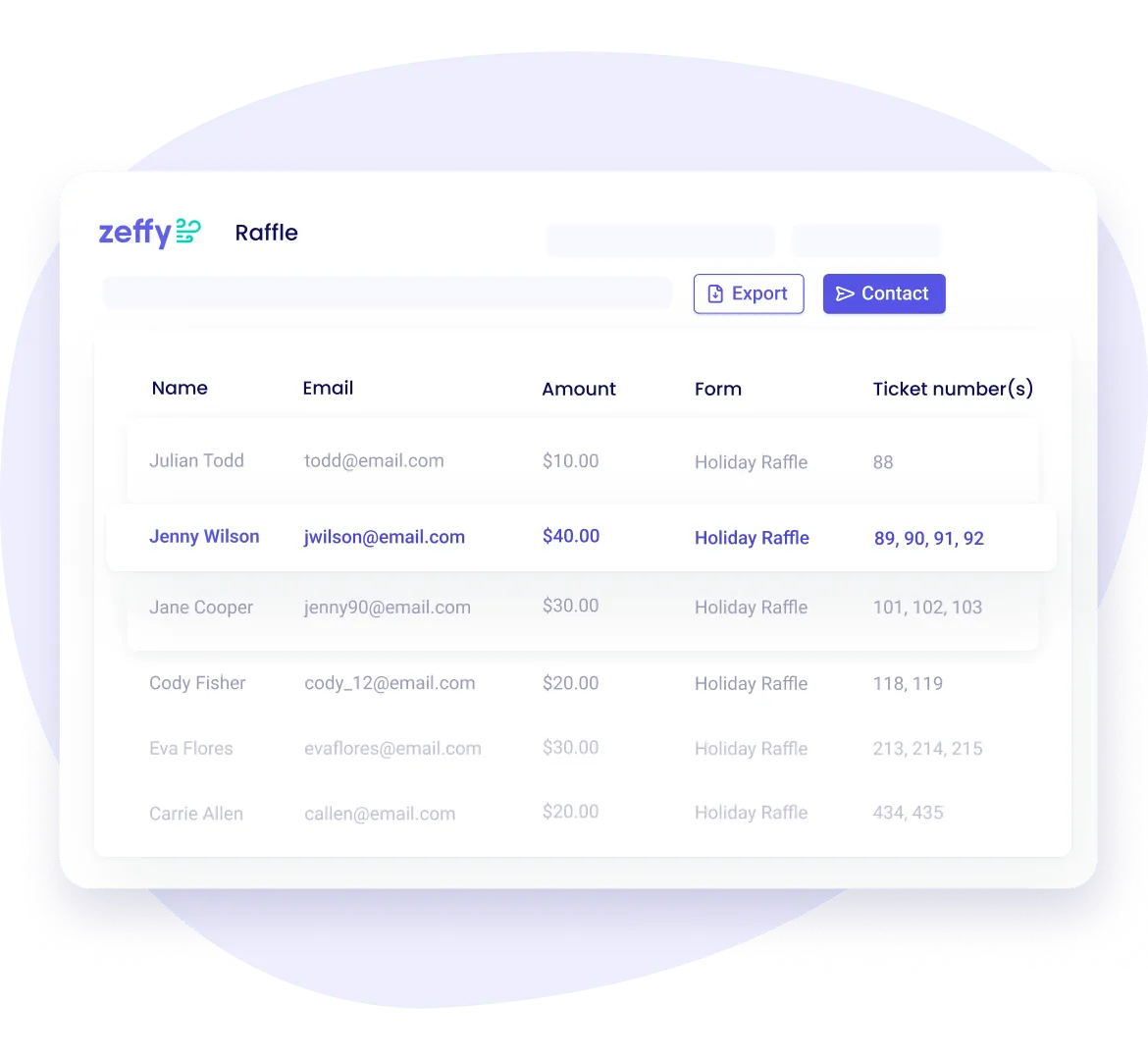
You can record your offline raffle ticket sales and export participant reports in Zeffy free forever, then pull the totals into the After Occasion Report. Zeffy is not processing the sales here. You are logging what already happened in person, so you have a clean participant list and a clean revenue total when the Board asks.
How much does it cost to host a raffle in Delaware?
Two costs to plan for: the Board's application fee (per raffle) and whatever you spend on prizes, printing, and software. Delaware does not take a percentage of what you raise. Confirm the current application fee on the Board of Charitable Gaming raffle page before you file.
For the software side, zero-fee fundraising keeps that line at $0. No platform fee, no transaction fee, no credit card fee. Ever. Zeffy is free for the 100K+ nonprofits that have collectively raised $2B+ on the platform. That applies to the pieces of your raffle workflow that are allowed in Delaware: offline sale recording, participant tracking, reporting exports, drawing-event ticketing, donation forms, and supporter email.
For a small Delaware nonprofit: the raffle is only worth running if the net after prize costs and admin time beats what a plain donation appeal would raise. Do that math before you file.
Can you use Zeffy to run online raffles in Delaware?
Are raffles legal in Delaware? Yes, on a Board permit. Can you sell the tickets online? No. Can you sell them in person and take a card through Zeffy? No. 102 § 2.2 bars third party payers as well as on-line raffles, so in Delaware the restriction follows the money, not just the channel.
Delaware's regulator prohibits third-party payers from handling raffle money, and Zeffy is a third-party payer of the kind the rule describes ("PayPal or similar entities"). You cannot use Zeffy to sell raffle tickets in Delaware, online or in person, and you cannot use PayPal, Venmo, or any similar platform to do it either. The nonprofit itself must handle the money.
What you CAN use Zeffy for in Delaware
Everything around the raffle that is not the sale itself is fair game, and every piece of it is free:
The ticket sale itself stays off the platform. Your volunteers take cash or a check, hand to hand, and your organization banks it. That is not a limitation we can design around: 102 § 2.2 names third party payers, so a card reader or a payment link would put us between the buyer and your account, which is the arrangement the Board will not approve.
The paperwork that sale creates.Record those offline raffle ticket sales in the Zeffy dashboard as you take cash and checks, keep the numbered stubs against buyers, and export the participant list and revenue total for your After Occasion Report. You are logging what already happened in person, so nothing here is a sale.
Collect direct donations on a free Zeffy donation form, and run a peer-to-peer campaign alongside it so supporters can rally their own networks around the raffle event. Some supporters would rather just give than take a ticket chance. Let them.
Email your supporter list to promote the raffle. Promotion is allowed. Sales are not.
The shape of a Delaware raffle on Zeffy is: transact offline, organize online.
No. 10 DE Admin. Code 102 2.2 says the Board of Charitable Gaming "will not approve on-line raffles." Sales must be in person. A home-printed or QR-code ticket is fine as a ticket format, but the transaction cannot happen online.
No. The same rule prohibits "raffles involving third party payers, such as PayPal or similar entities." Zeffy, Venmo, Cash App, and any similar platform fall into that category. The charitable organization itself has to handle the money, which in practice means cash or check taken in person.
Everything that is not the sale: recording your offline ticket sales in the dashboard, tracking participants, exporting the After Occasion Report data, selling attendance tickets to the drawing event, collecting direct donations on a free donation form, running a peer-to-peer campaign, and emailing your supporter list to promote the raffle. All free.
The Board reviews applications at its scheduled meetings, so timing depends on the calendar. File as early as your planning allows and check DELPROS for status. Confirm the current review cadence on the Board's raffle page.
Under those thresholds, Delaware does not require a permit. You still cannot sell tickets online or through a third-party payer, and you still have to run the drawing in person. Verify the current thresholds on the Board of Charitable Gaming's raffle page before you rely on them.
Not usually, but this article is not legal advice. If your raffle is unusual (very large prize pool, multi-day series, ambiguous eligibility), talk to a Delaware attorney and confirm the details with the Board.
Look for people who attend related events, follow relevant Facebook groups, or subscribe to aligned newsletters.These aren’t just potential donors—they’re your future advocates.
Look for people who attend related events, follow relevant Facebook groups, or subscribe to aligned newsletters.These aren’t just potential donors—they’re your future advocates.





3%201.avif)


.webp)

