We use cookies to improve your experience on our platform. By clicking “Accept all cookies”, you agree to the storing of cookies on your device to enhance site navigation, analyze site usage and assist in our marketing efforts.
Cookies required for basic website functionality.
Cookies used to deliver content most relevant to you and your needs.
Cookies used to deliver content most relevant to you and your needs.
Cookies that help understand the performance of the website, how users interact with it and to identify bugs.
How is Zeffy free?
How is Zeffy free?
Zeffy relies entirely on optional contributions from donors. At the payment confirmation step - we ask donors to leave an optional contribution to Zeffy.
How to Price Tickets for a Fundraising Event (UK Guide 2026)
July 2, 2026
⚡TL;DR — The Short Answer
You do not need a finance degree to price tickets for your charity event. You need four numbers, a clear goal, and the right approach for your UK audience.
Use the formula: (total event cost + fundraising goal) divided by expected paid attendees = minimum ticket price.
UK price bands range from £3 to £5 for a village fete entry, £5 to £15 for a quiz night, £75 to £250 for a gala dinner, and £15 to £30 for a sponsored 5K.
Gift Aid does not apply to event ticket prices. A voluntary donation on top of the ticket price can be Gift Aid eligible if structured correctly.
On Zeffy, every pound from your ticket sales goes to your cause. No platform fee, no transaction fee, no credit card fee. Ever.
You do not need a finance degree to price tickets for your charity fundraiser. You need four numbers, a realistic attendance estimate, and a clear goal. Enter them into the calculator and you will have a suggested ticket price, a break-even point, and three revenue scenarios before your board meeting starts.
Note for UK users: A fully localised UK ticket price calculator with £ and UK competitor fees is in development. In the meantime, use the manual formula in the "How to price tickets for a fundraising dinner" section below to calculate your ticket price.
Setting a price feels less like guessing when you know what similar charities charge. The ranges below reflect typical UK charity event ticket prices across common event types. They are indicative ranges, not averages from a dataset. Verify against your local charity market and the audience you are trying to reach.
Zeffy does not yet publish UK-specific benchmark data.
Event type
Typical UK price band
Notes
Gala dinner / black-tie event
£75 to £250
London venues skew higher; regional venues lower
Community charity dinner
£30 to £75
Village halls, community centres
Quiz night / bingo night
£5 to £15 per person
Often includes a drink or light supper
Summer fete / family day
£3 to £5 entry
Stall and activity fees are separate revenue
Sponsored fun run / 5K
£15 to £30 entry
Usually includes minimum sponsorship target
Ceilidh / community concert
£10 to £25
Dependent on venue capacity
Auction gala
£100 to £250
Price reflects dinner plus bidding experience
Nine smart pricing strategies for UK charity events
These nine strategies help you reach your target without putting supporters off or leaving money on the table.
1. Early bird discounts
Early bird pricing gets people to commit when they are excited, not when they are already overcommitted. It also gives you real sales data weeks before the event, so you can plan instead of panic.
Here is how to set it up:
1. Pick a deadline at least two to four weeks before your event. For example: "Early bird ends 1 September."
2. Offer £5 to £20 off the regular ticket price, enough to motivate supporters without hurting revenue.
3. Promote the deadline everywhere: your website, emails, social posts, and event page. For example: "Tickets: £25 early bird / £35 after 1 September."
A UK PTA running a summer fete could set early bird at £8 until 1 June, then £10 on the gate. The clear deadline makes the decision easy for supporters.
One ticket price fits nobody perfectly. Two or three tiers let more people attend while helping you meet your target.
Offer a general admission price for budget-conscious supporters, a VIP option with real perks for people who want to give more, and optionally a "supporter" tier that is essentially a donation with a ticket attached.
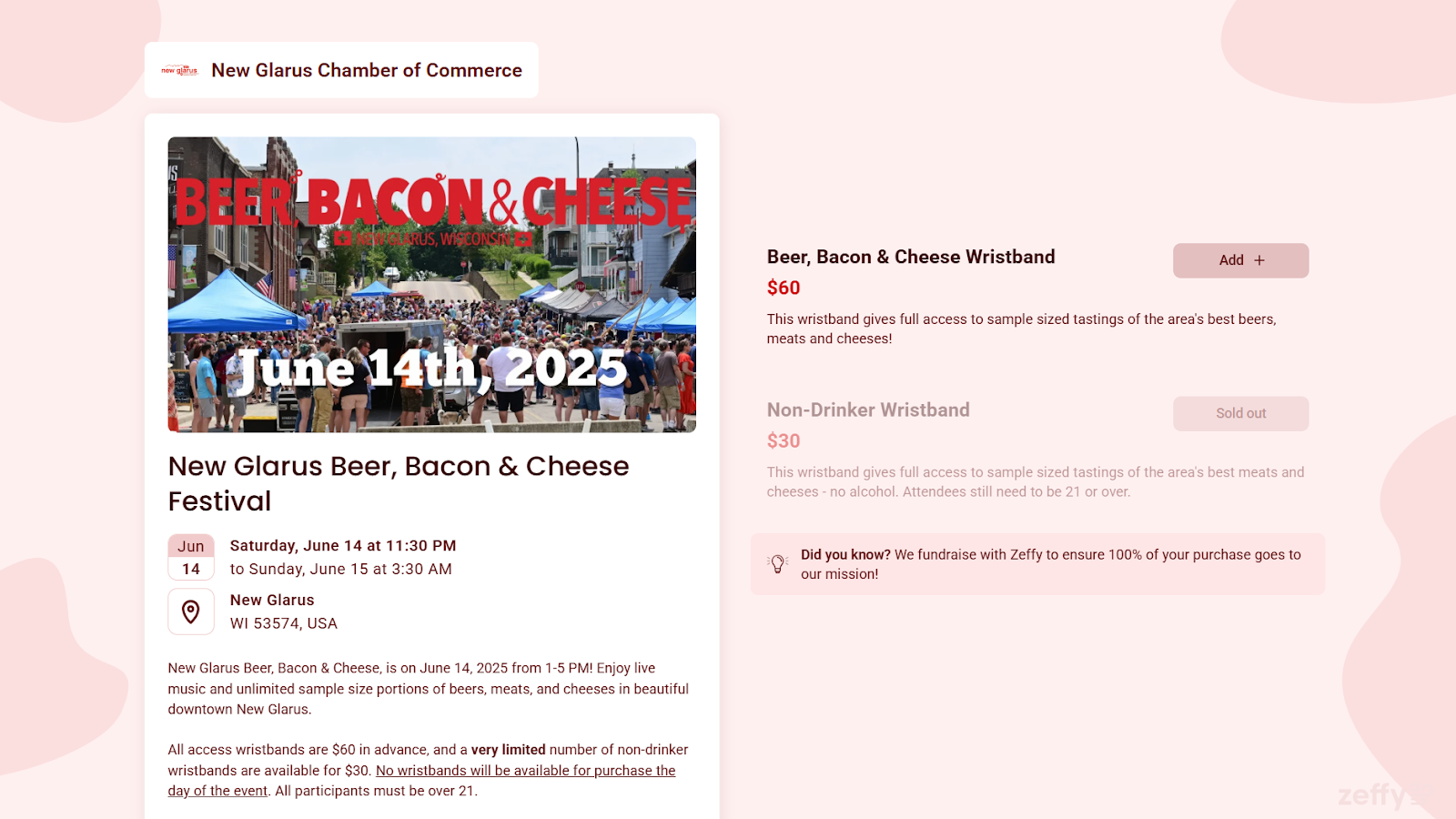
A UK community festival could sell full wristbands at £25 (drinks included) and non-drinker wristbands at £12, giving the same access at half the cost for teetotallers, designated drivers, and under-18s attending with family. More people come, revenue stays healthy, and no one feels excluded.
Every pound from a sponsor is a pound you do not need to recover through ticket sales. Lock in sponsors early and you can afford to price tickets lower, which fills more seats, which makes sponsors happier.
Create two or three straightforward sponsorship tiers (£100, £500, £1,000) with clear benefits: logo placement, social media mentions, and reserved tables. Ask for sponsors six to eight weeks before ticket sales open.
UK local businesses often prefer to donate raffle prizes, venue space, or catering in kind rather than cash. A "Raffle Prize Sponsor" or "Bar Sponsor" tier works well at village-hall events and school PTA fetes, where cash sponsorship budgets are small but in-kind support is genuinely valuable.
4. Group, family, or student discounts
Group discounts fill seats faster. When one person commits, they bring friends.
Offer family packs or "bring a friend" pricing. Give students a discounted rate: they are your future major donors if you treat them well now. A UK music charity could offer free tickets to under-25s alongside £20 general admission, building a future supporter base without denting revenue.
5. Sliding scale
There is no single perfect price that works for everyone. A suggested range lets people pay what they can. Most will pay the full amount. Some will pay less. A few will pay more because they believe in your cause.
A UK community theatre could run a "Pay What You Can" night for a preview performance: suggested £10, £15 or £20, with a £5 minimum. Most attendees pay full or above. A few pay less. A handful pay more.
Make the payment options clear and connect each contribution level directly to your mission impact.
6. Discounted add-on packages
Boost per-person revenue without making the base ticket price look intimidating.
Bundle extras such as meals, parking, or merchandise at a small discount when purchased with tickets. "£35 ticket + £15 supper" feels like a deal compared to "£40 supper separately." Supporters feel good about the value and you hit revenue targets without guilt.
A UK village-hall summer fete could bundle a £5 entry ticket with a £3 ploughman's lunch (£7 combined versus £8.50 separately), or add £2 parking for those driving in from surrounding villages.
Take card at the door. People are carrying less cash than they used to. Offering tap-to-pay for walk-up ticket sales and door collections removes a real barrier at fetes, quiz nights, and community events. Small contactless donations of £30 or less taken at the event may also qualify for the Gift Aid Small Donations Scheme (GASDS), which provides a 25% top-up without requiring a written Gift Aid declaration, up to a cap of £8,000 per year. This applies to bucket collections and card-reader donations at the event, not to the ticket price itself.
7. Limited-time flash sales
Use this when ticket sales are slower than expected and you need momentum without broadcasting that you are concerned.
Keep flash sales short, 24 to 48 hours, and promote them heavily. "Next 24 hours only: £10 off all tickets." The urgency is real. The confidence stays intact.
8. Flexible payment plans
For tickets priced at £100 or more, the upfront cost can slow purchases, especially if your event falls in the new school year or the Christmas period.
Split payments into two or three instalments. Only do this if you can track payments reliably. Options include:
Split payments: divide the ticket cost into two or three payments with set deadlines.
Monthly plans: allow three to six monthly payments before the event date.
Deposit option: take 50% upfront, with the remainder due closer to the event.
9. Psychological pricing
Prices that end in 9 or 5 feel more accessible, even when the difference is a few pence. £9.99 reads better than £10. £24.99 feels more affordable than £25. This is a proven tactic that works for charities too.
Make sure the price still covers your costs and aligns with your audience. Shaving a pound off a £200 ticket will not move the needle, but it can matter in the £25 to £50 range.
How to price tickets for a fundraising dinner
Fundraising dinners can be high-impact, but the maths needs to work before you send a single invitation.
If £90 feels steep for your audience, do not immediately lower the price. Look for sponsorships, add-ons, a raffle, or peer-to-peer fundraising to close the gap instead.
Platform fees compound quickly. On a £90 ticket for 100 guests, a 3 to 5% platform fee costs the charity £270 to £450. On a £150 dinner ticket for 100 guests, Eventbrite's UK pricing of roughly 6.95% plus £0.59 per ticket plus card processing can cost around £1,600 or more across the booking. Ticket Tailor charges a flat fee per ticket (from £0.22 to £0.60 plus Stripe at 1.5% + 20p), which drops that cost to around £60 to £100. On Zeffy, the full £150 stays with your charity. No platform fee, no transaction fee. Every pound goes to your cause.
If you are running a raffle at your dinner: raffle tickets are never Gift Aid eligible (they are a payment for a chance to win, treated as goods or services by HMRC). If you sell and draw the raffle entirely on the night, it is an incidental non-commercial lottery and requires no registration. If you sell raffle tickets in advance to people who may not attend, it becomes a small society lottery and must be registered with your local council (£40 initial registration, £20 annual renewal, £20,000 single-draw cap). See the Gambling Commission's small society lottery guidance for the full requirements.
Are UK fundraising event tickets Gift Aid eligible?
This is one of the most common questions charities get from supporters, and the short answer is: no, not for the ticket price itself.
Gift Aid does not apply to payment for goods or services. When someone pays £90 for a ticket to your charity dinner and receives a meal and entertainment in return, HMRC treats the full ticket price as payment for what they receive. The ticket price is not a donation. (HMRC Gift Aid guidance)
A voluntary top-up donation can be Gift Aid eligible. If a supporter chooses to pay more than the fair-value ticket price as a genuine voluntary donation on top of their ticket, that additional amount can be Gift Aid eligible, provided:
The ticket's fair value is clearly disclosed at point of sale (for example, "this ticket covers a £40 meal and entertainment; any amount above that is a voluntary donation to the charity").
The donation is structured as a genuinely optional, separate line at checkout and is not required for entry.
The supporter completes a valid Gift Aid declaration (name, home address, charity name, and confirmation of UK taxpayer status).
Your charity is HMRC-recognised and holds a Charities Reference Number.
Higher-rate (40%) and additional-rate (45%) taxpayers can reclaim the difference between their tax rate and the basic rate through Self Assessment.
GASDS at the event itself. Small cash and contactless donations of £30 or less taken at the event (for example, a bucket collection at the end of the evening) can qualify for the Gift Aid Small Donations Scheme, which provides a 25% top-up without a written declaration. The annual cap is £8,000 in eligible small donations. This applies to the donation, not the ticket.
The practical takeaway: be transparent on your event page about what the ticket price covers and what portion (if any) is a Gift Aid eligible donation. Never describe a ticket price as "tax-deductible." The mechanism is different from the US and that language will mislead your UK supporters.
For complex structures, consult a qualified charity tax adviser or the Charity Tax Group, which provides free technical guidance on Gift Aid and benefits rules.
Display your registered charity number and, if you are subject to the Fundraising Regulator levy, the Fundraising Regulator badge on your event page. UK supporters look for these before they book.
Tiered pricing works best for galas and auctions, where supporters expect different experience levels. Here is a simple structure to start from:
Tier
Price relative to GA
What to include
Suggested cap
Early bird
GA minus 15%
Same access as GA; limited window (two to four weeks before event)
No cap needed
General admission
Base price
Standard entry, programme, meal or refreshments
No cap
VIP
GA plus 50%
Reserved front seating, arrival drink, gift bag with donated local-business items, name on sponsor board
10 to 20% of total seats
Set your base price first
Use the formula (total event cost + fundraising goal) divided by expected paid attendees to get your base price. That is your general admission price. From there:
1. Set early bird at 15% below GA, available for a limited window of two to four weeks before the event.
2. Set VIP at 50% above GA. Cap the number of VIP tickets so scarcity is real.
3. Make VIP perks specific and tangible. "Reserved front seating and a gift bag" converts better than "premium experience."
Make VIP worth it
VIP does not need to be elaborate. Reserved seats at the front, a private reception before doors open, your name on a sponsor board, or a small gift bag with local business donations are low-cost additions that justify a significantly higher price for the supporters who want to give more.
Communicate tiers clearly
Show all three options side by side on your ticket page. Describe what each tier includes in plain language. If the early bird has a hard deadline, show a countdown. Zeffy's ticketing lets you create multiple ticket types on the same event page with different prices, quantities, and descriptions.
Three common ticket pricing mistakes to avoid
Underpricing to "be affordable"
Keeping prices low because you are afraid of pushback is the most common mistake. Underpricing does not just hurt your budget: it signals that your event and your cause are not worth much.
Low prices can leave no room for actual fundraising, undervalue your event in supporters' minds, and make it impossible to cover costs if attendance comes in lower than expected.
UK supporters are sensitive to hidden fees at checkout, not to fair prices. A £30 quiz-night ticket that clearly funds the cause converts better than a £15 ticket with a surprise 17% "platform contribution" added at checkout.
Offer a range instead: early bird pricing, a sliding scale, or tiered options. You can be accessible without setting a single rock-bottom price for everyone.
Forgetting about platform fees
If your ticketing platform charges 3 to 5% in processing or platform fees, that cost lands somewhere. Either you absorb it (reducing what reaches your mission) or you pass it to supporters as a checkout surprise. Neither is ideal.
On a £15 fete ticket, an Eventbrite fee of roughly 6.95% plus £0.59 per ticket plus card processing can amount to around £1.65 per ticket. On 100 tickets, that is around £165 gone before your cause sees a penny.
The UK charity fundraising stack is also expensive in aggregate. A charity running a £15 fete ticket, an autumn appeal donate page, a Christmas raffle, and a sponsored 5K currently pays for Ticket Tailor, JustGiving, Crowdfunder, and a CRM separately. Zeffy consolidates that stack, free, with Gift Aid handling on eligible donations built in.
With Zeffy, you keep every pound you raise. No platform fees, no transaction fees, no credit card fees. Zeffy is 100% free for charities. £100 in ticket sales is £100 to your mission.
Planning for 200 guests and getting 80 is a real scenario. If your ticket prices assumed full capacity, you may not cover costs.
Base your pricing on a conservative attendance estimate. 75% of what you hope for is a reasonable floor. The worked example above shows you exactly what happens at each attendance level before you commit to a price.
Assuming Gift Aid applies to your ticket price
Charities that assume Gift Aid uplifts the ticket price will under-recover when they come to claim. Gift Aid applies to donations, not to payment for goods or services. Structure your event page so the ticket has a stated fair value and any voluntary amount above that is a clearly separated, Gift Aid-declared donation line. See the Fundraising Regulator's Code of Fundraising Practice (effective 1 November 2025) for the transparency obligations that apply to ticketed fundraising events.
Use this formula: (total event cost + fundraising goal) divided by expected paid attendees.
For example: £3,000 event cost plus £6,000 fundraising goal, divided by 100 paid guests, gives a minimum ticket price of £90.
If £90 feels high for your audience, look for sponsorships, in-kind contributions, add-on packages, or a raffle to reduce the amount you need to recover through ticket sales alone.
Divide your total event cost by your ticket price.
For example: £3,000 event cost divided by a £30 ticket price means you need to sell 100 tickets to break even. Any ticket sold above that number contributes directly to your fundraising goal.
Build your break-even point into your planning before you commit to a venue deposit.
For a UK charity gala or black-tie dinner, ticket prices typically range from £75 to £250 per person. Venues in London tend to sit at the higher end; regional and community venues are generally lower.
The right price for your event depends on your venue costs, the meal and entertainment you are providing, your audience, and your fundraising goal. Use the formula above to calculate your minimum price, then sense-check it against local market rates.
Zeffy does not yet publish UK-specific benchmark averages for charity events.
Most UK charity bingo nights price entry at £5 to £15 per person. This usually covers entry, a set of bingo books, and light refreshments. Add-on revenue, such as extra books, refreshments, and a raffle on the night, can significantly boost total income above the entry price.
Check that your bingo night does not cross into licensable gambling territory. Most charity bingo evenings held as part of a private members event or at a registered premises are straightforward, but seek guidance from your local council if you are unsure.
2:1 to 4:1 return is a widely used benchmark: for every £1 spent on the event, aim to raise £2 to £4 net. Community events with low overheads (village halls, school PTAs) can often exceed this. Large gala dinners with venue hire and catering can be harder to clear the 2:1 threshold without sponsorship or auction revenue.
Track your return per event type over time so you know which formats work best for your charity's audience and mission.
Yes, if your platform charges fees, factor them into your ticket price, otherwise the fees come out of your fundraising goal rather than the ticket price.
On a £50 ticket, Eventbrite's UK pricing of roughly 6.95% plus £0.59 per ticket plus card processing can cost around £4 per ticket. On 200 tickets, that is £800 leaving your charity before a single pound reaches your cause.
With Zeffy, platform fees are zero. You do not need to build fees into your ticket price at all. The full face value of every ticket goes directly to your mission.
Common indirect costs that fall outside the headline venue-and-catering budget include: volunteer time (even unpaid, track the hours to understand true cost), printed materials such as programmes, raffle tickets, and signage; event insurance; licensing (a personal licence for alcohol sales, small society lottery registration at £40 for a raffle); payment processing hardware for door sales; and post-event donor communications such as thank-you letters and Gift Aid declarations.
Add a 10 to 15% contingency to your total cost estimate before you set your ticket price. It is far easier to price correctly upfront than to explain to your trustees why the event lost money.
Charities spending £100,000 or more annually on fundraising are expected to pay the voluntary Fundraising Regulator levy and register as members. All charities, regardless of size, should follow the Code of Fundraising Practice (current version effective 1 November 2025). Ticketed events fall under the Code's transparency requirements, including clear disclosure of what a ticket price covers and what (if any) portion represents a charitable donation.
Get weekly fundraising tips from nonprofits experts
Thank you! Your submission has been received!
Oops! Something went wrong while submitting the form.
Keep reading :
Nonprofit software
Best Eventbrite Alternatives for UK Charities in 2026
Every pound you lose to ticketing fees is a pound off your mission. This guide compares the seven best Eventbrite alternatives for UK charities in 2026, with honest fees, real UK examples, and a clear verdict on which platform suits your events.
Look for people who attend related events, follow relevant Facebook groups, or subscribe to aligned newsletters.These aren’t just potential donors—they’re your future advocates.
Look for people who attend related events, follow relevant Facebook groups, or subscribe to aligned newsletters.These aren’t just potential donors—they’re your future advocates.






.webp)

