We use cookies to improve your experience on our platform. By clicking “Accept all cookies”, you agree to the storing of cookies on your device to enhance site navigation, analyze site usage and assist in our marketing efforts.
Cookies required for basic website functionality.
Cookies used to deliver content most relevant to you and your needs.
Cookies used to deliver content most relevant to you and your needs.
Cookies that help understand the performance of the website, how users interact with it and to identify bugs.
How is Zeffy free?
How is Zeffy free?
Zeffy relies entirely on optional contributions from donors. At the payment confirmation step - we ask donors to leave an optional contribution to Zeffy.
How to Write a Charity Impact Report (Free Template for UK Charities) | 2026
July 7, 2026
Most impact-report guides treat the document as the deliverable. For a small or all-volunteer charity, that is backwards. The report is a donor-retention asset, and the real deliverable is the send: who you email it to, how you segment, and whether the closing link turns a reader into a second gift.
This guide is for the volunteer or solo staffer who needs to ship a 4 to 8 page impact report this quarter without hiring a designer. You will get a free in-page template, the essential sections, a step-by-step writing process, five real UK examples to study, and the metrics that actually matter to donors.
A charity impact report is a short, donor-facing document that shows what your organisation accomplished in the past year and how donor money made it happen. For a small charity, that is a 4 to 8 page document with about eight sections: a cover with one hero stat, a letter from leadership, your mission, the impact data, one or two stories, a simple financial snapshot, a thank-you to supporters, and a call to give again.
It is not a 40-page annual report. An annual report is a formal accountability document, in the UK, registered charities file an annual return and Trustees' Annual Report and Accounts (TAR) with their regulator, that covers your full financial year and detailed accounts. An impact report is a marketing and retention asset focused on outcomes and stories. We cover the full comparison in the impact report vs annual report section below.
For a small charity: if you can only build one document this year, build the impact report. It is shorter, more engaging for donors, and far easier to produce with a two-person team.
Why impact reports matter for small UK charities
You are competing for attention with organisations that have full marketing teams. An impact report is one of the few assets that puts your small charity on equal footing, because what donors care about is not your page count. It is whether their gift mattered.
It builds donor trust. Donors who can see exactly what their money did are far more likely to give again. Donor retention is the cheapest fundraising you have, and a report sent at the right moment is the cheapest retention tool you have.
It supports your grant applications. Grant-making bodies ask for impact data. A finished report is a ready-made attachment for funding applications to the National Lottery Community Fund, Arts Council England, or local charitable trusts.
It earns warm introductions. Trustees will forward a sharp 6-page PDF to their network. They will not forward a wall of text.
It sharpens your own thinking. Forcing yourself to pick the year's hero stat is the most useful planning exercise your team will run.
It turns one-time givers into recurring supporters. The report is a natural moment to ask a one-time donor to upgrade to a monthly gift.
The Fundraising Regulator's Code of Fundraising Practice (current version effective 1 November 2025) sets the transparency expectation UK donors bring to any charity communication, including impact reports. Being open about what you did, how much it cost, and what donors' money achieved is not just good practice: it is the standard the Code expects. NCVO, the largest sector body for charities in England and Wales, consistently treats donor retention as the highest-leverage lever for small charities, and a clear impact report sent to every donor in your supporter database is one of the most direct ways to improve it.
For a small charity: if retention is your weakest fundraising metric, a yearly impact report sent to every donor in your supporter CRM is the single highest-leverage document you can produce.
What to include: the essential sections checklist
Use this as a scannable checklist when you start. The 8 steps later in the guide walk through how to write each piece.
☐ Cover page with one hero stat that summarises the year
☐ Mission statement reminder (one short paragraph)
☐ Letter from leadership (chief executive or chair of trustees)
☐ Impact data: the headline KPIs with year-on-year context
☐ Programmes delivered: a short list of what you ran this year
☐ One or two impact stories: real people, real outcomes
☐ Financial snapshot: a simple income and expenditure pie chart
☐ Supporter recognition: thank donors, volunteers, and partners by name where possible
☐ Looking ahead: 2 to 3 goals for next year
☐ Call to action: a one-click link to give again
For a small charity: if a section feels like padding, cut it. A tight 5-page report that hits these essentials beats a polished 30-pager you never finish.
How to write a charity impact report in 8 steps
The 8 steps below match the 8 body sections. Work in this order so you build the spine of the report first, then layer in stories and design.
1. State your mission statement
Open with a short, plain restatement of your charity mission statement. Two or three sentences is enough. The reader has probably forgotten the exact wording since their last gift, and you want them oriented before you ask them to care about your numbers.
Concrete example: "We provide free tutoring to secondary school pupils across three London boroughs, with a focus on Years 7 to 9." That is one sentence. It works.
2. Include a leadership message
A 200 to 300 word letter from your chief executive or chair of trustees, addressed to "Dear friends" or "Dear supporters". Hit three beats: what we set out to do this year, what we actually accomplished, and a thank-you naming the donors and volunteers who made it possible.
Why it matters: donors want to feel they have a relationship with a person, not a brand. A signed letter is the most straightforward way to deliver that.
3. Share impact stories and testimonials
Pick one or two real stories from the year. A volunteer who became a trustee. A family supported by your foodbank collection. Use a photograph if you have written consent, and a real first name if the person is comfortable. We walk through the full story framework in the storytelling section below and in our deeper guide to charity storytelling.
4. Gather and present actionable data
This is where most reports go wrong: too many numbers, no hierarchy. Pick one hero stat for the cover, then five to seven supporting KPIs for the inside spread.
You need both kinds of data:
Quantitative data is what you can count: people served, programmes delivered, funds raised, volunteer hours, year-on-year growth.
Qualitative data is what you cannot count but can quote: testimonials from beneficiaries, trustee reflections, community feedback, behaviour changes you observed.
You need both. Quantitative data proves you delivered. Qualitative data proves it mattered.
5. Provide a financial overview
Show a simple breakdown of income and expenditure. A pie chart for each is enough. Include income by source (individual gifts, grants, events, earned income) and expenditure by category (programme, administration, fundraising).
You are not writing your Trustees' Annual Report. You are showing a donor that their pound went to the programme, not overheads. For the full picture, see our guide to charity financial statements.
6. Include future objectives and strategic plans
Two or three goals for next year. Be specific. "Support 200 more pupils" beats "expand our impact". Donors who feel they helped you hit last year's number want to know what they are helping you hit next.
7. Recognise your supporters
Thank donors, volunteers, and partners. For small organisations, naming individuals is the right move. A list of 40 donor names with a "thank you" header outperforms a generic "we are grateful to all of our supporters" paragraph every time.
Tier the list if you have giving levels, but err on the side of inclusion. The donor who gave £25 reads this list looking for their own name.
8. Make it easy to connect
End the report with one clear action. The best call to action on an impact report is a give-again link, ideally one that opens a pre-filled donation form so the reader does not have to retype their details. Because Gift Aid can be added to a repeat gift, make sure the form surfaces the Gift Aid declaration: that single tick adds 25p per £1 to every eligible donation at no extra cost to the donor. Use a free supporter CRM to tag the donors who clicked, so you know who to follow up with personally.
If you do nothing else from this guide, do this: do not end with "contact us". End with "Give again to fund next year's work" and a working link.
For a small charity: the 8 steps above are the report. Resist the urge to add a tenth section. A clean 6-page report you finish beats a 20-page report you abandon in November.
Impact report data: which metrics actually matter
Donors do not want every number you tracked. They want the handful that prove the mission moved. Here are the KPIs small charities should consider:
People served. The headline. How many beneficiaries did your programmes reach?
Programmes delivered. How many classes, meals, services, or events ran?
Volunteer hours. The donated labour that powered the work.
Cost per outcome. What did it cost to deliver one unit of impact (one meal, one tutoring hour, one shelter night)? Donors appreciate this figure.
Year-on-year growth. Pick your most important metric and show last year vs this year.
Donor retention rate. The share of last year's donors who gave again this year.
New donors acquired. First-time givers who joined your community this year.
Geographic reach. Cities, counties, or regions served.
Demographic breakdown. Who you served (with consent and care for privacy).
Hours of programming. Total programme time delivered to beneficiaries.
Partnerships. Other organisations, schools, or agencies you worked with.
Grant funding secured. Restricted funding secured this year, including grants from funders such as the National Lottery Community Fund or Arts Council England.
Gift Aid reclaimed. The £X in Gift Aid uplift on £Y of eligible donations. Gift Aid is a UK-specific impact metric worth surfacing in your report: it shows donors the compounding effect of their gift. Under the scheme, your charity reclaims 25p from HMRC for every £1 a UK taxpayer donates, at no extra cost to the donor.
For each metric, present it visually if you can: a big number with a label, an icon, a one-line caption, and the year-on-year comparison in smaller type. Save tables for the financial section.
For UK sector guidance on benchmarking your fundraising performance, NCVO and the Chartered Institute of Fundraising (CIoF) are the standard references. Do not invent a percentage.
For a small charity: pick five KPIs total. One hero stat on the cover, four supporting on the data spread. More than that and you have a spreadsheet, not a report.
How to tell compelling impact stories
Numbers prove. Stories convince. Every impact report needs at least one story written well enough that a donor pauses on it.
Use this five-beat framework for each story:
1. Situation. Who is the person, and where were they when your work reached them? Two sentences.
2. Challenge. What were they facing? Be concrete. "Maria, a single mother of two, lost her job in March."
3. Intervention. What did your programme do? Specific actions, not vague support.
4. Outcome. What changed for them? A real result, ideally measurable.
5. Quote. One short line in the beneficiary's own words. Always with consent.
Here is a fill-in-the-blank template for a 150-word beneficiary story:
When [first name] came to [programme name] in [month], they were [situation in one sentence]. They needed [the challenge in concrete terms].
Over [time period], [name] worked with [staff or volunteer role] to [the intervention, in two or three specific actions]. By [end date], [name] had [the measurable outcome].
"[One-line quote from the beneficiary about what changed]," [name] said.
Stories like [name]'s are possible because of [donor group, e.g., "supporters like you"].
A few rules: always get written consent before naming or photographing a beneficiary. For minors, get parent or guardian consent. If a story is sensitive, change the name and say so ("Maria's name has been changed"). Never publish identifying details that could put someone at risk.
For a small charity: one well-written story is worth ten thin ones. Pick the year's most powerful and tell it in 150 words with a real quote. That is the page donors will remember.
Impact report design: making your data visual
You do not need a design agency. You need three good decisions.
1. Length: 4 to 8 pages. For a small organisation, anything longer goes unread. Plan for a cover, a leadership letter spread, an impact-data spread, a story page, a financial page, a recognition page, and a closing call-to-action page. That is your page count.
2. The right chart for the right data:
Pie chart for the budget breakdown (income sources, expenditure categories)
Bar chart for year-on-year growth (this year vs last year on your hero metrics)
Big numbers with icons for headline KPIs (people served, programmes delivered, volunteer hours)
Map graphic if geographic reach is part of your story
Pull quotes for testimonials, sized large enough that a skimmer reads them
3. Brand consistency. Use your logo colours and one or two fonts (one for headlines, one for body). Reuse the same icon style throughout. Add your logo to every page footer.
Free tools that work:
Canva has charity impact report templates and a free plan for registered charities
Google Slides in landscape mode works well and exports to PDF
Google Docs if you want a simple page-flow layout
For a small charity: if you are choosing between spending another weekend on the design and spending it on the send, choose the send. A plain-looking report that lands in 800 inboxes beats a beautiful report that sits on your website.
Free charity impact report template
Use the structure below to build your report. It walks through every section with a suggested word count and a one-line prompt so you know exactly what to write.
2. Letter from leadership (200 to 300 words). What we set out to do, what we accomplished, who made it possible. Signed by chief executive or chair of trustees.
3. Mission reminder (50 to 75 words). Two or three sentences restating your mission for readers who need a refresher.
4. Impact by the numbers (100 to 150 words plus visuals). Five KPIs as big numbers with icons. Add year-on-year context where useful.
5. Programmes delivered (150 to 200 words). A short paragraph or bullet list of what you ran this year. Names, dates, locations.
6. Featured story (150 to 200 words). One beneficiary story using the situation-challenge-intervention-outcome-quote framework.
7. Financial snapshot (75 to 150 words plus charts). Income pie chart, expenditure pie chart, one-paragraph summary.
8. Thank you to supporters (100 to 150 words plus a name list). Donor names, volunteers, trustees, partners. Tier if you have giving levels.
9. Looking ahead (100 to 150 words). Two or three specific goals for next year.
10. How to help (50 to 100 words). One clear ask. Link to a pre-filled give-again donation form with a Gift Aid declaration. Newsletter sign-up. Volunteer page.
Total target: about 1,200 to 1,800 words, spread across 4 to 8 pages with visuals.
When your report is ready, the harder problem is getting it into donors' inboxes. A free supporter CRM lets you segment donors by gift size, recency, and tag. From there you can send segmented emails with open and click tracking so you know who actually read it. That is the send most small organisations skip, and it is the part that turns the report into a retention asset.
These are the UK charity reports that small teams actually study for cadence, hero-stat discipline, and supporter voice. The aim is not to copy at scale but to steal specific structural moves that work with a small budget and a two-person team.
1. Cancer Research UK annual impact report
Cancer Research UK is one of the UK's largest charities, but the structural discipline in their reports scales down well.
Steal these moves:
A single hero number on the cover, supported by a short declarative statement: "You donate. We discover." That discipline forces every small charity to ask: what is the one thing we want every donor to take away?
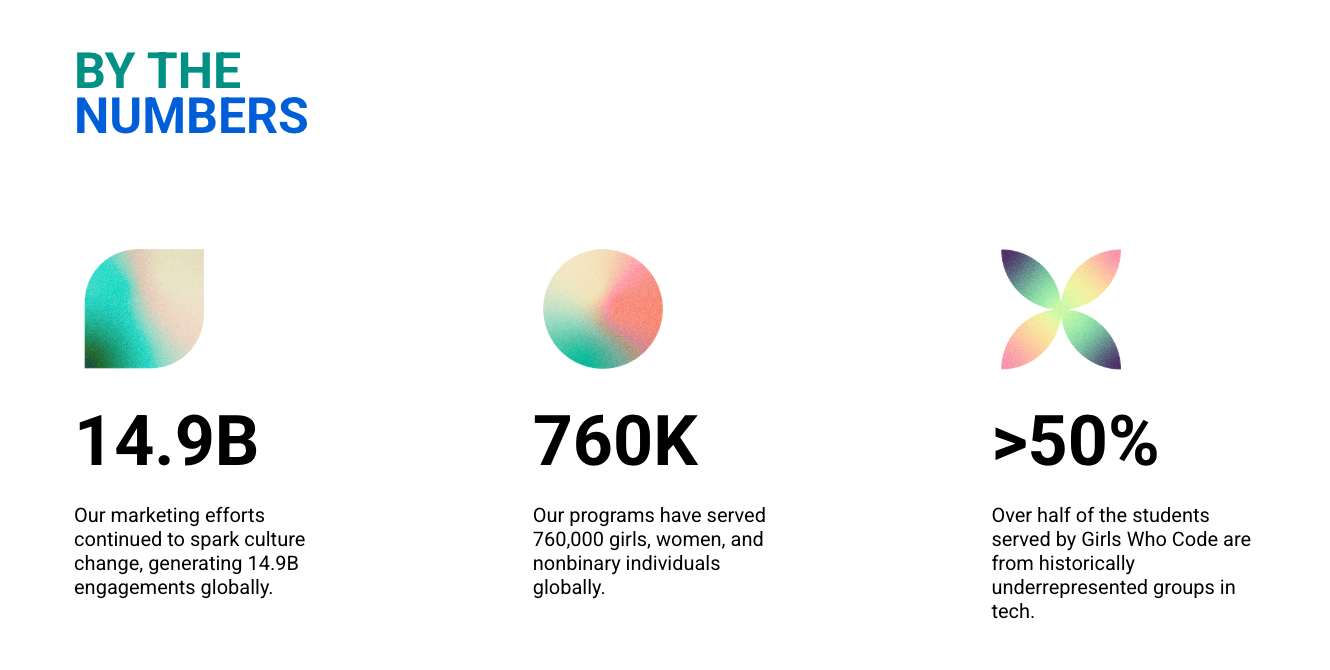
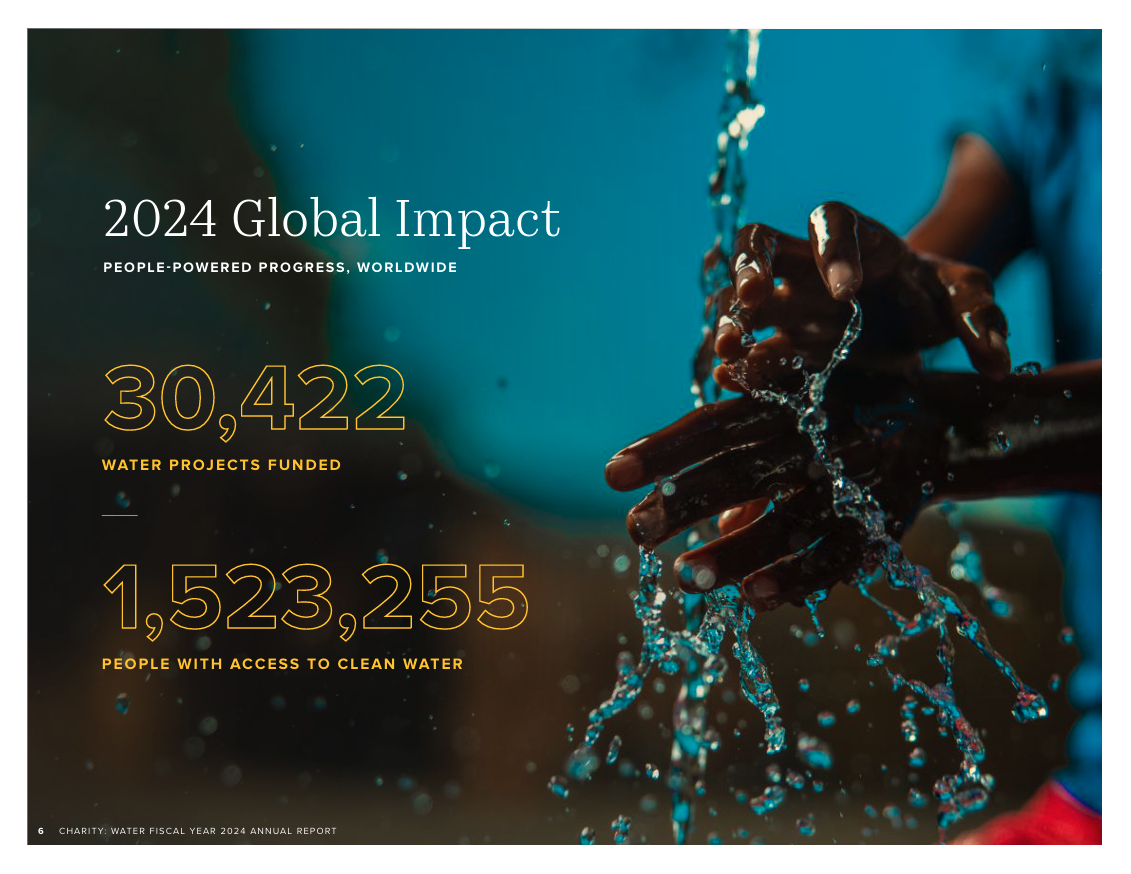
A "by the numbers" spread near the front with five or six big stats and icons. Donors who only glance at one page get the year in under ten seconds.
2. Macmillan Cancer Support impact report
Macmillan Cancer Support consistently demonstrates how short declarative sentences build trust faster than any amount of adjective-heavy copy.
Steal these moves:
One declarative sentence per section heading that tells you the outcome before you read the detail: "With your help, we were there for X people living with cancer this year." Borrow that pattern for your own programme sections.
Beneficiary quotes pulled out at large type, anchored by a real name and a clear outcome. Adapt this even if you only have one quote from one person your work reached this year.
3. RSPCA annual review
The RSPCA annual review uses a supporter-led voice throughout, making clear that the work happens because of the people reading the report.
Steal these moves:
"Supporter" language woven through the data sections, not just the thank-you page: "Thanks to supporters like you, we rescued X animals this year." Small charities can drop this framing into every KPI spread.
A clean programme-by-programme breakdown where each strand of work gets its own short section with a headline number. If you run more than one programme, this format lets each one get its moment.
4. Oxfam GB annual report
Oxfam GB demonstrates how to move from global-scale data to a single human story without losing the reader.
Steal these moves:
Plain-verb calls to action throughout: "Donate now", "Sign the petition", "Find out more". No adjective stacks, no emotional manipulation. UK donors respond to clarity.
A partner spotlight section that names specific organisations and what each contributed. For a small charity, this works equally well for major donors, in-kind sponsors, or grant-making bodies who funded your work.
5. British Red Cross
The British Red Cross demonstrates strong supporter-engagement framing and a disciplined approach to the opening call to action.
Steal these moves:
A "Join us" or "Sign up" structure at the close of major report sections, not just at the end of the document. Supporters who are moved by a particular programme can act on that impulse immediately.
Future-goals sections with three specific commitments and realistic timelines, not vague aspirations. Donors who read "we aim to reach 500 more families by March 2027" know exactly what their next gift is working towards.
For a small charity: do not try to copy a 40-page report from a 200-person organisation. Copy the structural moves (one hero stat, one strong story, named donors) and leave the design budget behind.
9 impact report mistakes that cost you donors
1. Not knowing your audience
Your readers are donors, volunteers, trustees, and community partners. Each group cares about different things. Donors want to see where their money went. Volunteers want to see the people they helped. Trustees want strategic context. Write for donors first, then make sure the others find what they need.
2. Ignoring clear goals
If you cannot say in one sentence what this year's report is supposed to do, the reader will not figure it out either. Write that sentence first. Then write the report.
3. Overloading with data
Too many numbers freeze a reader. Pick one hero stat for the cover and four or five supporting KPIs. Everything else goes in your internal end-of-year deck, not the donor-facing report.
4. A weak opening and closing
Donors decide whether to read on within the first ten seconds. The cover hero stat and the first line of the leadership letter do that work. The closing call to action does the conversion work. Spend extra time on both.
5. Using jargon
"Stakeholder engagement", "capacity building", "outcomes alignment". Your donor is a teacher, a retired professional, a small business owner. Write at a clear, accessible reading level. If you need a technical term, define it the first time.
6. Ignoring visuals
A wall of text is the fastest way to lose a skimmer. Every spread should have one visual: a chart, a pull quote, a photograph, or a big number with an icon. Use your brand colours and a consistent font set.
7. Hiding your challenges
Donors trust transparency. A short paragraph naming a setback (and what you learned from it) builds more credibility than a relentless highlight reel. Mature donors actively look for this honesty.
8. Missing a call to action
"Thank you for your support" is not a call to action. Direct the reader to do one thing: give again, sign up for the newsletter, volunteer for an upcoming event, refer a friend. Make the link work and pre-fill the form where you can.
9. Burying the impact data
Your biggest win belongs on page 1, not page 5. If a donor reads only the cover and the first inside spread, they should already know the year was a success. Everything after that is supporting material.
For a small charity: the most costly mistakes on this list are jargon, no call to action, and burying the data. Fix those three and you have already out-written most of your peers.
Impact report vs annual report: what's the difference?
In the UK, the distinction between an impact report and an annual report is not just a question of length or tone. It is also a question of legal obligation.
Registered charities in England and Wales must file an annual return plus a Trustees' Annual Report and Accounts (TAR) with the Charity Commission. Scottish charities file with OSCR. Northern Ireland charities file with CCNI. The TAR is a statutory document: it covers governance, risk, financial performance, and activities, and it is publicly searchable on the charity register.
An impact report is a separate, voluntary, donor-facing asset. Nothing in the Charities Act requires it. It exists because it works: donors who receive a clear, honest account of what their gift achieved are more likely to give again.
Short version: an annual return and TAR is a formal accountability filing. An impact report is a donor-retention asset. If you can only produce one, produce the impact report. It is shorter, more engaging, and easier for a small team to ship.
Impact report
Annual report / TAR
Purpose
Donor retention and engagement
Statutory accountability and transparency
Legal requirement
No, voluntary
Yes, statutory filing with Charity Commission (E&W), OSCR (Scotland), or CCNI (Northern Ireland)
Length
4 to 8 pages
20 to 80+ pages depending on charity size
Audience
Donors, supporters, grant-makers
Regulators, funders, the public
Tone
Warm, story-led, outcome-focused
Formal, financial, governance-focused
Financials
Simple snapshot (income and expenditure pie charts)
Full accounts: balance sheet, income and expenditure account, notes
Frequency
Annually (or after a major campaign)
Annually (statutory deadline)
For a small charity: start with the impact report. Add a full annual report filing when your regulator requires one, and treat the TAR as a separate compliance task rather than a substitute for donor communication.
Final thoughts: the template was never the bottleneck
The hardest part of an impact report is not writing it. It is sending it. A perfect 8-page PDF that sits on your website does not change donor retention. The same report, sent to every donor in your supporter CRM, segmented by gift level, with a one-click give-again link in the closing call to action, does.
Most small UK charities currently piece together JustGiving for donations, Ticket Tailor for events, and a separate CRM, and pay for all three. Zeffy consolidates that stack, free, with proper Gift Aid handling.
For a small charity, that means the maths is simple. Every pound you spend on platform fees, software subscriptions, or design contractors is a pound that did not go into the programme impact you are trying to report on. Zeffy is a fundraising platform built for small charities, and the unconditional free model is the point: no platform fee, no transaction fee, no credit card fee. Ever. Your charity keeps 100% of every donation, no matter what.
charity impact report is a short, donor-facing document, typically 4 to 8 pages, that shows what your organisation accomplished in the past year and how donor money made it happen. It covers your mission, headline impact data, one or two beneficiary stories, a financial snapshot, and a call to give again. It is a voluntary document, separate from the statutory Trustees' Annual Report (TAR) that registered charities must file with their regulator.
For most small charities, 4 to 8 pages is the right length. A cover page, a leadership letter, an impact-data spread, a story page, a financial snapshot, a supporter recognition page, and a closing call to action will fit comfortably in that range. Anything longer risks going unread. Aim for around 1,200 to 1,800 words of copy supported by visuals.
The most effective time is shortly after the end of your financial year, while the data is fresh and donors still remember their last gift. Many charities also time a report send around a key fundraising moment, before an autumn appeal or ahead of a Christmas campaign, so the impact evidence lands just before the next ask.
The Trustees' Annual Report and Accounts (TAR) is a statutory filing that registered charities in England and Wales submit to the Charity Commission (Scottish charities file with OSCR; Northern Ireland charities with CCNI). It covers governance, risk, financial accounts, and activities in full. An impact report is a separate, voluntary document written for donors rather than regulators. It is shorter, story-led, and designed to strengthen the relationship between your charity and the people who fund it.
Focus on five key figures: one hero stat for the cover (such as people served or meals provided), plus four supporting KPIs on your data spread (for example, volunteer hours, programmes delivered, year-on-year growth, and cost per outcome). If your charity claims Gift Aid, add the total Gift Aid reclaimed as a UK-specific metric, it shows donors the compounding effect of their eligible gifts. Avoid listing every number you tracked internally; selectivity is a sign of confidence, not a lack of transparency.
There is no legal requirement to produce an impact report, only to file your statutory annual return and TAR. That said, even a brief four-page report sent annually to your donor list is one of the highest-leverage retention tools available to a small charity. Donors who receive a clear account of what their gift achieved are significantly more likely to give again. If producing a full report feels out of reach, start with a two-page summary email that hits the same beats: hero stat, one story, financial snapshot, and a give-again link.
A practical guide for UK charities on preparing both the statutory Trustees' Annual Report (TAR) and an optional supporter-facing impact report. Covers what regulators require, what to include, format options, real UK examples, and free tools to bring your report to life.
Filing your UK charity's annual return does not have to be stressful. This guide covers what the Charity Commission, OSCR and CCNI require, how Gift Aid declarations work, and the year-round records discipline that makes filing season a formality for small and mid-sized charities.
Charity Financial Statements: A Complete Guide for UK Charities (2026)
A practical guide to charity financial statements for UK trustees, treasurers, and heads of fundraising. Covers the four key statements under Charities SORP (FRS 102), the difference between receipts and payments accounts and accrual accounts, CCEW/OSCR/CCNI filing requirements, Gift Aid income recognition, and tips to keep your accounting records audit-ready.
Look for people who attend related events, follow relevant Facebook groups, or subscribe to aligned newsletters.These aren’t just potential donors—they’re your future advocates.
Look for people who attend related events, follow relevant Facebook groups, or subscribe to aligned newsletters.These aren’t just potential donors—they’re your future advocates.







.png)


%25201.png)

.webp)


