We use cookies to improve your experience on our platform. By clicking “Accept all cookies”, you agree to the storing of cookies on your device to enhance site navigation, analyze site usage and assist in our marketing efforts.
Cookies required for basic website functionality.
Cookies used to deliver content most relevant to you and your needs.
Cookies used to deliver content most relevant to you and your needs.
Cookies that help understand the performance of the website, how users interact with it and to identify bugs.
How is Zeffy free?
How is Zeffy free?
Zeffy relies entirely on optional contributions from donors. At the payment confirmation step - we ask donors to leave an optional contribution to Zeffy.
Most charity merchandise articles read like a product catalogue: 40 items, no opinions, no idea whether any of it makes sense for a three-person team with no logo on file. This guide takes the opposite angle.
For a small charity, the question is not "what merchandise to order." It is "how do we sell it without burning a volunteer's Saturday on a sizing spreadsheet?" Merchandise is one of the few revenue-diversification levers a small team can actually run, alongside raffles, regular giving, and ticketed events. But only if the shop lives in the same place as your donations and supporter list. Otherwise you have just bought yourself a second platform, a second checkout, and a third reconciliation tab.
Below: the two or three items a small team can actually execute this month, how to design a shop that converts on a phone in 20 seconds, recipient-by-recipient ideas with a small-org feasibility verdict on each, verified bulk pricing, and the two-decision way to think about where to order.
"Merchandise" and "promotional items" do different jobs:
Branded merchandise: items you sell to raise funds.
Promotional items and giveaways: free branded items handed out at events to raise awareness and thank supporters.
Thank-you gifts: complimentary items given as recognition gifts to donors, volunteers, or long-standing supporters.
Strategically, merchandise and giveaways are one of the few revenue-diversification levers a small team can actually run. The charities that survive between the Christmas appeal and the summer fete season spread revenue across raffles, regular giving, ticketed events, grants, and merchandise instead of betting everything on a single campaign. Branded items add a small recurring stream and put your logo in front of new people every week.
NCVO regularly highlights income diversification as one of the most important resilience factors for small and mid-sized charities. Merchandise is one of the few levers that costs almost nothing to test and scales without major infrastructure.
For a small charity: merchandise will not replace your major-donor programme, but two well-chosen items sold at events and online can quietly add a few thousand pounds a year and put your logo in front of new people every week.
Two UK-specific things to know before you start selling
Gift Aid does not apply to merchandise purchases. When a supporter buys a t-shirt, they are receiving goods, not making a donation. The charity cannot claim the 25p-per-£1 uplift from HMRC on a merchandise sale. However, if you add an optional donation at checkout on top of the merchandise price, that donation portion is Gift Aid eligible, provided the buyer completes a Gift Aid declaration. (HMRC Gift Aid guidance)
VAT applies to most charity merchandise sales. The standard rate is 20%. Narrow reliefs exist for donated goods sold on behalf of the charity, but general branded merchandise is taxable. Charities selling merchandise above the VAT registration threshold (£90,000 turnover in 2026/27) must register for VAT. For most small charities well under that threshold this is background context, but worth knowing as your shop grows. (Charity Tax Group)
Start here: the two or three items a small team can actually execute
If you are reading this with no logo on file, no shop set up, and no time, the worst thing you can do is plan a 20-product catalogue. Pick three items:
One apparel item: a t-shirt or hoodie. Carries your logo, people wear it at weekends, and it is the highest-margin item in the lineup.
One practical item: a water bottle or tote bag. People use it daily. It lasts years.
One cheap awareness item: a sticker or badge. Costs under £1 in bulk. Acts as a thank-you gift, a giveaway at events, and a low-friction first purchase.
That is the whole lineup for year one. Three items you can actually photograph, describe, and restock.
Do not front the inventory. A print-on-demand or drop-ship supplier (the Printful or Teemill model) prints each order on demand, so you never write a £1,500 cheque for 200 t-shirts in sizes that may not sell. This is a supply tactic. It does not replace your storefront. You still need a checkout page that takes the order, captures the buyer, and books the revenue.
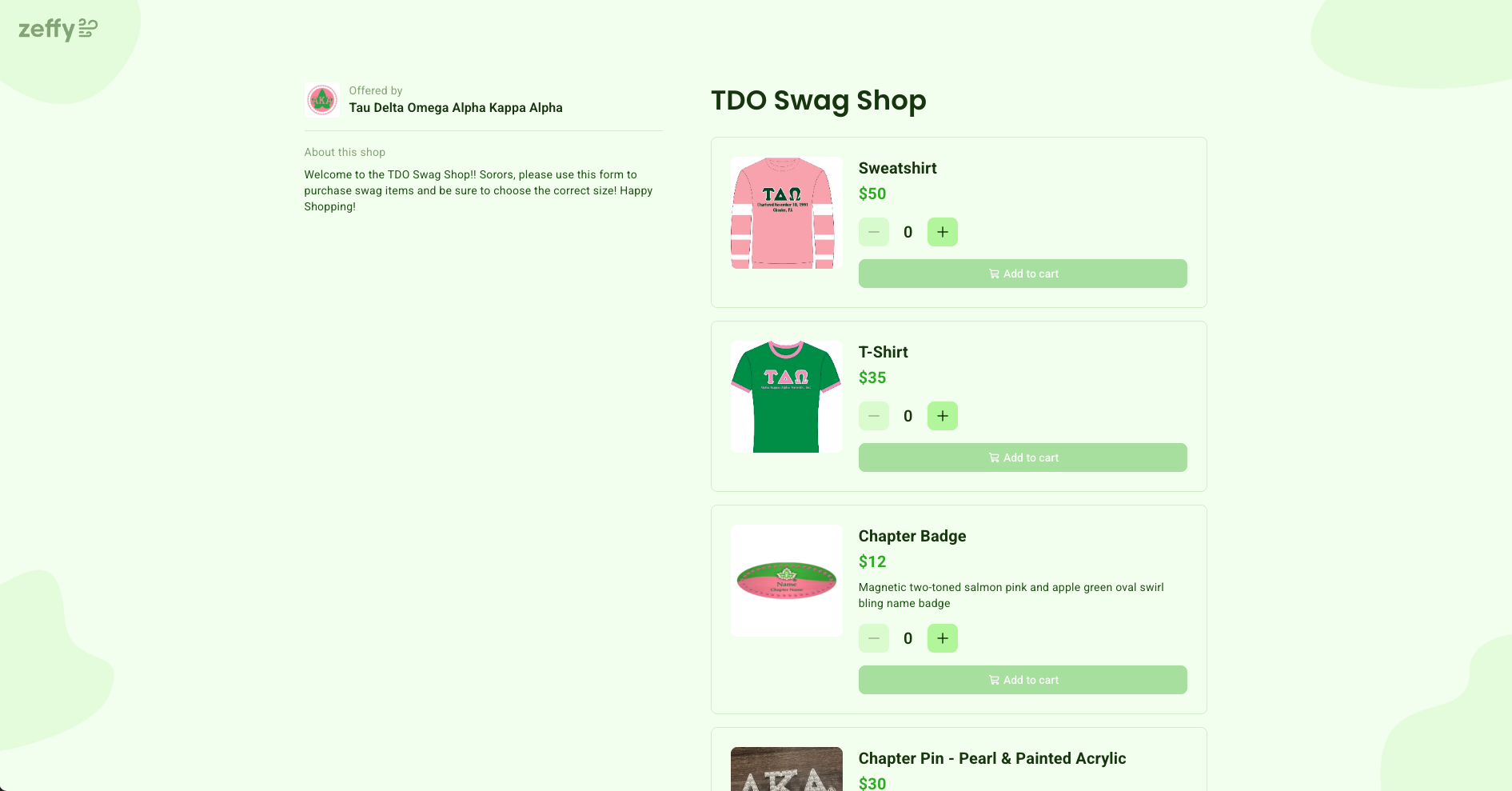
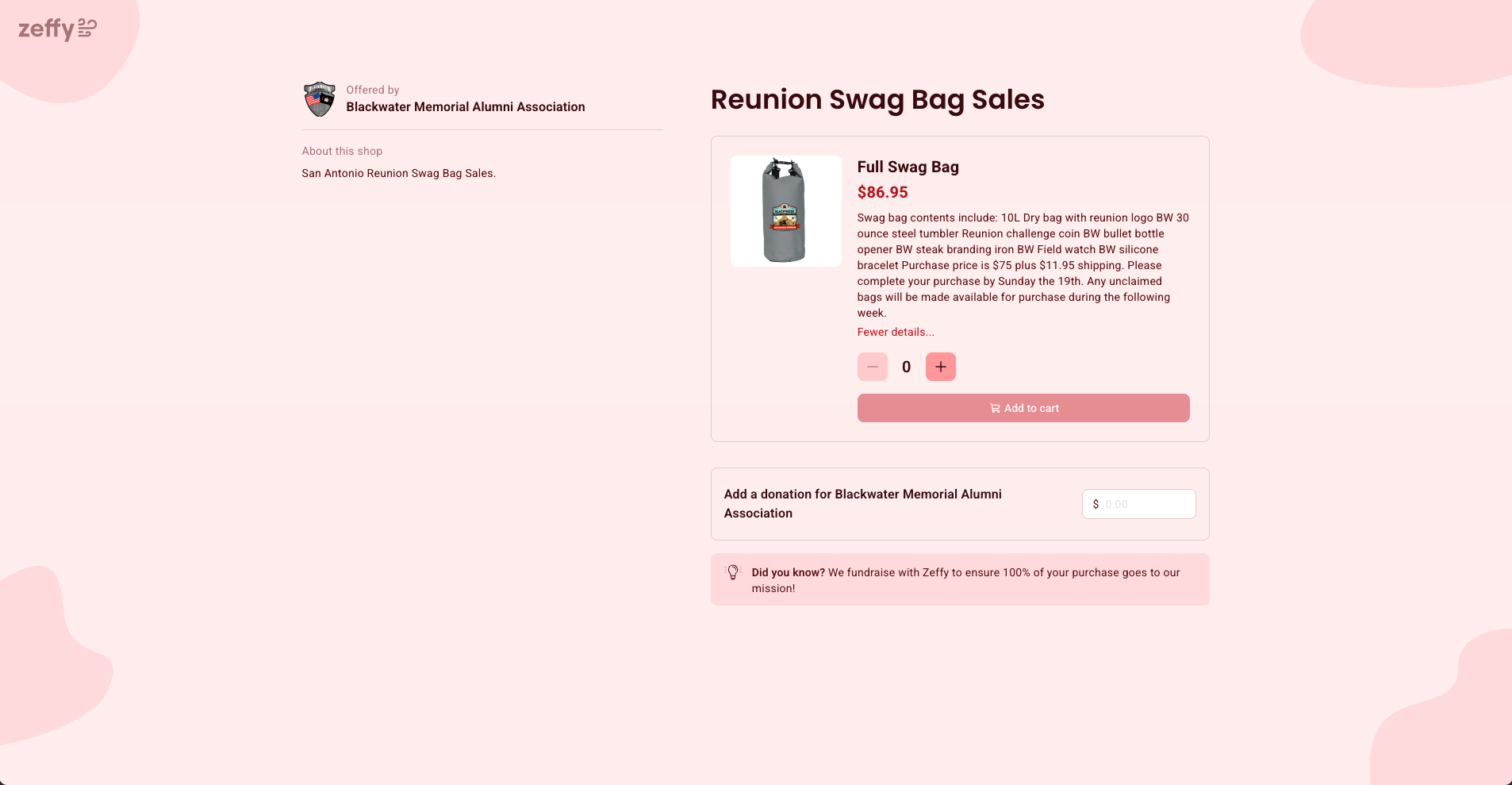
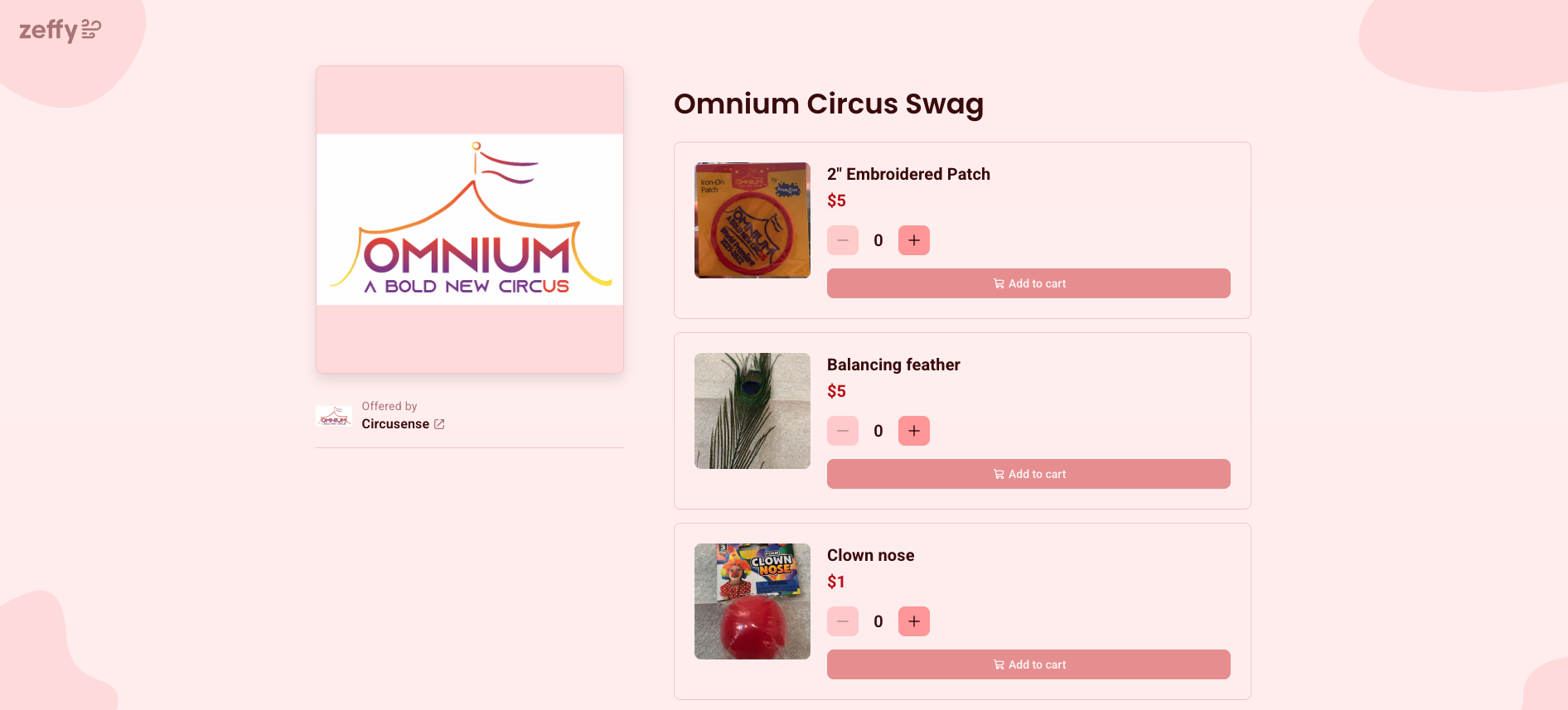
Sell it where your donations live. The single biggest mistake a small team makes is setting up a separate Wix or Shopify site for merchandise while donations sit on a different platform. Now you have two logins, two checkouts, and a spreadsheet thread for sizes. Set up the shop in the same place as your donations so a £20 t-shirt buyer can become a £25 buyer with a donation add-on at checkout, and so the buyer lands in your supporter list automatically. You can open a free online shop for your charity in an afternoon.
Sell it in person, too. At your next event, print a QR code that points to your shop and accept payment on a phone. No card terminal needed.
For a small charity: three items, one shop tied to your supporter list, one QR code at events. That is the realistic playbook. Everything else in this guide is detail on top of those four moves.
Designing a shop that actually converts
Picking the right products matters less than people think. Designing a shop a tired person can use on a phone matters more than people admit. Here is what works for small-charity merchandise shops, drawn from real conversations with the people running them.
Keep it scannable
Shoppers benchmark every checkout against Amazon. The bar is roughly 20 seconds from landing on the page to placing the order. That means a grid layout where photo, size, and colour are visible without scrolling. One product per card, a single price, a clear "add to basket" button. Long descriptions go below the fold or in an expand-on-tap drawer.
Design mobile-first
Most of your in-person sales will come from someone scanning a QR code on a phone at an event. If your shop is a long vertical scroll of paragraph copy, you have lost them by the second swipe. Test your shop on your own phone, in a queue at a coffee shop, with one hand. If checkout takes more than 30 seconds, simplify.
Handle variants at checkout, not by email
The hidden cost in small-charity merchandise is the manual sizing process. A buyer sends you £20, then you email them: what size, what colour, ship to where. That conversation takes longer than the sale itself. Variant fields built into checkout (size dropdown, colour picker, quantity) replace the back-and-forth entirely. Buyers pick "Large, navy" at the same time they pay. You see the right answer in your dashboard.
Plan for orders with multiple variants
Real-world example: a board member wants to buy a large polo for her husband and a small polo for herself in the same order. If your shop only lets her buy one variant at a time, she will abandon the second purchase. A real shopping basket and category navigation matter the moment you have more than five variants across your catalogue.
Show stock honestly
If you ordered 50 of one design, set a stock limit so the shop stops accepting orders at 50. The alternative is refunds, apology emails, and a volunteer's Saturday.
A note on checkout data and UK GDPR
When merchandise buyers enter their details at checkout, you are collecting personal data under UK GDPR. Use a checkout that captures explicit consent for future marketing, or rely on a documented legitimate-interest basis, and never assume a merchandise buyer has opted in to your appeals list. (Fundraising Regulator Code of Fundraising Practice and ICO)
For a small charity: a scannable mobile shop with variant fields at checkout will outperform a beautiful 20-product Shopify site every time. The shop is the product. Pick a platform that handles size and colour variants without making you build them.
Best merchandise ideas for volunteer appreciation
Volunteers want two things from a gift: something they will actually use, and a small signal that you noticed. Skip the trinket. Pick items that show up in their daily life.
Branded t-shirt (typically £4 to £10 per unit in bulk from UK charity-supplier lines): the default volunteer item. Doubles as a uniform at events. Works for almost any charity. ✅ Worth it.
Reusable water bottle (typically £2.50 to £5 per unit in bulk for aluminium bottles from UK charity-supplier lines): people use these for years. Highest visibility-per-pound item in the lineup. ✅ Worth it.
Tote bag: carries shopping, library books, beach kit. Long lifespan. ✅ Worth it.
Custom notebook or planner: useful during volunteer shifts and meetings. ✅ Worth it for charities with regular volunteer programmes.
Branded cap: doubles as event-day uniform. Worn casually long after. ✅ Worth it.
Enamel pin or badge: inexpensive thank-you for one-off volunteers. Lands on a backpack and stays there. ✅ Worth it.
Engraved keepsake (paperweight, plaque): ⚠️ Skip unless you have a long-tenure recognition programme (five-year, ten-year service). For a one-day volunteer, this lands wrong.
For a small charity: a t-shirt plus a water bottle covers 90% of volunteer-appreciation use cases. Save the engraved items for the people who showed up for a decade.
Donor recognition gifts that build loyalty
Donor recognition is where a lot of small charities overspend. The instinct is "they gave us £250, we owe them something nice." The honest answer is that a personal handwritten note plus a small branded item outperforms a £30 engraved gift almost every time.
Handwritten thank-you card on branded notecards: under £1 per card in bulk. Highest-impact recognition gift on this list. ✅ Worth it for every charity.
Custom sticker pack: typically £1 to £2 per sheet at volume. Tucked into the envelope with the thank-you card. ✅ Worth it.
Branded notebook or journal: practical, under £10. Good for regular-giving anniversaries. ✅ Worth it.
Reusable tote bag with mission tagline: ✅ Worth it as a year-end thank-you to recurring donors.
Custom enamel pin: collectible feel, low cost. ✅ Worth it for monthly-giving programme members.
Engraved donor wall plaque or crystal award: ⚠️ Skip unless you run a real major-gifts programme with five-figure donors. For most charities with income under £250k, the spend does not return.
Premium gift box (mug, journal, candle, card): ⚠️ Only for top-tier donors significantly above your average gift size. Otherwise overkill.
For a small charity: a thoughtful note on branded notecards, paired with a sticker or small item, beats a £30 gift box for the vast majority of donors. Reserve the premium recognition tier for the donors who actually anchor your budget.
Event giveaways have a brutal half-life. Most of them end up in a hotel bin by Sunday morning. The exceptions are items the recipient already needed.
Reusable water bottle: especially at outdoor events, sponsored 5Ks, or summer galas. People drink from it at the event and take it home. ✅ Worth it.
Tote bag: doubles as the bag that holds the rest of the giveaways. Carries the event home. ✅ Worth it.
Branded pen: for galas, auctions, and any event with bidding sheets or sign-in. ✅ Worth it.
Custom sticker: inexpensive, light, easy to post or stuff in registration bags. Lands on laptops and water bottles. ✅ Worth it.
Wristbands (typically £1 to £2 in bulk from UK charity-supplier lines): great for ticketed events and awareness walks. ✅ Worth it.
Branded snack or energy bar: consumable. Used on the day, gone by Monday. ⚠️ Only if food handling and any relevant local rules in your area allow it.
Hand fan or sunglasses: ⚠️ Only at outdoor summer events where they solve a real problem. Otherwise junk-drawer fodder.
Match the giveaway to the event. A formal gala wants understated items: branded pens, notebooks, a single nice tote at the auction sign-in table. A community 5K wants water bottles, wristbands, and stickers. Do not bring the gala items to the 5K or vice versa.
Sell at the event, too. The under-used move is selling merchandise at the event itself, not just giving it away. Print a QR code on a small sign at your registration or merchandise table that points to your shop, and accept card payments on a phone. A £20 hoodie at the door, paid by tap, is the easiest add-on revenue you will find all year. This directly addresses what small UK charities already know: as one village-hall organiser put it, "people are not carrying around cash like they used to." Card-first selling at events is no longer optional.
For a small charity: water bottles, tote bags, and stickers at events plus a QR code to your shop is the entire event-merchandise playbook. Pass on the rest.
Inexpensive does not mean low-impact. The right sub-£5 item, ordered in volume, lands in more hands than any single premium gift. Prices below are indicative ranges from UK charity-supplier lines; verify live pricing with your chosen supplier before ordering.
Custom stickers: typically £0.50 to £1.50 each at volume. The most cost-efficient awareness tool you can order. ✅ Worth it for every charity.
Badges or pins: typically £0.50 to £2 in bulk. Lapel-pin scale, conference-bag stuffer. ✅ Worth it.
Branded pens: typically £0.50 to £1.50 in bulk. Practical event giveaway. ✅ Worth it.
Custom notepads: typically £1.50 to £4 in bulk. Used at a desk, restocked annually. ✅ Worth it.
Fridge magnets: typically £0.75 to £2 in bulk. Year-round visibility in the buyer's kitchen. ✅ Worth it.
Bookmarks: typically £0.50 to £1.50 in bulk. Ideal for literacy, library, and education-focused charities. ✅ Worth it for mission fit.
Silicone wristbands: typically £1 to £2 in bulk. Awareness campaigns, ticketed events. ✅ Worth it.
Aluminium water bottles (bulk): from around £2.50 in bulk. The most useful sub-£5 item on this list. ✅ Worth it.
Stress balls or fidget items: typically £1 to £3 in bulk. ⚠️ Only if they match your mission (mental health, wellbeing charities). Otherwise filler.
Branded keychains: typically £1 to £3 in bulk. ⚠️ Easy to lose. Lower visibility than items people wear or use daily.
For a small charity: a sticker plus a badge plus a wristband can outfit a whole event for under £1.50 per attendee. The trap is ordering too many. Match volume to actual attendance, not to optimistic projections.
Eco-friendly merchandise for mission-aligned charities
If your mission is environmental, the contradiction of handing out plastic trinkets will not be missed by your supporters. Eco-aligned merchandise is worth the small premium for charities working in conservation, climate, animal welfare, food systems, and sustainable agriculture.
Categories to ask suppliers about:
Recycled-material apparel: t-shirts and hoodies made from recycled cotton or rPET (recycled polyester).
Reusable items: stainless or aluminium water bottles, glass straws, bamboo cutlery sets, beeswax wraps.
Bamboo and wood: pens, journals with bamboo covers, wooden keychains.
Recycled-paper goods: notebooks, notepads, stickers on recycled stock.
Organic-cotton totes: a reliable workhorse, often available with low-impact dyes.
Plantable and compostable items: seed-paper cards and tags for charities with a planting or restoration mission.
Ask suppliers for documentation on any sustainability claim before you put it in your marketing copy. Specifics such as recycled-content percentage or certification details vary by product line and year, so verify with the printer at order time rather than quoting numbers from a blog.
For a small charity: a single recycled-content t-shirt and a stainless water bottle covers most of the eco-aligned use case. Skip the gimmick items (plastic "eco-themed" pens) that undercut your message.
Where to order charity merchandise: two decisions, not one
Almost every "where to order merchandise" article conflates two completely separate decisions. They are not the same problem. Solve them separately.
Decision 1: the supplier (who makes and ships the item)
This is the printer. They take your design, produce the physical item, and ship it. Categories:
Print-on-demand and drop-ship (Printful with UK and EU fulfilment centres, Teemill for organic-cotton UK-made items, Everpress for campaign-first drops): no upfront inventory; each order is printed when placed. Great for testing a new design or a campaign-tied run. Higher per-unit cost, no warehouse. The supplier ships to the buyer directly.
Bulk promotional-product suppliers (4imprint UK, Vistaprint UK, Awesome Merchandise in Leeds): lower per-unit cost, larger minimum orders. Best for events where you know your attendance numbers in advance. You receive a box and distribute yourself.
Local printers and screen-print shops: best for one-off runs, urgent orders, and supporting your local high street. Many offer charity discounts. Pricing varies, but turnaround is fast and quality control is in person.
Selection factors that actually matter: minimum order quantity, the customisation options for your design, turnaround time before your event, and postage costs. Ask for a sample before a large order. Always.
Decision 2: the storefront and checkout (where buyers actually buy)
This is the part most small charities get wrong. They pick a supplier, then bolt on a Wix or Shopify site to take orders, leaving donations on a separate platform entirely. Now they are juggling Wix for merchandise, a different platform for donations, and a spreadsheet thread for sizes. Three logins, two checkouts, one reconciliation headache every month.
The average small UK charity currently runs Ticket Tailor for a £15 fete ticket, JustGiving for an autumn appeal, Crowdfunder for a Christmas project, a separate CRM for supporters, and a Wix or Shopify shop for merchandise. That is five tools, five reconciliations, and five subscription lines. Zeffy consolidates the stack for free, with proper Gift Aid handling on the donation portions and UK regulatory fit.
The consolidation argument is simple. Merchandise sales should hit the same dashboard as your donations and ticketed events. That way:
A £20 t-shirt buyer can become a £25 buyer with a donation add-on at checkout.
The buyer lands in your supporter list automatically. You can email them next year's appeal without an export-and-import process.
Your bookkeeper closes the month from one report, not three.
For a small charity: pick the supplier on cost and turnaround. Pick the shop on whether it lives where your donations live. Those are two different conversations.
3 merchandise mistakes that hurt your mission
1. Merchandise that contradicts your mission
An environmental charity handing out plastic trinkets. A food-security charity handing out branded confectionery. A health-focused charity handing out keychains made of cheap PVC. Supporters notice. Audit every item against your mission statement before you order.
2. Quantity over quality
The instinct is to order 500 of something inexpensive because "what if we run out?" In practice, you will discard the leftovers after three events and your logo will be on something that broke within a week. Order fewer, better items. Restock when you sell out.
3. Running merchandise on a separate platform from donations
This is the silent reconciliation cost. Merchandise on Wix, donations on a different platform, sizes in a spreadsheet thread. Every month-end, someone is exporting CSV files and matching transactions by hand. The fix is structural: put the shop where the donations are. A buyer becomes a record in your supporter list, not a line in a Wix export. Your bookkeeper thanks you. Your future self thanks you.
How to package your charity merchandise
Packaging matters more than people expect. The first impression of your brand often comes from how the item arrives, not the item itself. Stick to options that reinforce identity without burning budget.
Custom-printed boxes: best for major-donor packages or premium event giveaways. Reserve for higher-spend recipients since per-box cost adds up quickly.
Eco-friendly wraps (recycled kraft paper or cellophane): best for sustainability-focused charities. A paper sleeve with a sticker seal costs almost nothing and aligns with mission.
Padded envelopes with a branded sticker: best for posting smaller items such as enamel pins or accessories. Inexpensive, protective, and the custom sticker turns a generic envelope into a branded touchpoint.
Cardboard tubes: best for posters, prints, and educational brochures. Inexpensive, sturdy, easy to label.
Clear plastic sleeves with a branded insert card: best for bookmarks or brochures. Buyers see the item without unwrapping it. Add a small card with your mission and a QR code to your shop or donation page.
For a small charity: a padded envelope plus a branded sticker covers 80% of posted merchandise. Save the custom boxes for donor-tier recipients where the unboxing actually matters.
Sell your charity merchandise with Zeffy's free online shop
Most small charities end up running merchandise on Wix or Shopify, donations on a separate platform, and sizes in a spreadsheet thread. Three platforms, two checkouts, one reconciliation headache every month-end. That is the pattern. It is also the pattern that costs more in volunteer hours than the merchandise ever earns.
Zeffy's free online shop puts merchandise sales in the same dashboard as donations and ticketed events. Size and colour variants are built into checkout, so buyers pick "Large, navy" at the same time they pay (no email back-and-forth on sizing). Add a donation option at checkout, so a £20 t-shirt buyer can become a £25 buyer. Automated receipts and thank-you emails go out automatically. Buyers land in your supporter list as records, not as line items in a spreadsheet export.
Zeffy is used by UK charities for donations, ticketing, raffles run as small society lotteries, auctions, and memberships, all in one place. No platform fee, no transaction fee, no card fee. Ever. Over 100,000 charities and not-for-profits use Zeffy, and more than £2 billion has been raised through the platform.
There is no universal rule, but a practical starting point for a charity with around £100k in annual income is to allocate £1,000 to £3,000 for a first merchandise run. That covers a small batch of two or three items at modest quantities. The goal in year one is to learn what sells, not to maximise volume. Order fewer items at higher quality, sell out, and restock.
Events are the highest-converting distribution point: fetes, quiz nights, sponsored 5Ks, gala dinners, award ceremonies, and community days. Beyond events, giveaways work well at PTAs, church fetes, village-hall gatherings, and local markets. Online orders can be posted with a branded insert card. Registration bags for ticketed events are a natural home for stickers and badges that cost very little to include.
The best items are the ones your supporters will actually use. For most small charities that means: a t-shirt or hoodie (worn on weekends, logo in public), a reusable water bottle or tote bag (used daily for years), and a sticker or badge (inexpensive enough to give freely at every event). Those three items cover volunteer appreciation, event giveaways, and online sales without requiring a warehouse or a complex logistics setup.
Yes, with realistic expectations. Merchandise will not replace a major-gifts programme or a Christmas appeal. But two or three well-chosen items sold at events and through an online shop can add a few thousand pounds a year, put your logo in front of new audiences, and give volunteers and donors something tangible to connect with. The key is keeping the setup simple and selling through the same platform as your donations, so every merchandise buyer lands in your supporter list.
Start with a clean version of your logo (ideally an SVG or high-resolution PNG file). Choose a print-on-demand supplier such as Printful or Teemill, upload your design, select your products, and connect the supplier to your shop. For bulk orders, approach a UK promotional-product supplier such as 4imprint UK or Awesome Merchandise, request a proof, approve a sample, and confirm your quantities. The entire process from logo to live shop can be completed in a day for a simple two-product range.
good promotional item is something the recipient already needs or will use regularly. Water bottles, tote bags, pens, and stickers consistently outperform novelty items because they stay in use long after the event. Match the item to the context: understated branded pens and notebooks for a gala dinner, water bottles and wristbands for a sponsored walk or community 5K. Avoid items that will go straight into a bin or a junk drawer.
Start with your mission and your audience. An environmental charity should lean towards organic-cotton totes, recycled-material apparel, and stainless water bottles. A community youth charity might prioritise bold t-shirts and wristbands. Ask: will this item show up in my supporter's daily life six months from now? If yes, order it. If no, skip it. For a broader view of fundraising approaches that work alongside merchandise, browse more charity fundraising ideas.
Get weekly fundraising tips from nonprofits experts
Thank you! Your submission has been received!
Oops! Something went wrong while submitting the form.
Keep reading :
Nonprofit guides
VAT and tax relief for UK charities: a practical 2026 guide
VAT is often misunderstood by small UK charities. This guide explains how VAT applies to charity purchases and income, which reliefs and zero-ratings are available, when registration is required, and how Gift Aid sits alongside VAT. Anchored in HMRC guidance and Charity Tax Group resources, it replaces the US-centric "sales tax" framing with a clear, practical UK picture.
How to Create an Online Shop for Your Charity: 7 Steps to Launch in 2026
Learn how to set up an online shop for your UK charity in 2026. This guide covers the charity trading rules, VAT basics, print-on-demand vs inventory, platform options, and 7 steps to get your shop live this week without paying a cut on every sale.
Best online shop builders for UK charities in 2026: complete comparison
Comparing the best e-commerce platforms for UK charities in 2026, from completely free tools to paid platforms. Zeffy leads with zero fees, Gift Aid support on donation add-ons, and a single dashboard for sales, donations, and supporter records. Also covers Shopify, Wix, WooCommerce, Squarespace, BigCommerce, and Ecwid, with UK pricing throughout.
Look for people who attend related events, follow relevant Facebook groups, or subscribe to aligned newsletters.These aren’t just potential donors—they’re your future advocates.
Look for people who attend related events, follow relevant Facebook groups, or subscribe to aligned newsletters.These aren’t just potential donors—they’re your future advocates.








.webp)

